

Since I learned to read, I have been a bookworm of great and perhaps of distressing proportions. I read pretty much everything that suits me at the moment, both non-fiction and fiction. As the bibliophile I am, it often happens that I get nervous when I have a quiet moment to spare and not a book at hand. Unfortunately, over the years I have also been burdened by an overly extensive book collection, consisting of works that I usually have acquired cheaply and by impulse. My wife would like to get rid of all the books that clutter our home, they collect dust and some can unfortunately have a smell bad, maybe they even create allergies, and it doesn't get any better since we have a tendency to change abode quiet often.
One or two visitors night wonder if I've read all those books. A question that sound somewhat strange to me, of course I don't have red them all. What is stacked in my bookshelves are friends, some I know quite well, others I wish to become more familiar with. Back-to-back the books I have read stand together with the unread ones, those whose company I will one day enjoy and learn from. This is probably largely the reason to why I have not wanted to join any of the book clubs I over the years have been asked to join. Not that I don't appreciate talking about my reading experiences, on the contrary, it's rather because I don't want my unbridled reading to be subdued by what others think might be of interest – bestseller lists, accepted classics and everything else like that. I want to wander through the enchanted world of literature on my own and it is within a wild grown book forest I seek out what I want to read, real books that you can touch and smell, not e-books or podcasts.
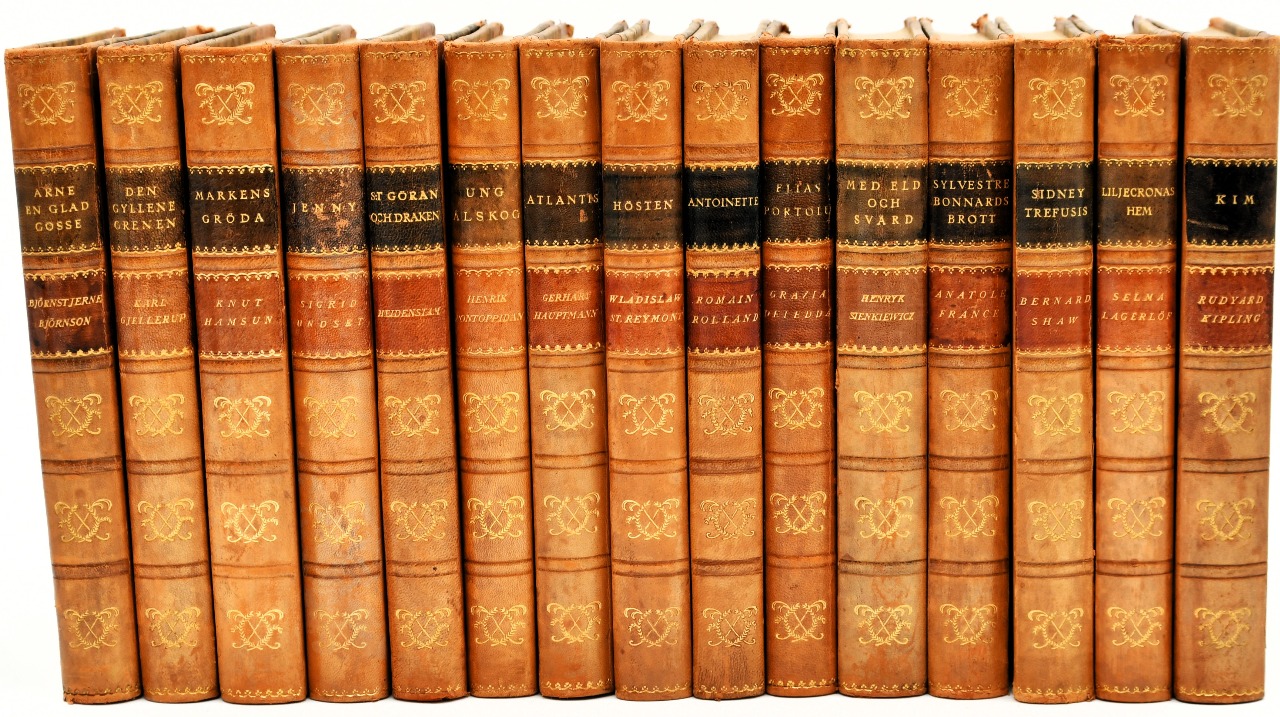
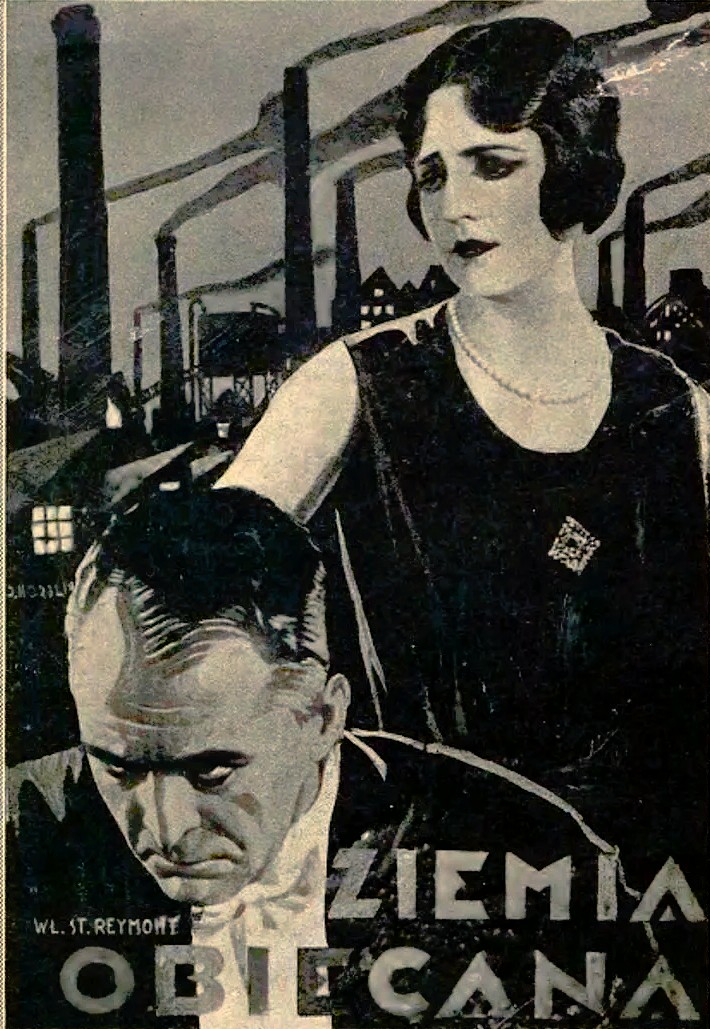
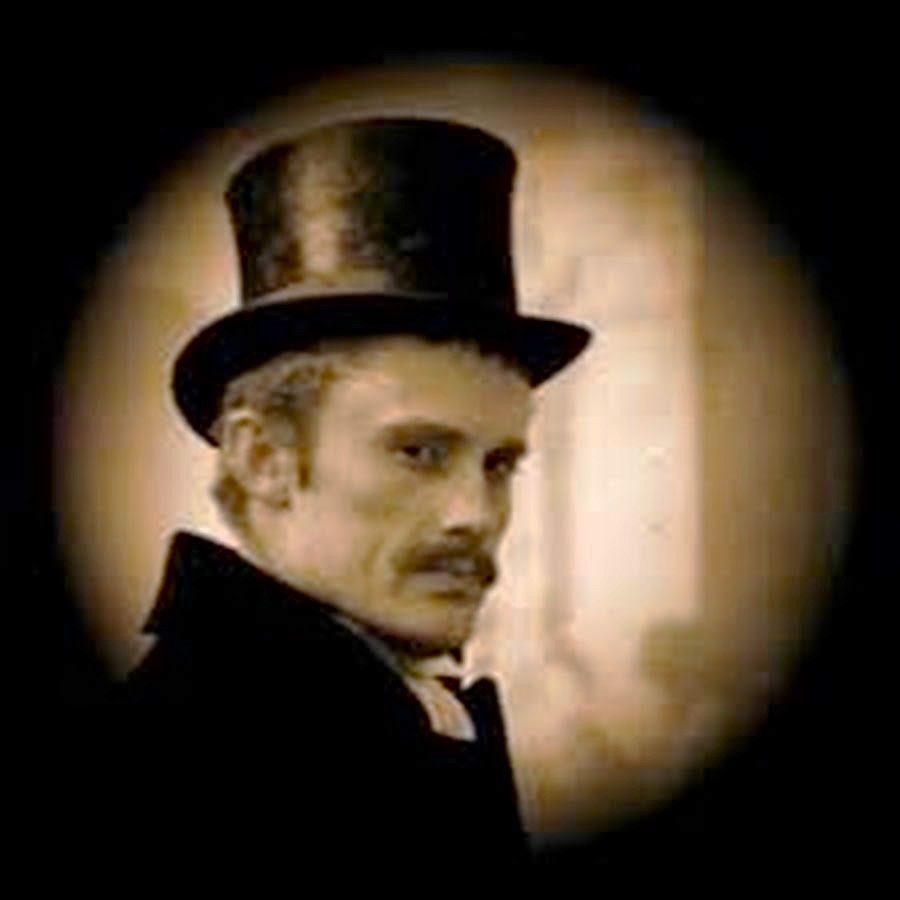
One of my pleasures is to explore my own book collection and pay attention to a book I have been attracted to for a long time. Scattered among my unsorted shelves are, for example, a number of hardbound books with half-leather binding with novels by more or less forgotten Nobel Prize winners. They originate from my grandfather's generally interesting, but now scattered, book collection. Among these dust-collecting books, I recently chose Władysław St. Reymont's The Promised Land. A novel I have long intended to read after having seen and been moved by Andrzej Wajda's film adaptation of this story about Łódź's industrialization and unbridled capitalism by the end of the 1800s. The novel has on several occasions attracted film directors, something that is quite natural due to its dramatic scenes and abundant dialogue, like so many other novelists, Reymont was also a playwright and had during several periods of his youth been active as an actor.
Wajda's film is also a Polish classic. A solid craftsmanship that follows the plot of the novel relatively faithfully, but in the guise of a skilful film adaptation. Wajda interprets the original novel by expanding, interpreting and deepening certain scenes, while adding a final sequence that the novel lacks. Reymont's novel is a collective depiction of a propertied industrial class, where the difficult existence of the badly paid, mistreated, overworked and accident-prone workers are glimpsed, but seldom described in depth. This while Wajda's depictions, although securely based on the novel's accounts, are emphasising the workers' perspective, often accompanied by Wojciech Kilar's suggestive music, which percussion beat seems to imitate the inhuman rhythm of the spinning mills.
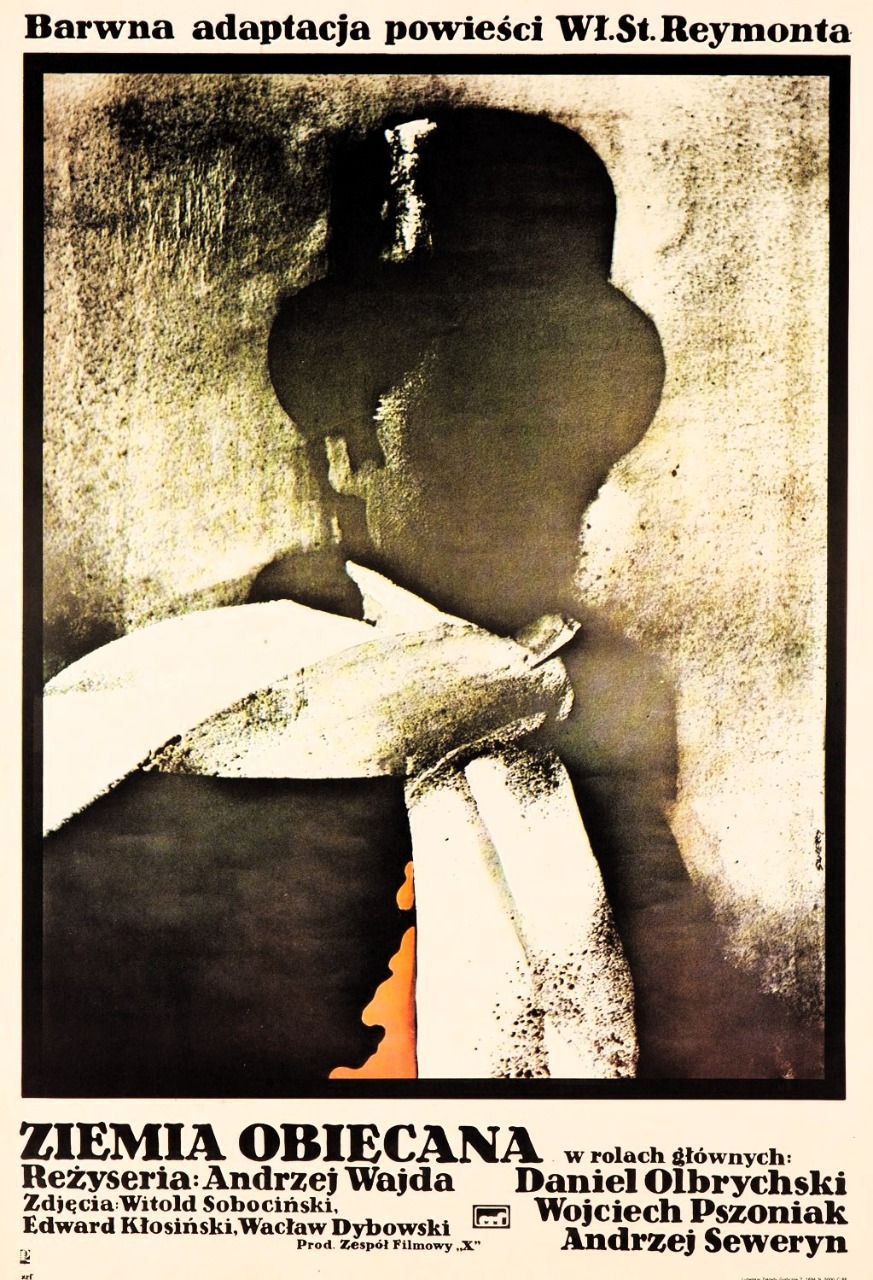
https://www.youtube.com/watch?v=qY4wnf40J-Q
Władysław Stanisław Reymont (1867 – 1925) was one of those writers who, with a rich reserve of experience from a varied life, manages to empathize with and bring to life the most diverse environments. His most significant works are collective novels in the spirit of Emile Zola, but they lack Zola's “objective” cynicism and naturalistic refinement. Beneath the surface of the Promised Land ‘s depictions of the cauldron of an industrial city, with its constant business upheavals, labour struggles, luxuries and want, the reader perceives a pity for the vulnerability of the propertyless workers. How capitalists regard them as pawns in their cynical power games. Łódź's spinning mills could easily absorb a constant stream of impoverished land proletarians and immigrants from Germany and the vast Russian Empire, of which Poland at the time was an integrated part of.
Early on, Reymont had sought an escape from his unhappy existence in a strict Catholic home, his father being a grim church organist, an embark on a care-free wandering existence. After leaving home he did for several years suffer an extremely poor and lonely life, while travelling across Poland.
The father had tried to force his son to become an organist, but the young Reymont, in spite of his musicality, hated the merciless music lessons, preferring to devote himself to an outdoor life, during which he devoted himself to romantic and fantastic dreams. In Warsaw he joined an underground socialist revolutionary movement, but after the secret police got track of him, he joined, under false name, a travelling theatre company. Reymont's rather poor acting talents made him leave that path fairly soon and instead he became assistant to a German lecturer who performed spiritualist séances. After a while he had grown tired of the occultist humbug and ended his collaboration with the lector, became a shop attendant and later a timber salesman. As such, he was attracted to agriculture and supported himself for a time as a farmhand. When this became too hard for him, Reymont returned to a profession he had learned as a young man. After his father had realized that his son was not good enough to become an organist, he forced him to become a tailor’s apprentice. Eventually, Reymont left tailoring and became employed by the railroad and was then assigned a post as railroad guard, living in a small cottage in a remote area. It was there that he began to write in earnest:
I didn't have much work to do, having plenty of time to read and write and do all sorts of foolish things. I was 22 years old; I was healthy, I owned a single suit, a pair of broken boots, faith in the world, and in my head a thousand bold plans. I began with feverish eagerness to write plays in ten acts, novels without an end, short stories in several volumes, poems – then I tore everything apart, or mercilessly burned it.
Reymont’s superiors distrusted him and he had not the slightest interest in his profession. Increasingly discouraged, he sent a couple of his short stories to a newspaper. The editor appreciated and accepted them. Filled with confidence, Reymont left the railroad employment to once again seek his fortune in Warsaw, but there came to an abrupt halt. None of his short stories were accepted, starved and dressed in rags Reymont waged a difficult fight for existence.
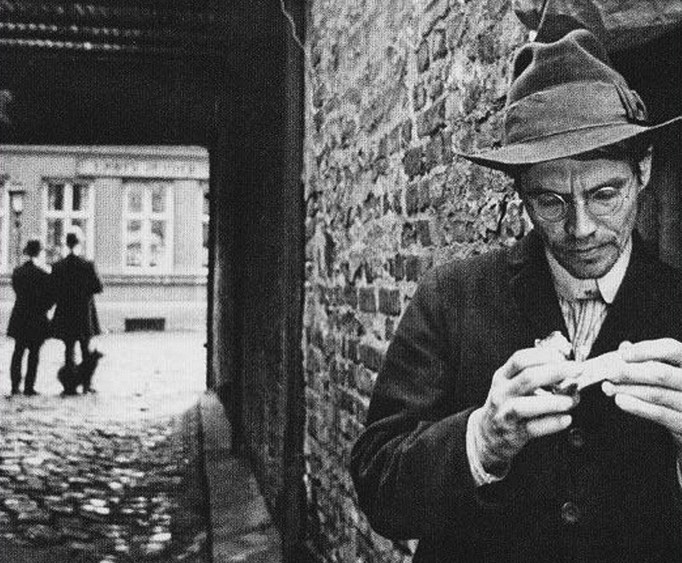
I nourished my soul with organ music and the sight of religious ceremonies. All day I read Augustine, the Bible, and the Church Fathers. More and more seriously, I began to think about killing myself. Already the earth opened up under my feet.
But suddenly the world opened up to him. A newspaper adopted a depiction he had made of a pilgrimage, and soon the novels The Acrtess and Jäsningsemner followed, which appreciated newspaper serials. Reymont's captivating contemporary and women's studies were a success with his readers, and he was soon able to travel to London, Paris, and Sorrento, where he lived for extended periods before moving to Łódź and writing The Promised Land. Now he had become a celebrated writer, but unfortunately, he was close to dying in a railway accident and was never fully recovered from his severe injuries.
Reymont was awarded the Nobel Prize in 1924, mainly for his depictions of peasants. In retrospect, through his sharp realism, he also became popular during communism, despite the fact that several of his socially critical depictions were then completely banned, including a satire in which animals take power over a farm and establish a dictatorship, not unlike the one depicted several years later by George Orwell in his Animal Farm.
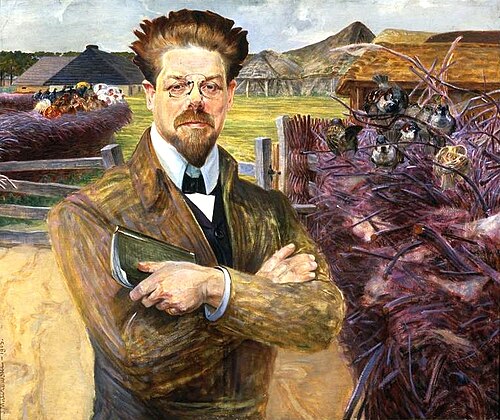
I have not yet read Reymont's great novel The Peasants, which was the main reason why he received the Nobel Prize. But I will do it, attracted by the epic approach he employed in The Promised Land.
Łódź woke up. The first shrill whistle of a factory tore apart the stillness of the early morning. And from all corners of the city other factory whistles, each more powerful than the other, began to give throat with their hoarse, shrill voices like a chorus of colossal cocks whose metal throats called to the day's work.
The long black bodies and slender necks of giant factories — the chimneys rose against the lingering darkness, looking ghostly against the screens of the dense e rain— they slowly came to life, spewing brooms of fire, exhaling clouds of smoke, the town was coming to life and workers moved in the darkness that still engulfed the earth.
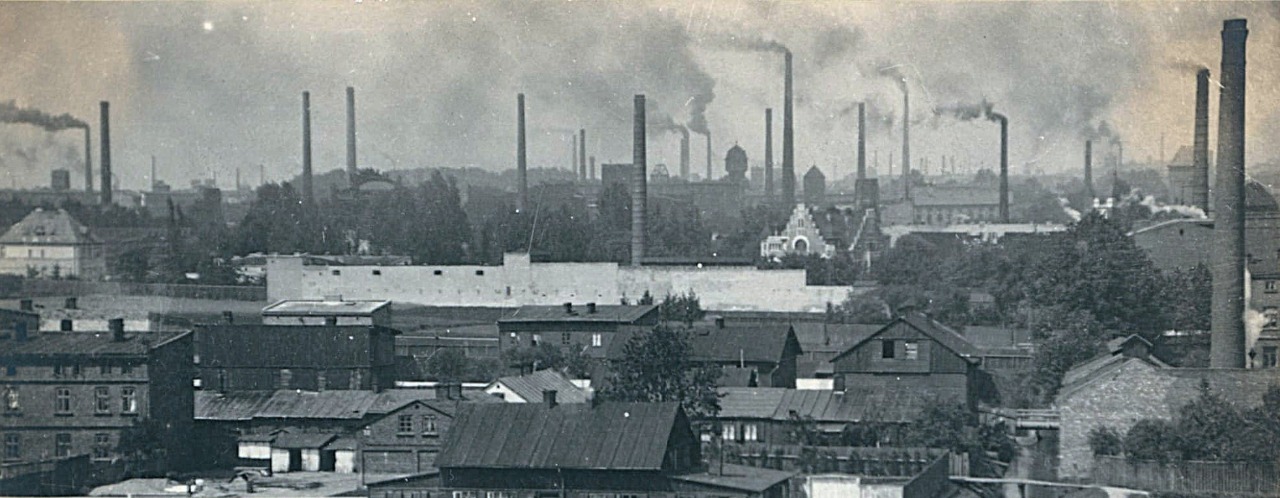
Thus begins The Promised Land, and throughout the novel the smoke hangs thick over the city while the rain often pours down and splashing through drainpipes and alleys, whereas violent fires devastate one by two of the huge factories, generally set on fire for insurance reasons.
A gang suffering from hangover is, together with their servant, brought to life by the factory whistles. They are the Polish nobleman and chemical engineer Karol Borowiecki, the German Max Baum, heir to an obsolete textile factory, and the Jew Moritz Welt, an independent financier, poor and disinherited, but related to influential bankers and factory owners, and their servant and all-rounder, Matthias. The four men share a house and every day spin plans on how to become wealthy and participate in the intense race for quick wins that has sent the whole town into a fever. Each, with his unique personal characteristics, represents one of the population groups from which a few successful individuals for themselves have managed to create fortunes and influence.
Borowiecki is descended from old Polish nobility, his father is the owner of an estate that his son does not want to take over and he is only waiting for his father to sell it, so that he can get enough capital to start a textile factory. Max Baum is the third generation of a German, solid craftsman family that once established itself as a master weavers in Łódź and then built up an industry based on high-quality fabrics woven on hand-manoeuvred looms. Now the Baum weaving mill is threatened by the modern, steam-powered giant factories that constantly produce cheap fabrics, admittedly of inferior quality, but accessible to a large and ever-increasing clientele. Max is ashamed of his conservatively stubborn father who clings to his hand-operated looms and cares for his workforce constituted by reliable master weavers. Max hopes that his father will sell this obsolete disaster before it capsizes and won’t be able to obtain the start-up capital for the factory he hopes to start together with his cronies. Moritz cannot expect any inheritance from his relatives, but he is quick-witted and has his ears, eyes and tentacles everywhere among Łódź’s capitalist circles, among whom he moves like fish in water, filled himself up with information about how the textile market works and fluctuates. Mortz is witty and charming, something that arouses admiration among his Jewish relatives who act like a closed clan, constantly worried about more or less unexpected racially motivated attacks from their German and Polish competitors.
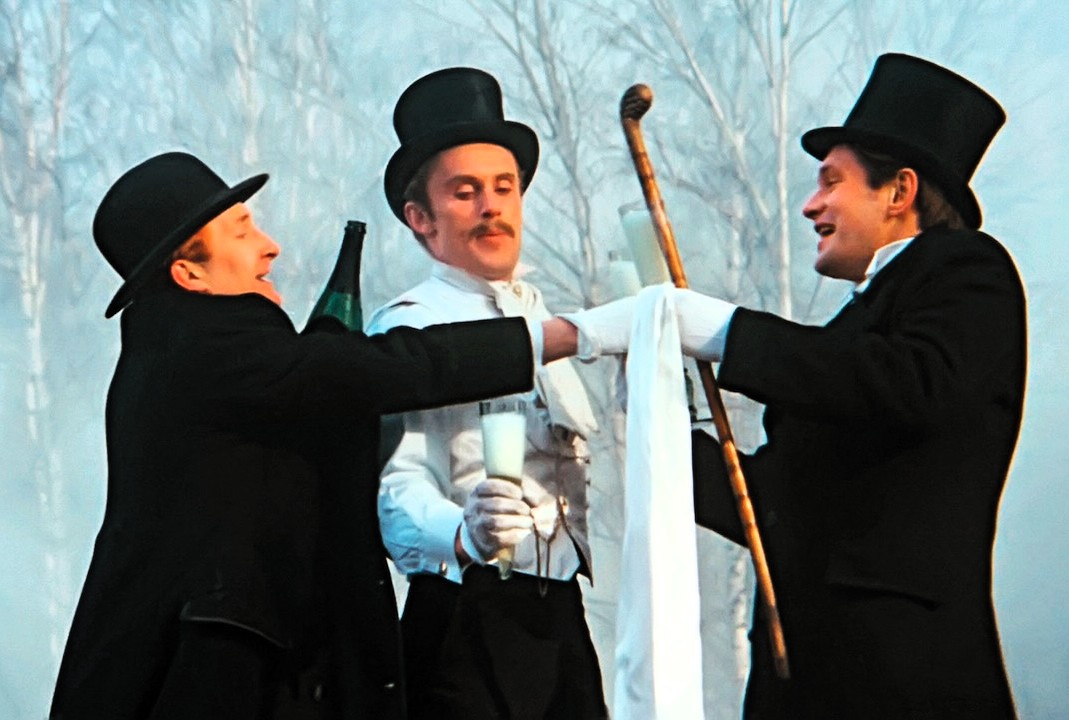
The Jewish capitalists maintain their ancient traditions and invite cantors and rabbis to their sumptuous palaces to perform daily prayers and conduct the religious feasts of their families. The German millionaires pray to their Protestant God and tend to maintain the age-old traditions they brought with them form their places of origin, while the Poles confess their sins within their churches and participate in the Catholic processions, but they all worship the same god – Mammon. They worship their deity with insatiable greed. If they were to devote themselves to charity, they would do so only to avoid falling out of grace with their “morally inclined” environment. Foremost in the philanthropic sphere are the Jews, sensitive to the racial hatred that bubbles beneath the surface and that at the slightest misstep can explode in their faces, especially if they have lost the prestige and protection that their fortunes provide.
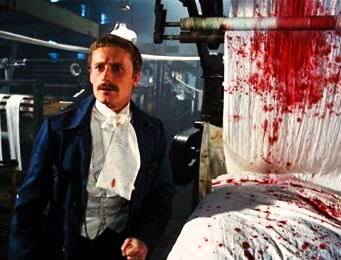
The three cronies are of the same scrap and grain; they feast and amuse themselves without giving a thought to their dispossessed and abused fellow beings, they seek the blessings of money. To them, the worn-out and underpaid workers are only cogs in the vast moneymaking industrial enterprise. Not for a moment would they waste their time on charity being completely blind to the misery surrounding them. Karol Borowiecki, who initially works for the old German tyrant Buchholz, even becomes annoyed when a worker falls into one of the machines and in an instant is crushed to pieces in such a way that his blood stains several meters of the fabric being rolled out.
The only one among the people around the three aspiring cronies who cares about the situation of the workers is the office clerk Horn who, despite his modest position, comes from a wealthy background and is thus able to maintain a certain independence from his employers. He tries to convince widows and injured workers to seek legal support, an activity that only annoys a man like Borowiecki, who believes that such sentimentality counteracts production efficiency. Another self-sacrificing benefactor is the quiet doctor Wysocki, who despite belonging to Łódź's upper class, moves among the city's poor and unlike the novel's more prominent individuals is not at all interested in any monetary gains for himself.
The old Grünspan holds tight to Jewish traditions, dresses in a cloak and skullcap and surrounds himself with a group of rabbis. However, he is just as obsessed with a desire to make a profit as the German and Polish industrialists, although unlike them he also engages in a certain amount of charity.
His daughter Mela loves her father, but is not religious like him, rather a freethinker who unreservedly associates with Jews, Poles and Germans. Doctor Mjeyschek Wysocki is boundlessly in love with Mela Grünspan and his love is reciprocated. Against all odds, old Grünspan seems to affirm his daughter's infatuation with a goyim, but Wysocki's bigoted mother frantically opposes a marriage. When she during a social gathering gets into a conversation with Karol Borowiecki, who, like most members of Łódź's wealthy elite, holds Dr. Wysocki in high regard, even though they consider his aptitude for helping poor and needy workers is a sentimental and loss-making business. Mrs. Wysocki is furious about the rumours she hears of a possible marriage between her son and the Jew Mela Grünspan and becomes even more annoyed when she finds that Borowiecki, despite his calculating coldness, does not harbour any anti-Semitic prejudices. He is a practical-minded, modern Pole, who identifies anti-Semitism with backward conservatism:
"Never! I give my word that it will never go there as long as I live! she exclaimed in a subdued passionate voice. "Would my son marry a Grünspan?"
Her hazel-coloured eyes blazed in a copper-red sheen and deep excitement shone in her proud, beautiful face. Borowiecki remarked:
"Ms. Mela enjoys a particularly good reputation in Łódź. She is considered to be a very wise girl. In addition, she is also very rich and very beautiful, Therefore ..."
"All that doesn't help matters at all. After all, she is a Jewess, isn’t she?" Mrs. Wysocki whispered, and there was contempt, yes — almost hatred in her words.
The shy, timid and utterly discreet Mjeyschek Wysocki bows to his mother's will and, to general surprise, Mela marries Moritz Welt, the mischievous and charming young Jew who is also a sharp and not entirely honest businessman, who to some extent also deceits his associates.
It is possible to read Reymont's with anti-Semitic glasses, but I assume that would be to do the novel an injustice. When it comes to the desire for profit, there is no difference between Jewish, German, and Polish capitalists in the novel, and Reymont highlights the stereotyped shortcomings of the various population groups. He does so not by referring to any racial traits but by pointing to the traditions that characterize his characters, with whom they either identify themselves with, or oppose. The German industrial owners descended from immigrant professionals who nurtured a great pride in their craftmanship. The new generation is becoming increasingly obsessed with how they should be able to earn an income quickly and easily. However, the young German Max Baum retains a romantic streak. He is enchanted by Karol Borowiecki’s fiancée, Anika – an angelic, Polish aristocratic girl who grew up in a rural environment. Romantically and fabulously beautiful, she has a livid sympathy for the poor and dispossessed of the big city, as well as the mistreated workers whom her future husband despises. To his great annoyance, after a collapse during the construction of his and his cronies’ factory she cares for several severely injured construction workers in their own spacious home. Anika increasingly distances herself from her fiancé's cynicism and he finally abandons her for a German girl who is violently smitten with the handsome Karol Borowiecki, the town's heartthrob. Whether Max Baum will ever arouse any love in the Anika, so admired by him from a distance, we will never know. Compared to his two ever-enthusiastic companions, who are always on the go, Max comes across as a somewhat sullen and timid, but hard-working young man.
Moritz Welt is the opposite. A young man with his nose for business, great charm and an easy-going manner that covers up the deep fellowship he nevertheless feels deeply related to his Jewish relatives, which he does not hesitate to exploit. He, like most of Łódź's other wealthy Jews, well aware of the fact that wealth is the best protection available against the anti-Semitism that constantly smoulders around them.
If it is easy to perceive that Reymont occasionally succumbs to racist clichés. However, there is no doubt that it is the Pole Karol Borowiecki who is the novel’s great anti-hero. Elegant and handsome, he is admired by the ladies of the city and he is also a skilled, highly educated chemist and engineer, appreciated by his employers. Borowiecki is the pride of his old father, a benevolent old Polish nobleman who finds it difficult to come to terms with the fact that his son does not want to take over the family mansion and finally has to sell his estate, against his own will, to a vulgar upstart and then move into Łódź, where he withers away and dies, constantly taken care of by Borowiecki's betrothed Anika.
Even before his fiancée had appeared in town, Borowiecki is embroiled in a passionate, secret love affair with the violently hot-tempered and beautiful Lucy Zucker, married to one of Łódź's Jewish industrial magnates. Through his relationship with Lucy, Borowiecki gains access to information from her husband's extensive network of contacts, including how tariffs fluctuate in England and Russia. Nevertheless, Borowiecki is bothered by Lucy’s reckless love and abandons her when she becomes pregnant. Shortly afterwards, he also leaves the sweet Anika to marry the somewhat silly Mada Müller who’s vulgar but business-conscious father company at all costs wants to tie the charming and knowledgeable Karol Borowiecki to his company. By the end of the novel, Borowiecki has "gained the world, but lost his soul".
To some extent, Reymont's The Promised Land pales in comparison to Israel Joshua Singer’s The Ashkenazi Brothers. A powerful family chronicle that picks up where The Promised Land ends. In The Ashkenazi Brothers the reader follows how after the unprecedented rise depicted in The Promised Land Łódź inexorably moves towards his fall, during worker struggles, Jewish pogroms, the fall of the Russian Empire, the Russian Revolution, the German occupation after World War I, the reconquest of their country by the Poles, and the founding of the Second Polish Republic. An impressive story of doom that in addition to its concentration on a family’s fate through vivid side descriptions reflects the violent changes that affect the entire society and how they influence the lives of each individual. It was therefore perhaps not so remarkable that in 1937 The Ashkenazi Brothers for several weeks shared the top spot on the New York Times bestseller list, along with Margaret Mitchell's Pulitzer Prize-winning Blockbuster Gone with the Wind, which also depicted how an entire society collapsed, although in her case it was the slave-based world of the American South, which she described in nostalgic terms.
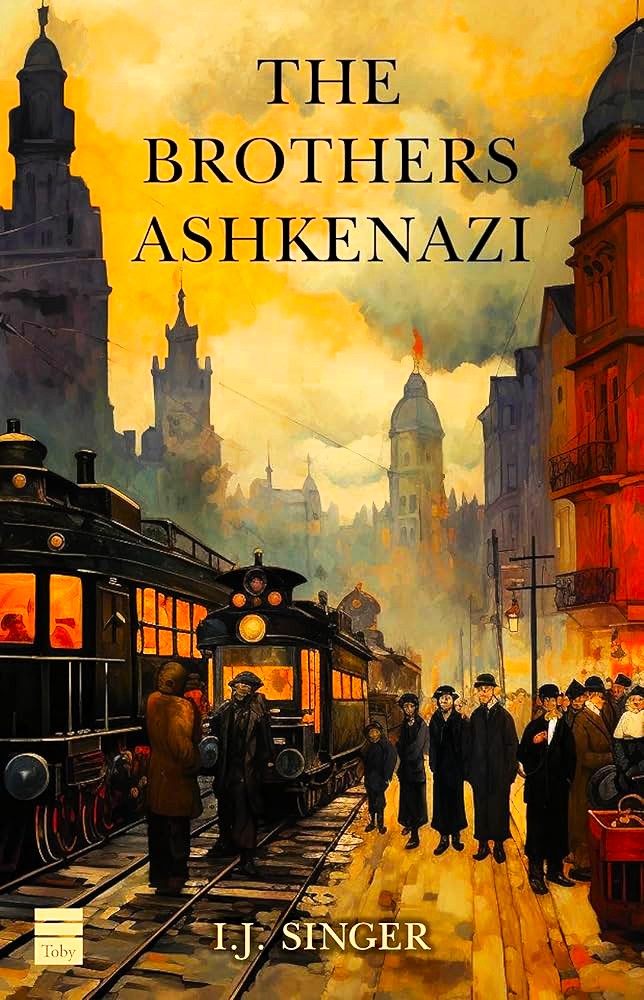

In The Ashkenazi Brothers we also find love, jealousy, obsession, violent conflicts, defeat, and rehabilitation, but by Singer the reader encounters no nostalgia, no solid heroic figures, only individuals who fight by various means against an unfortunate fate that they try in vain try to master by acquiring wealth and influence, through religious devotion, violent political agitation, or resignation. In addition, Singer is endowed with a lot of wit and satire.
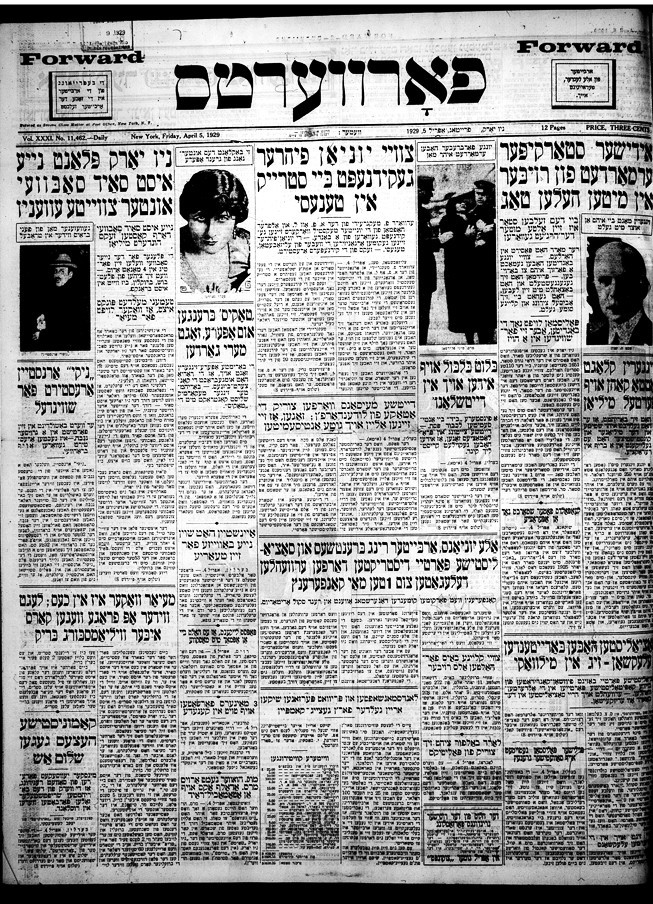
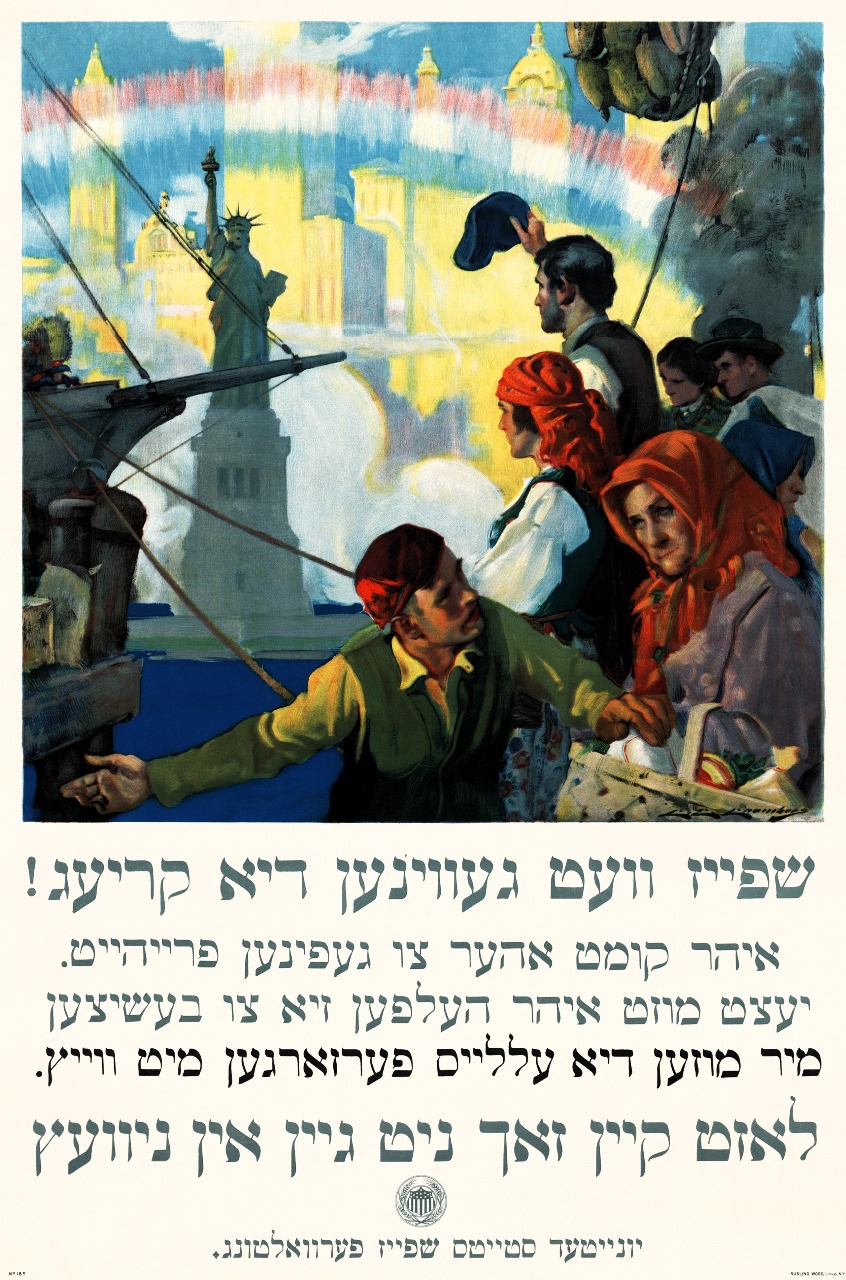
The Ashkenazi Brothers weas written in Yiddish and between 1934 and 1935 serialized in the Jewish daily Forward (פֿאָרווערט /Forṿerṭs). The newspaper, which was written in Yiddish and published in New York, had a pronounced socialist orientation and was distributed throughout the United States. At the time of the Ashkenazi Brothers’ publication, Forverts had a circulation of 275,000 copies. In 1936 the novel had been published in book form and translated into English. That same year it was published in Swedish and soon it had been translated into at least fifteen languages.
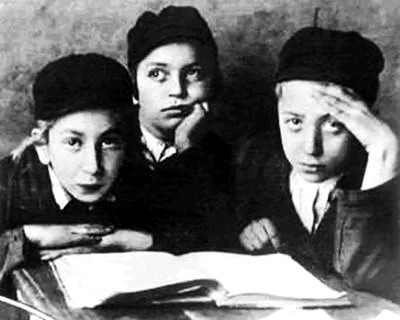
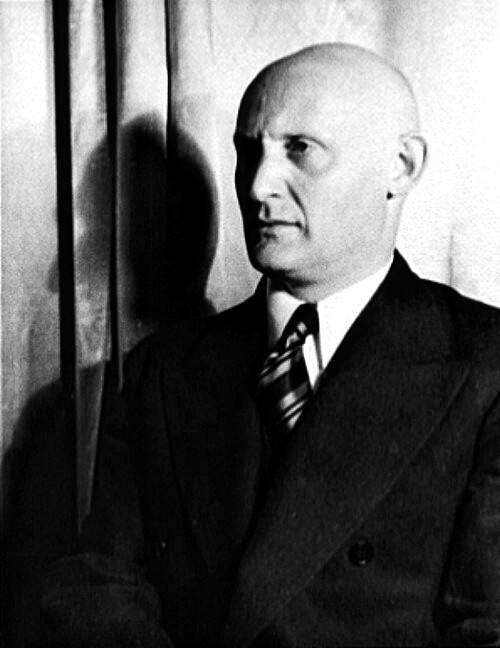
Israel Joshua Singer (1893-1944) was born in Biłgoraj, a town in southern Poland. Since the 17th century, Biłgoraj had been a refuge for Jews. They were free to settle there without any restrictions. Although the number of Jews was occasionally declining due to war and persecution their number was at the time of Israel-s Joshua birth around 3,000 and they then constituted forty percent of the city's inhabitants.
Biłgoraj was a centre of Jewish piety, especially Chassidism, a revivalist movement that arose in southern Poland in the early 18th century and counted on a large number of rabbis, who generally earned their living as teachers, but several of them were also merchants or farmers, while others earned their living through Jewish-related activities, such as ritual slaughter or the provision of kosher related items and drink.
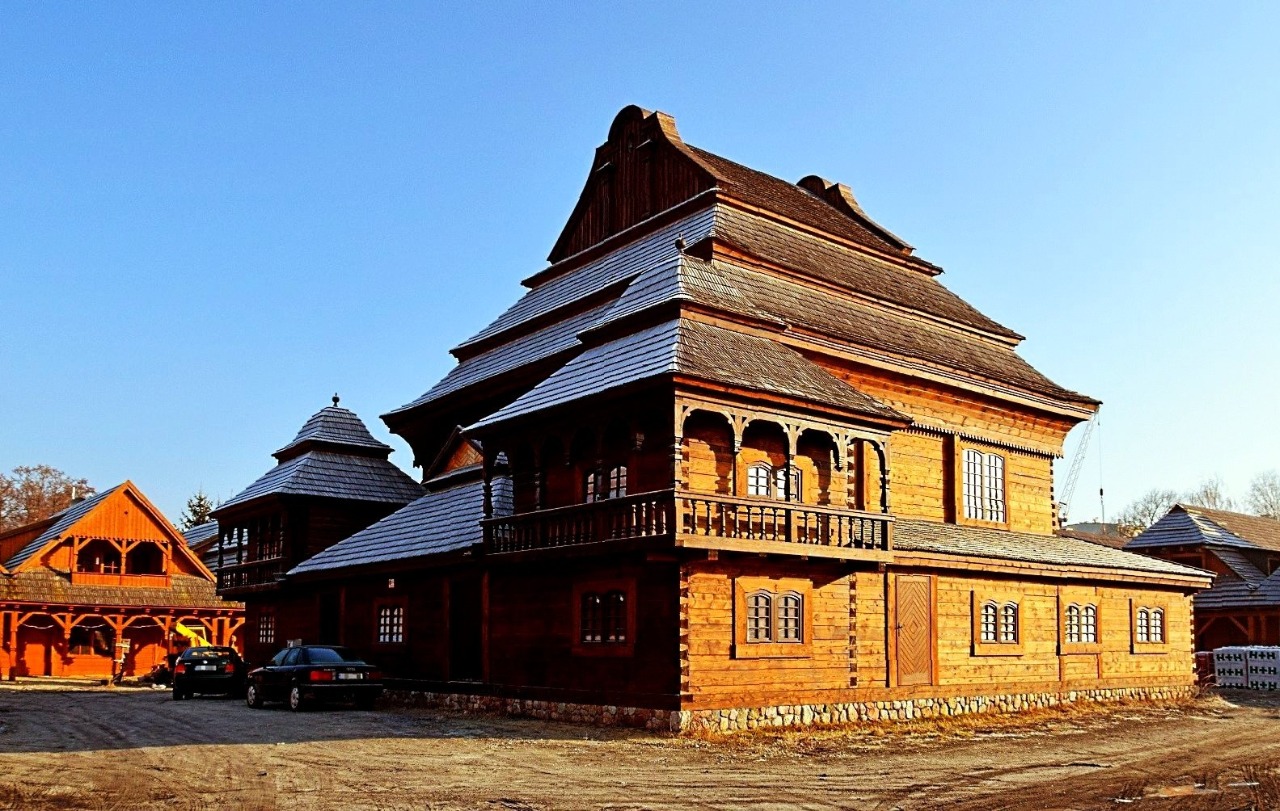
Jewish boys were raised to be orthodox Chassids, studying in yeshivas headed by renowned rabbis with a thorough knowledge of the Torah, the Talmudic scriptures, and Halacha, Jewish law. Below is Biłgoraj's reconstructed wooden synagogue, the original was of course burned down by the Nazis, who also exterminated the town’s entire Jewish population.
Israel Joshua Singer was the son of Pinchas Mendl Zynger, a respected rabbi and author of several books of rabbinic commentaries on the Torah and the Talmud. Zynger was a warm, impractical and quiet man, a pious Chassid often completely immersed shrugged in his studies, though he could occasionally burst into an innocent enthusiasm about some famous tsadik, wonder maker, or something he had recently heard or read. Singer’s mother was quite different, considerably stricter and emotionally less sensitive than her husband. According to Singer, she was a froy mit a mansbildishn kopf, a woman with a male head. Moreover, she was not a Chassid like her husband, but a supporter of Misnagdim, Opponents, a movement that opposed the mysticism of the Chassids and their intense faith in in the powers of the Tzadik and the imminent arrival of the Messiah. The Misnagdim found their origins in the Baltic countries and their followers were therefore often called Litvaks, Jews with their roots in the former Grand Duchy of Lithuania (present-day Lithuania, Latvia and Belarus). Singer later wrote, "my parents would have been an excellent couple if my mother had been my father and my father my mother." He claimed that he and his younger brother Isaac Bashevis Singer similar to their mother, while their older sister, Esther Kreitman, was more like their father. The three siblings became writers and Isaac Bashevis Singer was later awarded a well-deserved Nobel Prize for literature.
Singer received a solid Chassidic upbringing, but eventually distanced himself from Jewish piety and became a socialist. After leaving his childhood home, he devoted himself for a time in Warsaw to a number of odd jobs, attended painting courses and wrote a number of short stories, which he occasionally managed to sell to the Yiddish-language press, at the same time he nurtured contacts with the literary elite who wrote in Yiddish.
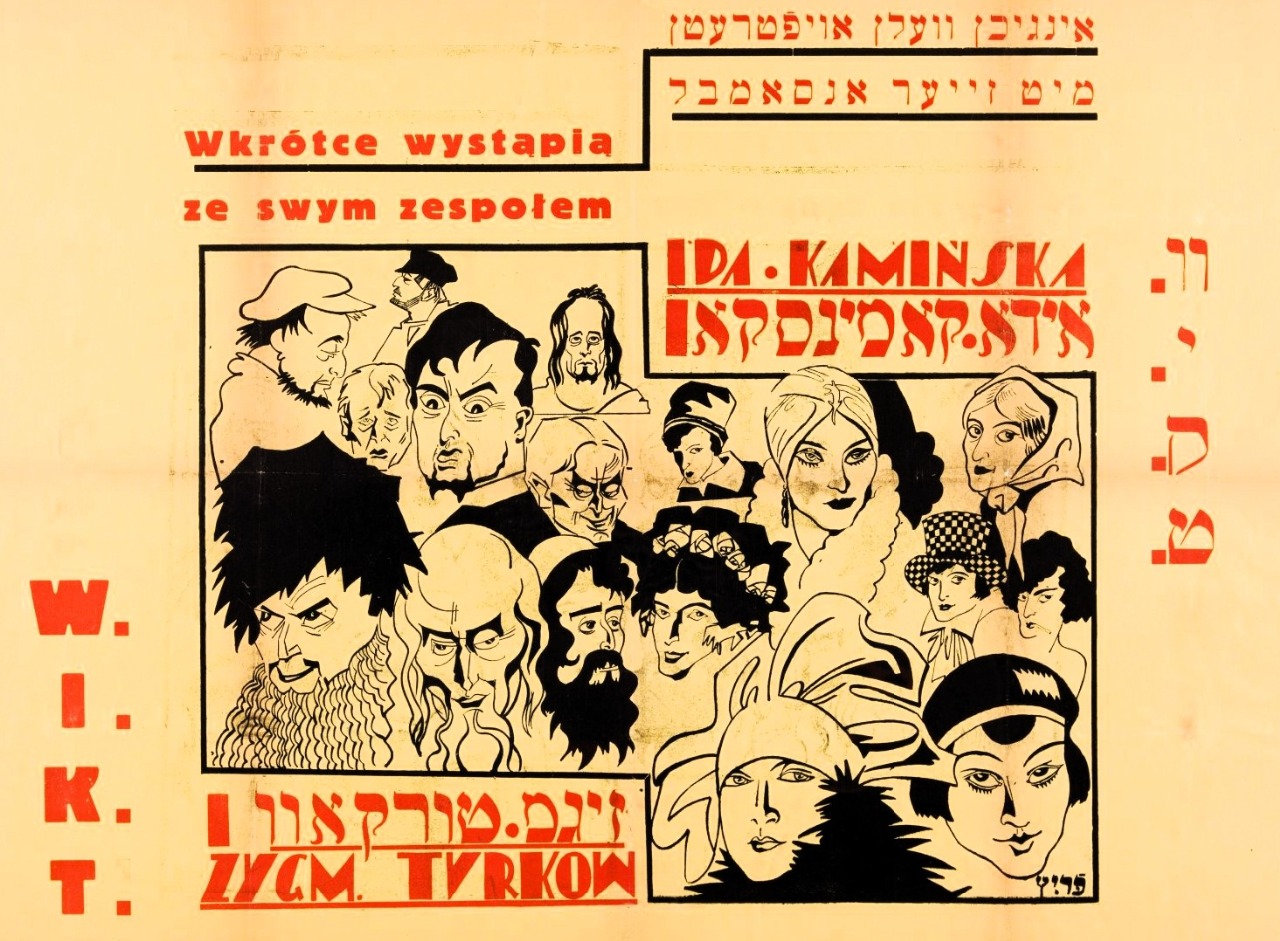
In the 1910s and 1920s ,Yiddish-based culture was unusually vibrant in Warsaw and Łódź, with several theatres, magazines and publishing houses, which had grown up around writers, artists and other artists who tried to unite Yiddish with the emerging, secular European modernism – expressionism, futurism and cubism, often with politically radical overtones, but there was also a wealth of popular music and light entertainment.
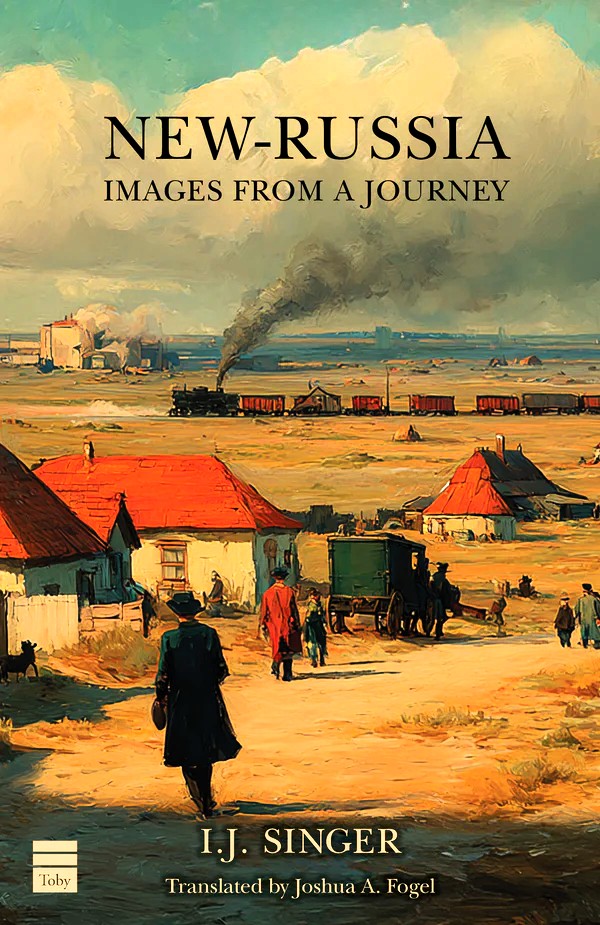
In 1918, Singer ventured straight into the chaos of the Russian Revolution and between 1918 and 1920 he spent most of his time in Moscow and Kiev. In Kiev, he wrote a short story The Pearl, which was based on his Russian experiences and attracted the attention of Forṿerṭ's publisher, Abraham Cohan. Cohan was born in Lithuania and had in 1882, at the age of 21, been forced to flee to the United States, wanted by the tsarist Ochrana, the secret police, for his socialist views. Cohan printed Singer’s Pearl in his newspaper and hired him as a foreign correspondent, and based in Warsaw Singer wrote mainly about Polish subjects and especially on socialism and Zionism, ideologies he could sympathize with, but felt that he would not become a truly devoted supporter of. In 1927, he had returned from a longer journey through the Soviet Union and returned indignant at the hypocrisy, corruption and poverty he had seen and experienced there. Observations he summarized in a series of articles for Forṿerṭs – Nay Russia, New Russia, which outraged several orthodox communists.
Even several Zionists regretted that Singer only half-heartedly supported their cause. Singer did not believe that the founding of a Jewish state in Palestine would solve the Jewish problems of racism and integration, rather it would exacerbate them, especially since the land demanded by the Zionists was not uninhabited. He wrote: “I don't think there is a cure for us. I have the diagnosis, but lack medication.”
As a journalist, Israel Joshua did not shy away from criticizing the Polish government and its authorities, but he also unreservedly criticized Jewish phenomena such as a conservative-oriented Chassidism, Jewish capitalism and even the criminality that has grown up in some of the big cities’ Yiddish-speaking groups. Singer’s outspoken articles and naturalistically inspired short stories won several admirers among the Yiddish-speaking writers of the time, in both Poland and the United States. For a time, he was prominent in Warsaw’s short-lived literary and radical group – Di Khalyatsre, The Gang, which in a manifesto declared that they wanted to transform mainstream Yiddish literature to become bold, urban, and even expressionistically “apocalyptic”. Below is a bald Israel Joshua with his friend Melech Ravitsch and his family. Ravitsch wrote epic poems in Yiddish, often reminiscent of Walt Whitman's poetry.
In 1932, a stage production of Singer's novel Yoshe Kalb was a huge success in New York. It was the story that, in a strictly Chassidic tradition, takes place in a small town in Galicia where, after fifteen years, a man unexpectedly appears and is accused of being either the son of a respected rabbi who has fled from an arranged marriage, or a miserable and introverted beggar who likewise has escaped from a forced marriage and then been accused of spreading plague around him. Strangely enough, Yoshe Kalb does not deny any of the different identities imposed upon him. Seventy rabbis flock to the small town to find out who this strange man really is. The answers are vague and he himself answers the question “Who are you?” with “I don't know”. An answer that could be provided by many Jews who, like Israel Joshua Singer felt that they had lost their identity within a changing society and did not know in which ideological camp they belonged.
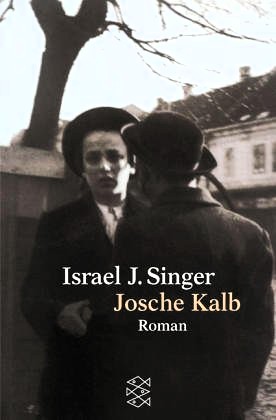
After both the novel and the play Yoshe Kalb had been acclaimed in the U.S., Israel Joshua decided to take his family with him to New York. Unfortunately, his two sons became seriously ill, nine-year-old Joseph recovered, but his younger brother died. The family had to postpone their departure for two years. Joseph Singer would later translate his father's novels and stories into English.
After establishing himself in New York, Israel Joshua arranged for his admiring younger brother Isaac Bashevis to come over to the U.S. and be employed by Forṿerṭs. In 1944, Israel Joshua Singer died in New York after a heart attack, by this time all of his Polish relatives remaining I Poland had been wiped out in the Holocaust, of his closest relatives, apart from Israel Bashevis, only his sister Esther, who lived in London, survived.
By the time of Israel Joseph’s death, the rich and vibrant eastern Yiddish tradition had already been wiped and survived only within the Jewish diaspora, mainly in America and Israel. Yiddish is now spoken among Hasidim, the Chassids, who are estimated to number between half a million and one million. 250,000 persons are speaking Yiddish in Israel, 250,000 in North and South America, and 100,000 in the rest of the world.
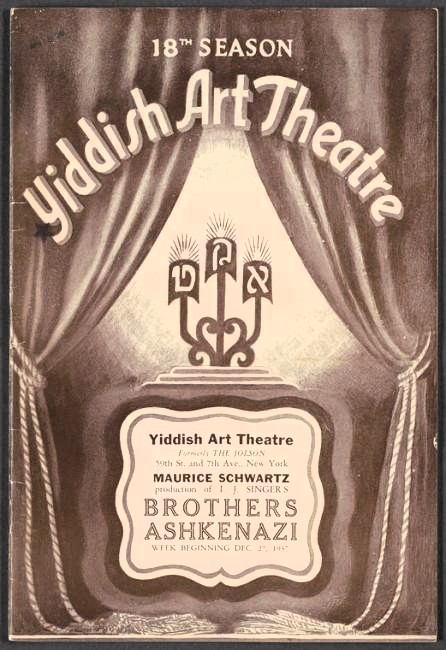
Singer’s powerful novel The Ashkenazi Brothers was also staged in New York, but was far from becoming a huge success like his Yoshe Kalb, which can be considered natural. How could one present the plot of such an extensive epic novel with such a comprehensive sense of purpose, which backdrop of enormous social upheavals influenced the protagonists’ actions, speech and thoughts?
In Singer's novel, as in the case of Reymont, Łódź is a constant presence:
Like a strange fruit, red brick factories sprouted in the fields around Łódź . They emitted slimy pools of sludge and poisoned the land, air, and water. Construction of residences, stores , workshops , and factories continued at a furious pace. Jewish artisans from all over Poland poured into Łódź. Peasants with too many children and too little land flocked in to take jobs in factories. Merchants from Russia arrived to snatch up goods for their own textile-starved country. The end was nowhere in sight, and as Łódź flourished so did the House of Abraham Hersh Ahkenazi.
Abraham Hersh was a pious Chassid with an overconfidence in famous rabbis and tzadiks. He had started out as a weaver and itinerant textile merchant, but one of Łódź's richest factory owners, the former German master weaver Heinz Huntze, had noticed the skilled Jewish businessman and his connections with textile buyers all over Poland and not the least in Russia. Huntze hired him and Hersh’s business acumen, common sense and knowledge of people, had relatively soon made him Huntze’s confidant and he appointed him his sales manager.
Being a pious Chassid, when his wife Sarah Lea gave birth to twins Hersh sought out a respected rebbe and consulted with him about what names he should give his sons and what future could be expected for them. According to the rebbe, both of them would be successful, but each in his own way. Like so many other Chassidic women, who outwardly seemed to be subservient to their chauvinistic husbands, Sarah Lea ruled within the four walls of the home, even if she to some extent feared her moody and unruly husband. The “eldest” twin, who had left the womb a few minutes before his brother, was by his father, after consulting with his rebbe, decided to be named Simcha Meir, though as a secularised factory owner he later came to call himself Max Meyer. However, Sarah Lea had insisted that the younger son should be named Jacob Bunim.
The sharp and intellectual Simcha won his father’s respect and followed in his footsteps until he finally took over Huntze’s industries and out-maneuvered his own father. The more outgoing and handsome Jacob became the apple of his mother’s eye and despite his lethargic disposition he also became a wealthy man.
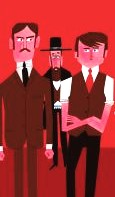
From an early age, a big difference between the brothers was noticeable. The slender and carefully calculating Simcha avoided the other boys’ wild games, but compensated for his physical inferiority with shrewd determination and iron will. Jacob, on the other hand, was strong, attractive and bold and felt no need to be smart and manipulative. Through his strength and attractive manner, he won the respect of boys and the admiration of girls, especially the beautiful Dinah was charmed by him.
The boys’ pious father sent them to different yeshivas. Jacob was a mediocre student, but that did not at all affect his attraction and respect he enjoyed among the other students, though the rabbis did not consider him to have a bright future, neither as an intellectual nor as an industrial magnate. It was different with Simcha, who quickly learned everything the teachers expected of him. His mind was focused on learning the essentials, separating the wheat from the chaff, concentrating on what he knew was required of him. He could skim a text, whether it was in the Talmud or in a business manual, in a short time perceiving what it was all about, and then masterfully communicate the central information to those around him. As an adult, Simcha/Max could quickly and easily find out what benefited him the most, where opportunities to acquire power and wealth were to be found. He relied on hard work and keen observation, which did not prevent him from making use of deception and deceit. Soon he had become one of Łódź's richest and most powerful men. He even managed to outdo his brother and obtain the beautiful and highly desired Dinah as his wife. He won her through shameful coercion of those around her, but he never gained her love, it was kept by his brother Jacob.
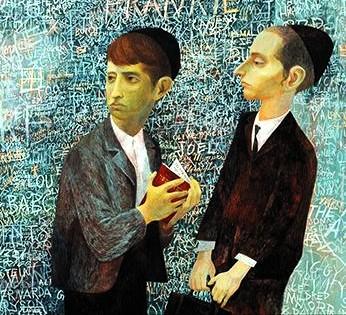
Simcha had to work hard to preserve his social position, which was constantly threatened from various directions. This while Jacob seemingly without any effort at all managed to gain both power and wealth. Women and men were constantly charmed by him and this gave him favourable marriages, large inheritances and desirable mistresses. In all his undisguised naivety and robust health, Jacob remained a frivolous but lovable person with a good heart, even if his rather lethargic thoughtlessness occasionally drove him into choices that could harm others, if he himself generally emerges unscathed from his temporary difficulties. Simcha was not particularly lucky, but he fought his way forward with a defiantly stubborn egoism, although he was sensible enough to carefully hide his intentions until it was time to strike and win what he desired. He occasionally went from defeat to defeat, but through intelligence and determined stubbornness he managed to get back on his feet and become even more successful than he had been before a backlash had befallen him.
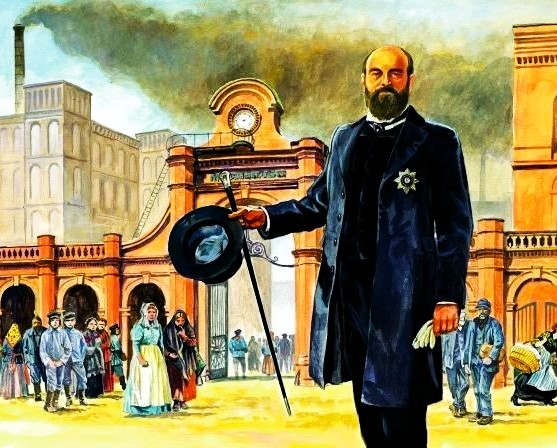
Neither Simcha nor Jacob are solid characters, they have their obvious faults and shortcomings. Towards the end, Simcha realizes that his quest for power and wealth had been nothing more than a chase after the wind, but this does not halt his life-long quest and he continues to tirelessly strive along until he alone and bitter meets his miserable end. Jacob is towards the end of the novel driven to try to save a brother who throughout his miserable life has shown him no love and has, due to his incurable jealousy, even worked against him. Everything ends in tragedy and a dark cloud hangs over the entire story – the curse of having been born a Jew. The Ashkenazi Brothers takes for most part place on the same plane as the Promised Land, a constant battle between Poles, Jews and Germans for the control of Łódź’s money-grinding mills. But to an even greater extent we do in Singer’s novel encounter the struggle of the poor workers.
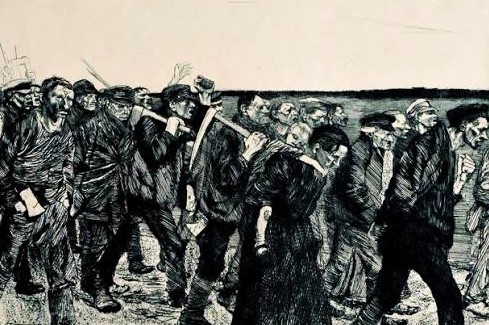
Nissan Eibeshutz, the son of the rabbi who headed the yeshiva where Simcha had studied, was also a good student. Unlike Simcha, however, Nissan made an effort to truly understand, assimilate, and consider what the Jewish holy scriptures conveyed. He saw through Simcha's superficial knowledge and smooth adaptation to the expectations of the authorities. But, unlike Simcha, who, like him, abandoned the legal rigor of Chassidism, Nissan was and remained an idealist. Together with the rag dealer Feivel, who with the modest surplus he obtained from his activities created an extensive library open to every inquisitive youth. Throughout his life, Nissan fought for the victory of socialism. For Feivel, the struggle meant that he was exposed to his family’s contempt. All but his beloved daughter, Bashke, who to her own misfortune had a crush on the handsome Nissan, Fievel's wife and children came to regard him as a hopelessly daydreaming jerk and useless provider to his own family’s wellbeing. On their own, Fievel's family managed to make a living from black market trading and other dubious activities.
Nissan and Fievel tried to spread the ideas of socialism to the impoverished and oppressed masses of workers and tried to do so by various means – they agitated, wrote and printed leaflets and fought on the barricades during the fighting that occasionally flared up. The results were always the same, uprisings were suppressed and/or the fighting spirit ebbed out among the workers, but one fact remained – the Jews were and remained outsiders. Whether they were capitalists or socialists, they suffered at every assault or suppression of rebellion by the superior power. The anger and frustration of people, workers, capitalists and authorities, hit them hard with devastation and pogroms as a result.
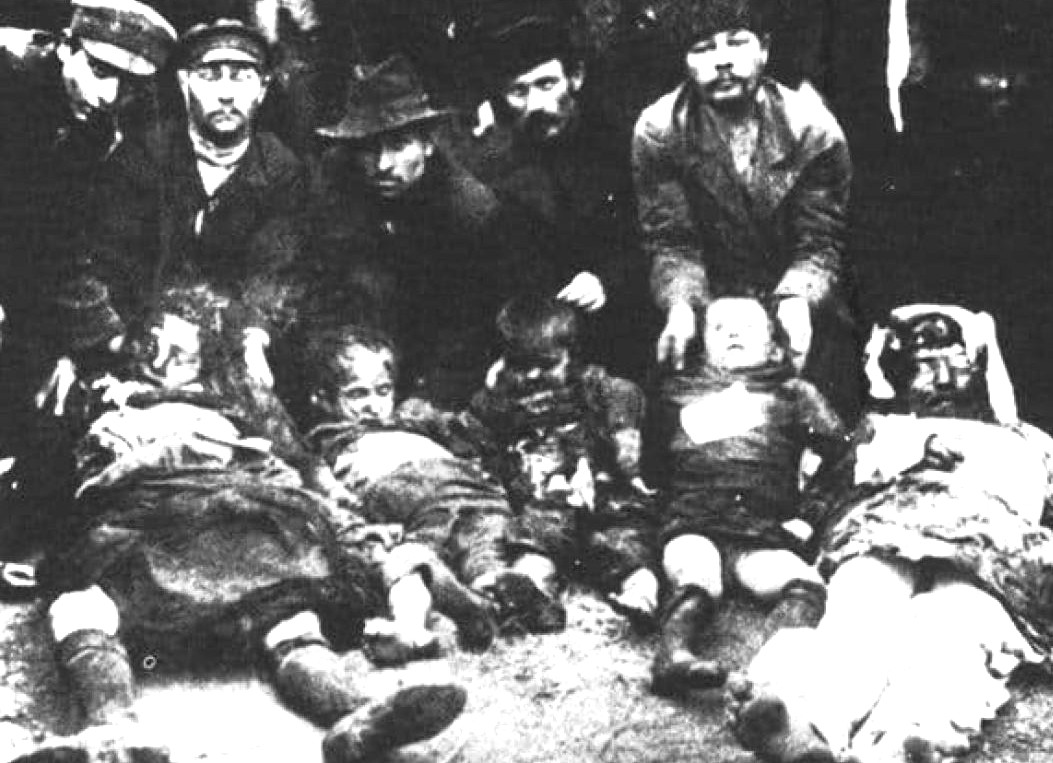
The idealist Nissan united himself with Polish and Russian socialists and anarchists, with Polish patriots and Soviet communists, but the result was always the same. Nissan was betrayed, handed over to the authorities, or abandoned, by his comrades, while death and misery followed in his tracks. The capitalist Simcha united himself with German industrialists, Polish aristocrats, the Tsarist - or Bolshevik regimes, but after initially gaining fortunes, he went bankrupt again and again – deep down, no one trusted a Jew.
Singer sensed in 1934 where Europe was going, and he knew that Eastern European Jews would once again be subjected to violence and contempt, whatever ideology they adhered to, whatever survival strategy they chose to follow, they were doomed. It did not matter what kind of person you were, good or bad, the ethnic stigma would still be mightier than you. Then, as now, ethnicity could mean the death of an individual – in Palestine, in Sudan and many other places. It is a plague that spreads easily and can poison any community.
Reymont, Władysław S:t (1927) The Promised Land. New York: A.A. Knopf. Singer, I.J. (2021) Josche Kalb. Frankfurt: Fischer. Singer, I.J. (2024) The Ashkenazy Brothers. New Milford, CT: Toby Press.


