On weekdays, the Roman square Campo di Fiori is filled with stalls, several of them selling fruit and vegetables, but most of them have over time been replaced by booths aiming at Rome's increasing tourist hordes and have accordingly been provided with all kinds of knick-knacks, t-shirts and tempting packaging of herbal mixtures, pasta, cheese, wine, grappa and the like.
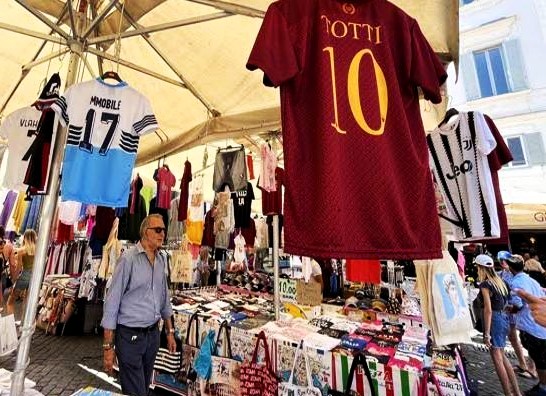
In the evenings, the remnants of this trade have been effectively cleaned away and now the tourist traps are instead tempting us with overpriced restaurants that line the square. At midnight, however, the calm has descended over the otherwise so tumultuous square.
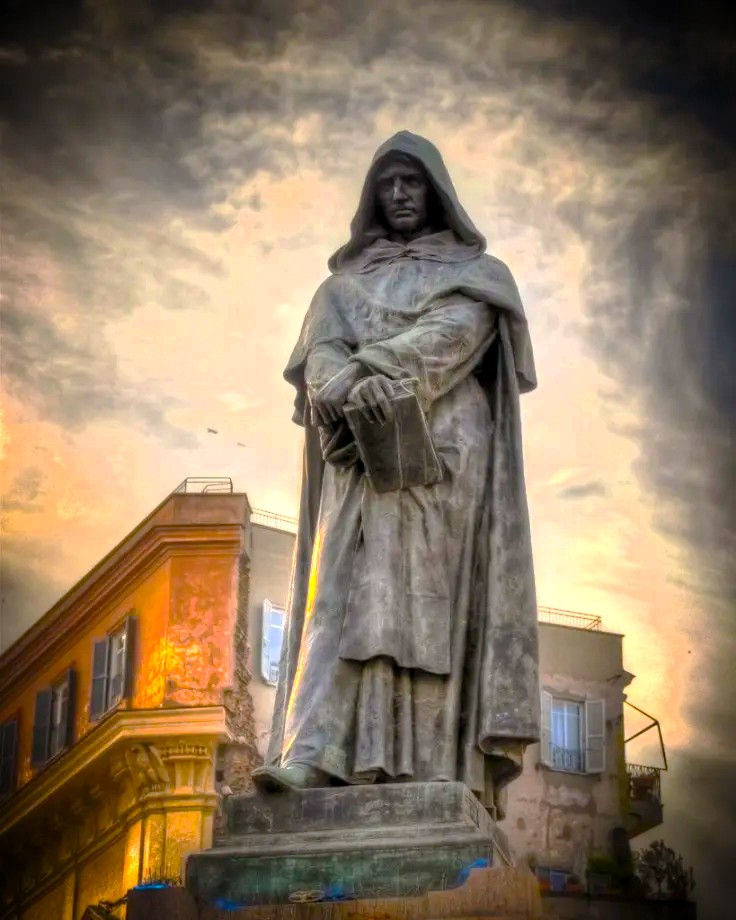
I came out after the last screening at Cinema Farnese, the cinema at one end of the square. It was drizzling and light from the lanterns were shining on the wet paving. In the middle of the square towers Giordano Bruno’s magnificent figure.
In the centre of Rome we find deserted alleys where no tourist has strayed and where you can feel the presence of the ancient city, how it breathes as if it was a living being. You can also find peace in places that had been buzzing with life a short time before, but where tranquility is then allowed to reign, such as there in front of Giordano Bruno where he mightily rises from his high pedestal looking down at us with inscrutable seriousness.
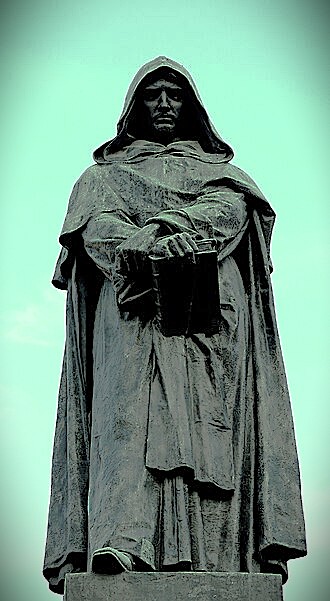
Could this really be an accurate representation of the real Giordano Bruno, who, according to eyewitnesses, was rather small in stature and whose appearance did not correspond to the intense self-consciousness which actually characterized him?
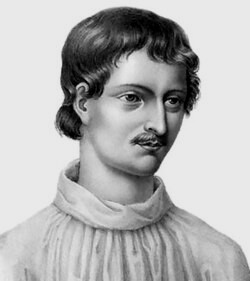
However, the impressive sculpture corresponds to the impression that the German pilgrim Gaspar Schopp had of him. Schopp was a former Lutheran who had converted to Catholicism and as a kind of penance had come to Rome for the Catholic jubilee of the year 1600. Fascinated by Giordano Bruno, Schopp had followed in his footsteps; from his cell to the final interrogation in the Basilica of Santa Maria Sopra Minerva, until he was later burned alive in Campo di Fiori.
At that time, Santa Maria Sopra Minerva, located in the heart of Rome, was connected to a Dominican monastery and thus also the centre of the Suprema Congregatio Sanctae Romanae et Universalis Inquisitionis, The Highest Holy Congregation of the Roman and Universal Inquisition. This institution was managed by the Dominican monk order and was considerably milder in its approach than its more famous Spanish branch. The Roman Inquisition based its rulings on rigorously conducted preliminary investigations and careful examination of witnesses.
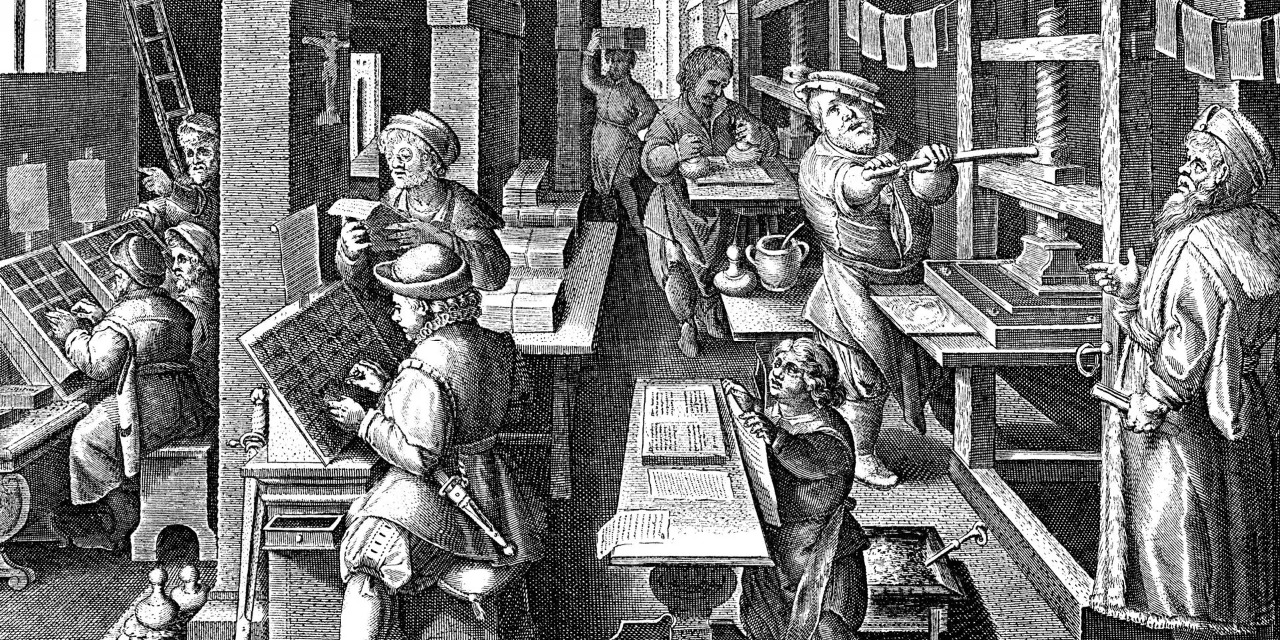
Since 1542, the Roman Inquisition had mainly acted in support of the Catholic Church’s counter-reformation against the spread of Protestantism. This meant not only that it investigated how teachings based on Lutheranism and Calvinism had infiltrated the Catholic Church, but the Inquisition also sought to curb “heresies” spreading through the increasingly numerous printing presses and reached people through books and pamphlets that were no longer written only in the Latin of Church potentates, but like most of Giordano Bruno’s writings also in vernacular Italian.
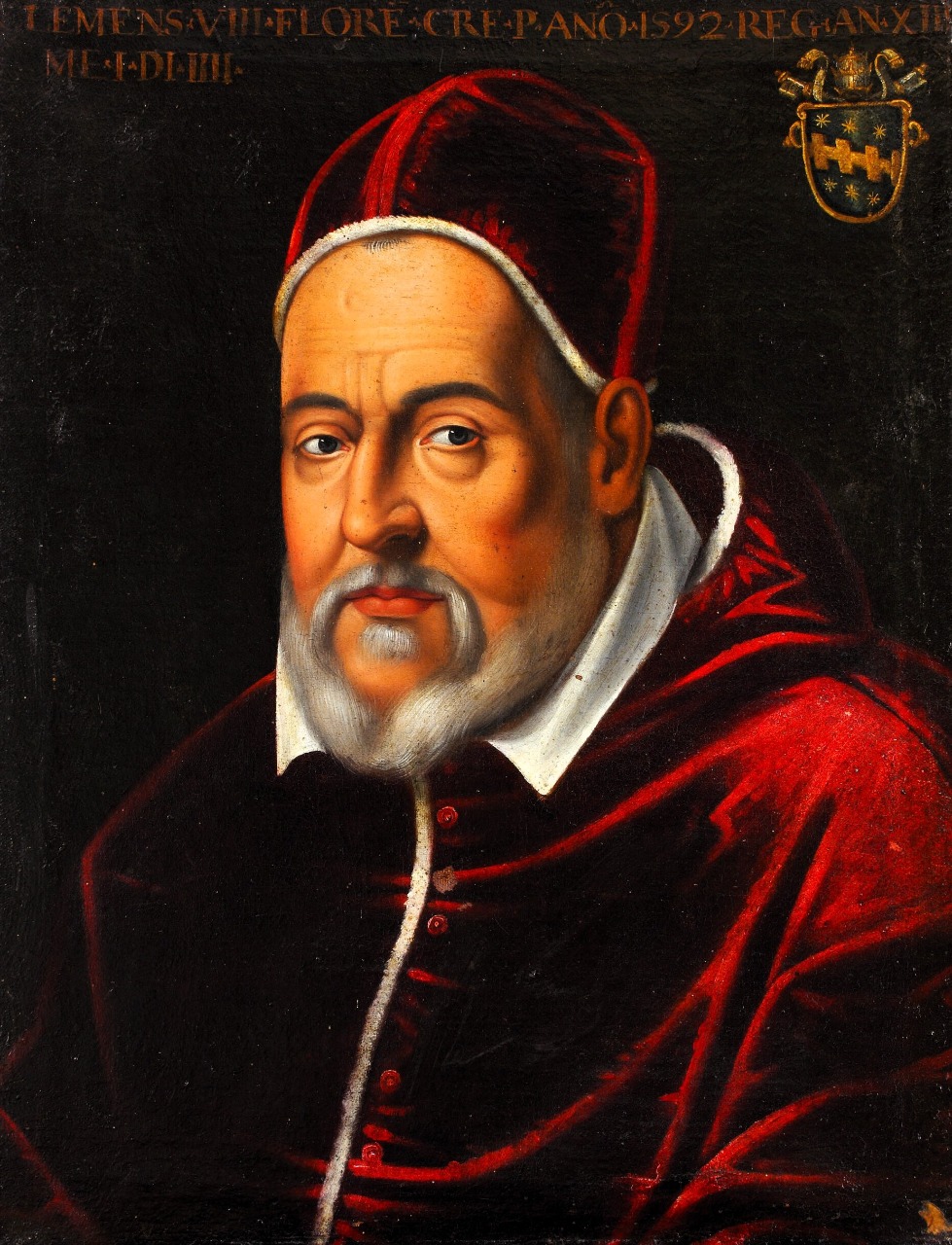
Pope Clement VIII (Ippolito Aldobrandini), who ruled from 1592 to 1605, fought relentlessly to unite the Catholics in a common struggle against the increasingly popular Protestantism and the looming Ottoman Empire. Something that meant that within his own Ecclesiastical State he fought fervently against the spread of what he considered to be “harmful” ideas.
Although Clement had ordered the Inquisition to be “frugal” with the death penalty, under his papacy, on the advice of the Inquisition, more than thirty “heretics” were burned alive within the Ecclesiastical State (the pope had to personally ratify all judgments of the Inquisition).
The trial of Giordano Bruno was public and among the spectators who thronged to listen to the final verdict was Gaspar Schopp who described how Bruno defiantly and uprightly, “proud as Satan himself” had proclaimed his anathema against his judges:
I dare say that you are more afraid of passing judgment against me than I am of receiving it!
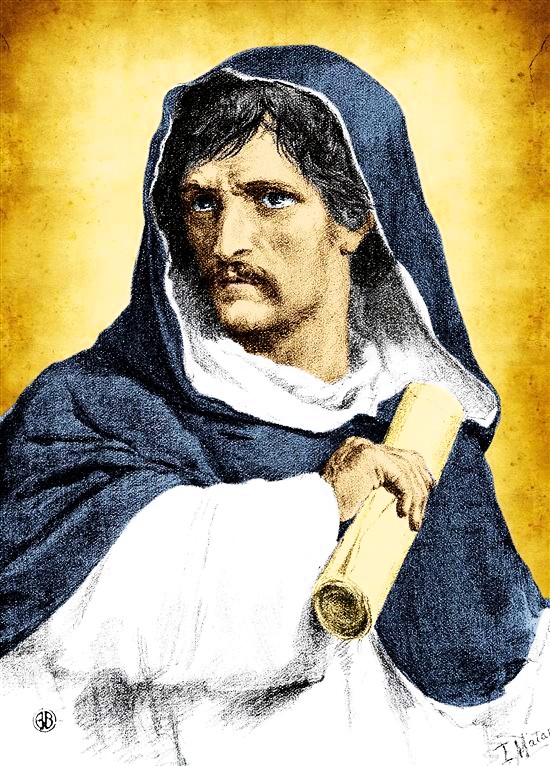
The sullen Bruno, who was known for his “unbridled eloquence”, burst out in accusations that among other things, quite rightly, established that his judges’ names would soon be forgotten, while his words and efforts would remain. It was probably this that, after the Inquisition handed Bruno over to Rome’s municipal leaders to carry out the death sentence, that they decided that Bruno had to be provided with a mordacchia, a kind of painful metal “mouth-lock” that prevented him from speaking.
Schopp felt no pity whatsoever for Giordano Bruno and concluded his detailed account of the philosopher’s last days on earth with the words:
Thus he perished miserably by being roasted alive, and he can now enter the fantastic worlds he dreamed up and there tell of how in this world wicked blasphemers are treated in Rome.
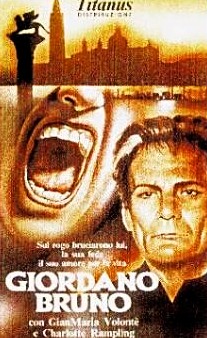
When I stood and watched Giordano Bruno high up on his pedestal, I remembered how I as a youngster had watched Giuliano Montaldo’s film about Giordano Bruno. I think it was excellent, at least in terms of portraying Giordan’s philosophy and the various legal proceedings. However, I was still somewhat disappointed because a few years earlier I had seen Montaldo’s stronger film about the miscarriage of justice that in the twenties had befallen Sacco and Vanzetti, with its evocative song by Morricone and sung by Joan Baez.
https://www.youtube.com/watch?v=R4xWbRBLj2I
At that time, I didn't know who Giordano Bruno was, but was attracted to the film by Sacco and Vanzetti and by the fact thatthe lead role was played by the excellent Gian Maria Volonté, whom I have seen in several spaghetti westerns.
It was after being shaken by the final scenes when Giordano was brought to the stake to be burned that I became really interested in this strange man and began reading about him.
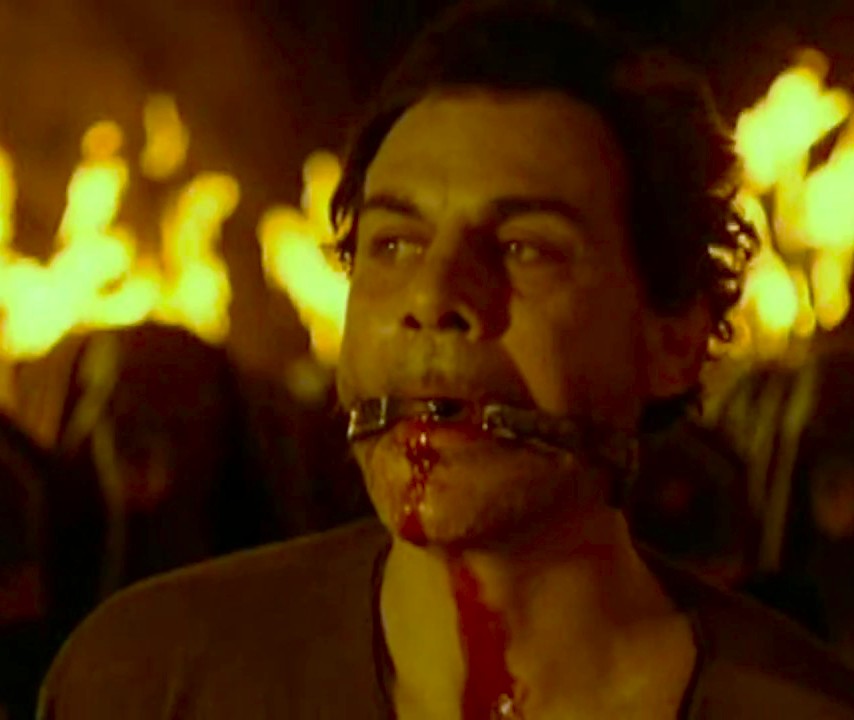
The episode below is in Italian and Giordano Bruno’s silent road to death begins after twelve minutes:
https://www.youtube.com/watch?v=VAGOv23SBz4
Montado’s film described in detail what had happened. Clement VIII had decided that the year 1600 would be a “jubilee” and by attracting the attention of the whole of Europe it would reflect the power and strength of the Catholic Church. Representatives of all orders of monks and nuns were commanded to Rome and pilgrims were promised forgiveness of sins and possibly reduced punishment in Purgatory.
Beds for one and a half million visitors were secured in churches, monasteries and specially established hospices. It has been estimated that more than two million visitors were attracted to Rome while it had been predicted that the year 1600 would be especially fateful, because it consisted of the sacred numbers nine and seven, several thousand times over. Number magic was common at the time and was applied both among ordinary people and by university intellectuals.
Giordano Bruno’s execution, although only one of many events, was thus well attended and he was accompanied on his painful path to death by long processions with representatives of a multitude of Catholic organizations.
The self-conscious Giordano Bruno stepped onto the scaffold, on which bundles of rice were being stacked, with a towering posture. When a priest held out the cross to him, he turned his head away in protest.
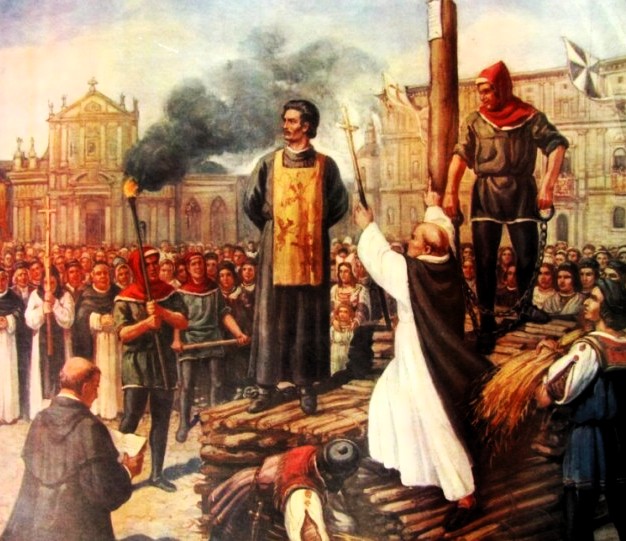
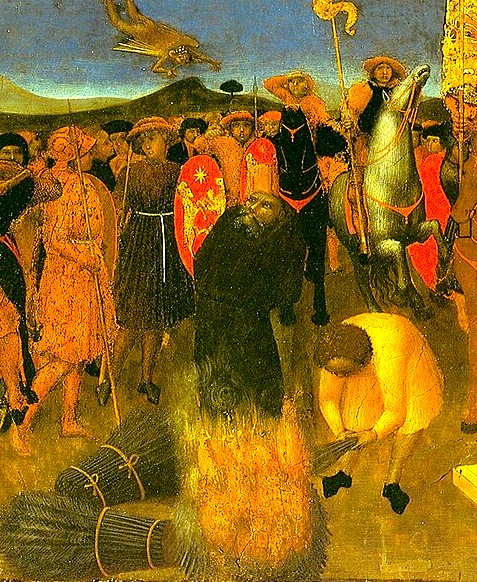
Giordano Bruno’s spectacular death at the stake became known throughout Europe and its memory lived on. However, as mentioned above, at the same time a number of other heretics had been burned alive. A man from a much simpler background who was executed for asserting views not entirely different from Giordano Bruno’s was the northern Italian miller Domenico Scandella, called Menocchio, who was burned alive a year before Giordano Bruno. His life story became public knowledge when the historian Carlo Ginzburg published his book The Cheese and the Worms: A 16th-century Miller's Thoughts on Creation, which was based on the Inquisition’s contemporaneous trial protocols.
It seems that Menocchio’s unconventional education may have originated in the art of printing and that he learned to read through one of the very few public schools that were not connected to any religious order. For example, the humanist Girolamo Amaseo, born in the town of Udine in Fieosle, Menocchio's home district, had founded a school in the early fifteenth century intended for
reading and teaching, without exception, of the children of citizens from both craftsmen and the lower classes, old and young, without payment.
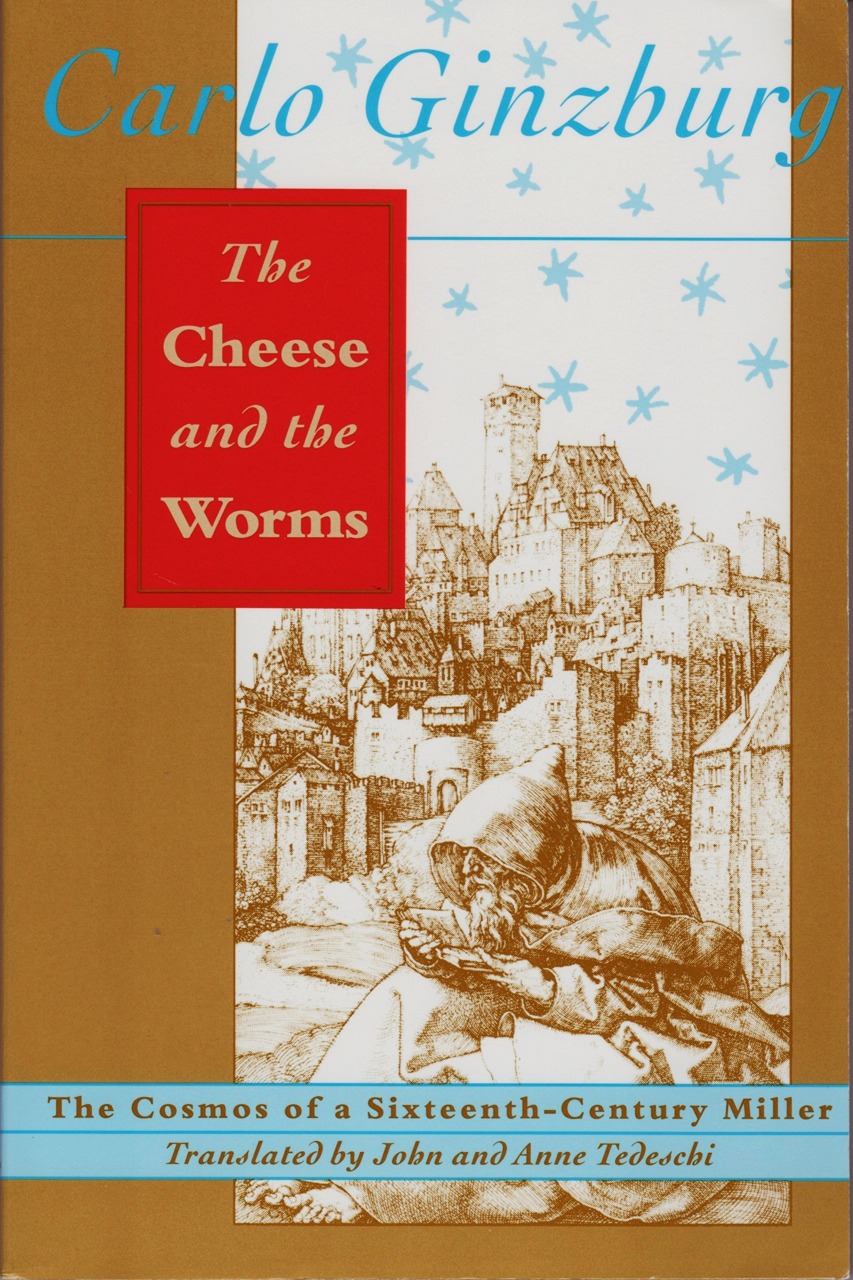
Through the books and pamphlets that came his way, Menocchio developed a critical philosophy, influenced by his own thoughts and local traditions. As punishment for spreading his ideas, he spent almost two years in prison, after repenting his sins he was released. After three years, however, Menocchio was imprisoned again and after a year of torture and harsh interrogations he sentenced to “death at the stake”.
Menocchio’s worst crime was that he preached that the clerics enriched themselves at the expense of the poor. That the so-called sacraments, controlled by the Church, were nothing more than instruments of exploitation resting securely in the hands of the corrupt, deceitful clergy. He explained:
I believe that the laws and commandments of the Church are part of a business endeavour and that the priests make a living from them. […] You priests and monks, want to know more about God and you are like the devil, you want to be gods on earth and know as much as God, you are walking in the footsteps of the devil. [..] I believe that God’s spirit lives in all of us and I also believe that anyone who has studied can become a priest. […] God has provided the Holy Spirit to everyone, to Christians, to heretics, to Turks, and to the Jews; and he considers them all to be dear to him, and they are all saved in the same manner.
This was unforgivable, anarchy – an attack on the entire Catholic power structure, indeed on religious power in general. Other things could be forgivable. That Menocchio had stated that Jesus was a man; that by his death he had not at all “redeemed mankind” from the original sin; that Mary was not a virgin; that the power of the Pope did not come from God but was invested in him by those who supporetd him; that Purgatory was invented so the clergy could make a profit from intercessions for the dead. He stated:
I meant that we should be careful to help each other while we are still in this world, because afterward it is God who rules over souls. Not us.
That Menocchio had strange ideas about life arising from decay, hence the parable of the cheese and the worms. Menocchio had studied how rotting cheese gave rise to worms. All creation had thus have to have a source and the world could not have been created from nothing as the Bible said. Even God was not eternal, he had probably once been created out of chaos.
All of this could be attributed to personal confusion and an unlearned craftsman’s devouring of heretical writings. Nevertheless, to doubt the Papacy’s right to power, wealth and knowledge – such heresies could only be punished by a painful death in the sight of others.
Giordano Bruno was in many ways different from Menocchio – multi-skilled and extremely well-read, a widely travelled doctor of theology, with a deep knowledge of both magic and the art of memory, so sought after at the time. Nevertheless, he also came from humble circumstances. His father had been a retainer for the Spanish army, but we know nothing about his mother other than her name, Fraulissa Savolina. In any of the thirty-eight writings he published, Giordano barely mentioned his parents.
However, he often mentions his hometown, the small town of Nola of Oskian origin and located between the castle-crowned hill of Cicala and Mount Vesuvius. In one of his poems, Giordano pays tribute to the flower-clad “Brother Cicala” and the bald “Brother Vesuvius”, only to in the next stanza describe how, after climbing the flowering Mount Vesuvius state that from there Cicala appeared to be bare and barren. An image typical of the great explorer and doubter Giordano Bruno, who constantly changed perspectives, while he wanted to get to know everything and interpret it in his own way.
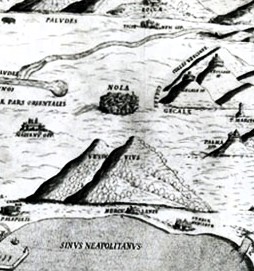
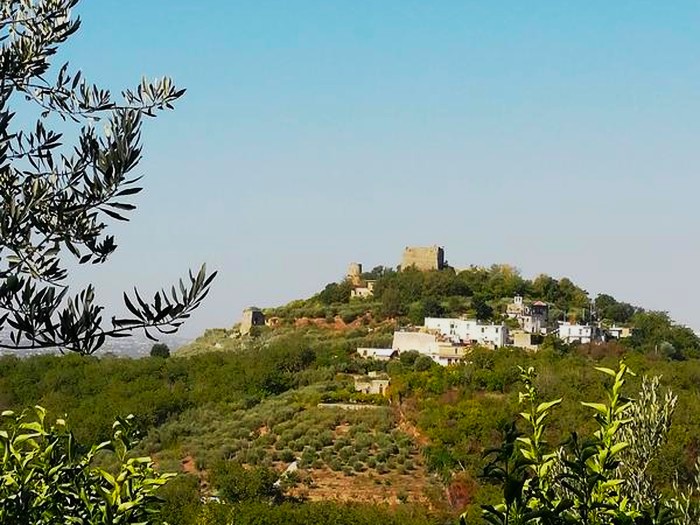
At the age of seventeen, Giordano moved to nearby Naples and settled in the monastery of San Domenico Maggiore, where he entered the Dominican order. To most of us, it may seem as if monastic life was confined and restrictive, but for a young man thirsty for knowledge, coming from a small town like Nola, it could very well have been a bewildering and liberating experience. The monastery of San Domenico Maggiore was also a very special place. It housed the University of Naples, founded in 1224 as Europe’s first non-denominational, non-sectarian, and state-funded university.
Its founder was the remarkable Emperor Frederick II, called Stupor Mundo, the Wonder of the World, a polyglot who spoke six languages and at his court gathered poets and philosophers, regardless whether they were Christians, Jews or Muslims, a fact that also characterized the university’s teaching staff.
Its extensive library must have been like heaven for a bookworm like Giordano. His fascination with this magnificence, this universe of human knowledge, perhaps influenced his later conception of the infinity of the universe and the wide range of the individual man’s ability to think and fantasize.
Giordano was not a democrat. He despised the ignorant mob, but at the same time he believed that knowledge might ennoble and change anyone. “We are already old,” he declared, “through books we have assimilated centuries of knowledge.” At the age of twenty-four he was ordained a priest and at the age of thirty-two he received a doctorate in theology at the University of Toulouse.
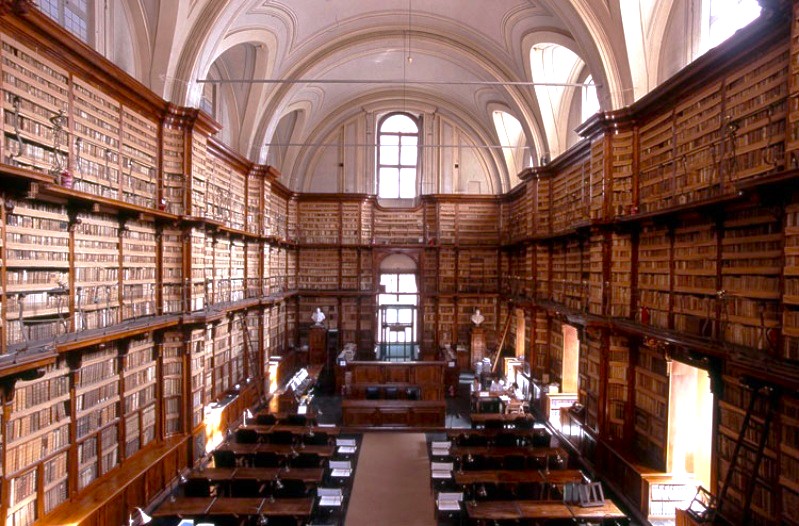
In the University Library of Naples there were translations of the writings of Muslim and Jewish philosophers, several of them ordered by Frederick II – most significant among them were The Book of Penance of the Soul, written by Ibn Sima, called Avicenna (980-1037), Ibn Rushds, called Averroës (1126-1198), numerous commentaries on the philosophy of Aristotle, and Guide for the Perplexed by the Jewish philosopher and multitasker Moses ben Maimon, called Maimonides (1135-1204). There were also a number of other philosophical and scientific writings by Muslims and Jews, in both original languages and in Latin translations.
Throughout his life, Giordano Bruno remained deeply influenced by the Neapolitan studies of his youth and not least the Dominican tradition in which he had been inculcated. The Dominican Order had been established by the Catalan Domenic de Guzmán (1170-1221). Although his order came to be known for its devotion to studies, Domenic himself believed that it was more important to spend a life in poverty and devote oneself primarily to the advancement of those who were ignorant of God’s greatness. Even if he was studying diligently for his ordination, Domenic admonished his superiors by stating “Would you like me to study these dead skins [parchments] when people around me are dying of hunger?”
Domenic made himself known for “converting” the Cathars who had survived the Albignesian Crusade (1209-1229) which had killed 200,000 of their co-religionists. Domenic saw it as his order’s primary task to fight the heresy that threatened the unity of the Catholic Church, and his order brothers thus came to be known as Domini canes, God’s dogs.
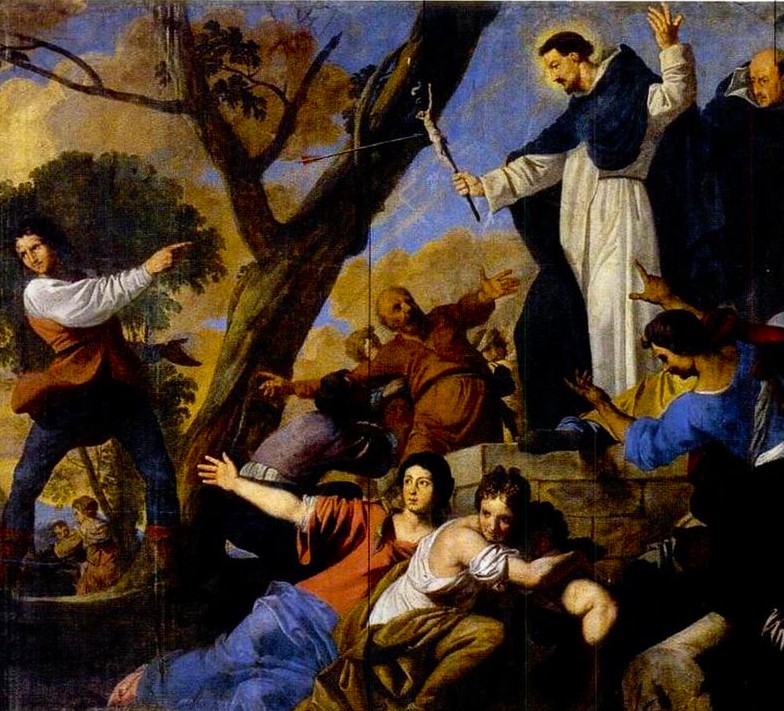
Although Dominic did not establish the Inquisition, his order became the leading force in this organization. As a preaching order, the Dominicans emphasized the importance of education in order to effectively proclaim God’s Word and respond to those who they felt were distorting it. This led them to study in depth not only the Church Fathers and ancient philosophy, primarily Aristotle, but also their Muslim and Jewish interpreters.
But, why Aristotle? Why Jewish and Muslim scriptures? In 630, Muhammad had triumphantly returned from exile to his native Mecca and after his death two years later the Muslims began their miraculously rapid conquest of neighbouring countries. In 636 Syria had been conquered, fourteen years later the mighty Persian Empire fell into their hands, Egypt was conquered in 642, Carthage in 697, most of Spain in 712, the conquest of Sicily and Calabria ended in 732.
The Muslims had created their empire with relatively little bloodshed. The victorious Arabs came from a mostly nomadic existence in a barren desert area and thus had limited experience of bureaucracy and the administration of the large tracts of land they had conquered. They initially had to rely on their subjects, most of whom did not mind serving their new masters. In Syria, for example, which population was mostly Nestorian Christians (considering God and Christ to be completely separate entities) had been discriminated against by their Byzantine masters, while people in most conquered territories appreciated the large tax breaks under the Muslims and their proclamation of the equality of all before Allah. Islam's teaching about the People of the Book (i.e., Jews, Christians, and Zoroasters) that exempted them from the requirement of conversion if they paid a certain tax, was also considered an advantage and under the Muslim empire a symbiosis developed between people of different faiths and their scientific traditions.
It was in such an environment that much of ancient philosophy came to be preserved and continued to be debated, while even influences from India and China enriched the thinking. Both Plato’s and Aristotle’s writings were available, but Aristotle’s more down-to-earth philosophy, which at the same time accepted the belief in an omnipotent deity, appealed more to the majority of Islam’s scholars than the teachings of the more esoteric Plato.
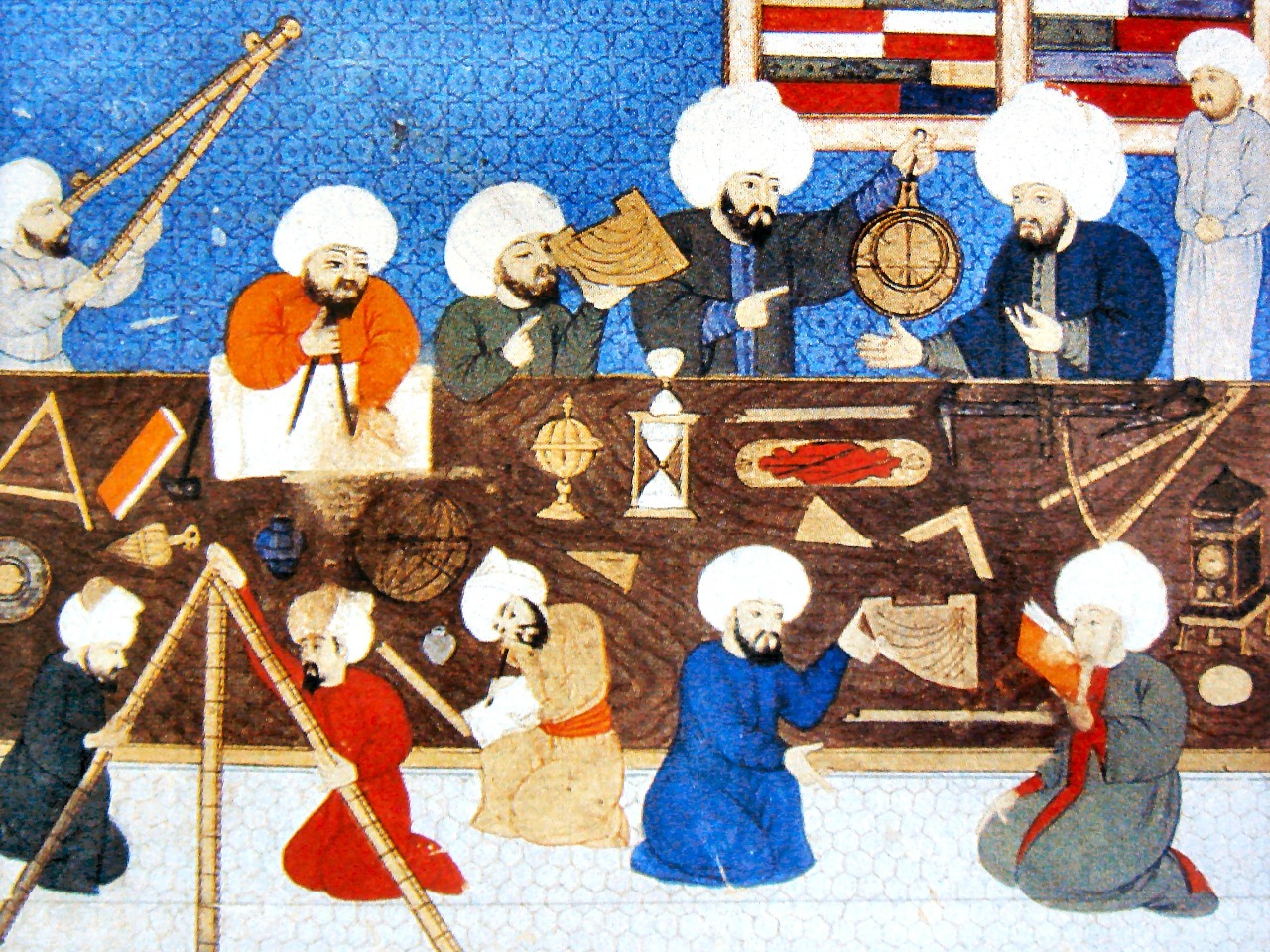
However, this did not mean that all was peace and quiet within the Muslim empire that soon split into different kingdoms and internal conflicts, but Islam did not, generally speaking, become the oppressive religion that Christianity developed into in many parts of Europe and the areas that their armies came to conquer. In some places, such as Al-Andalus, Muslim Spain, and southern Italy, intellectual exchanges between Muslims, Jews and Christians became great.
Avicenna wrote an extensive encyclopaedia describing and commenting Aristotelian and Neoplatonic philosophy, which came to gain a huge importance in Christiaan theology. His discussions on the relationship between universalities, i.e., thoughts and interpretations, and particularities, i.e., things and their properties, were of great importance to Medieval scholastics.
Avicenna’s life was similar to Giordano’s in the sense that his knowledge was extremely extensive, but was largely based on his predecessors in a variety of fields. Like Giordano, he came to spend his life as a n appreciated teacher, as a refugee and as a prisoner, misgivings often caused by his attacks on those that initially had favoured him. Avicenna was born in Bokhara, moved to Khorasan and ended up in Tehran. Sometimes he taught medicine, sometimes astrology, sometimes philosophy.
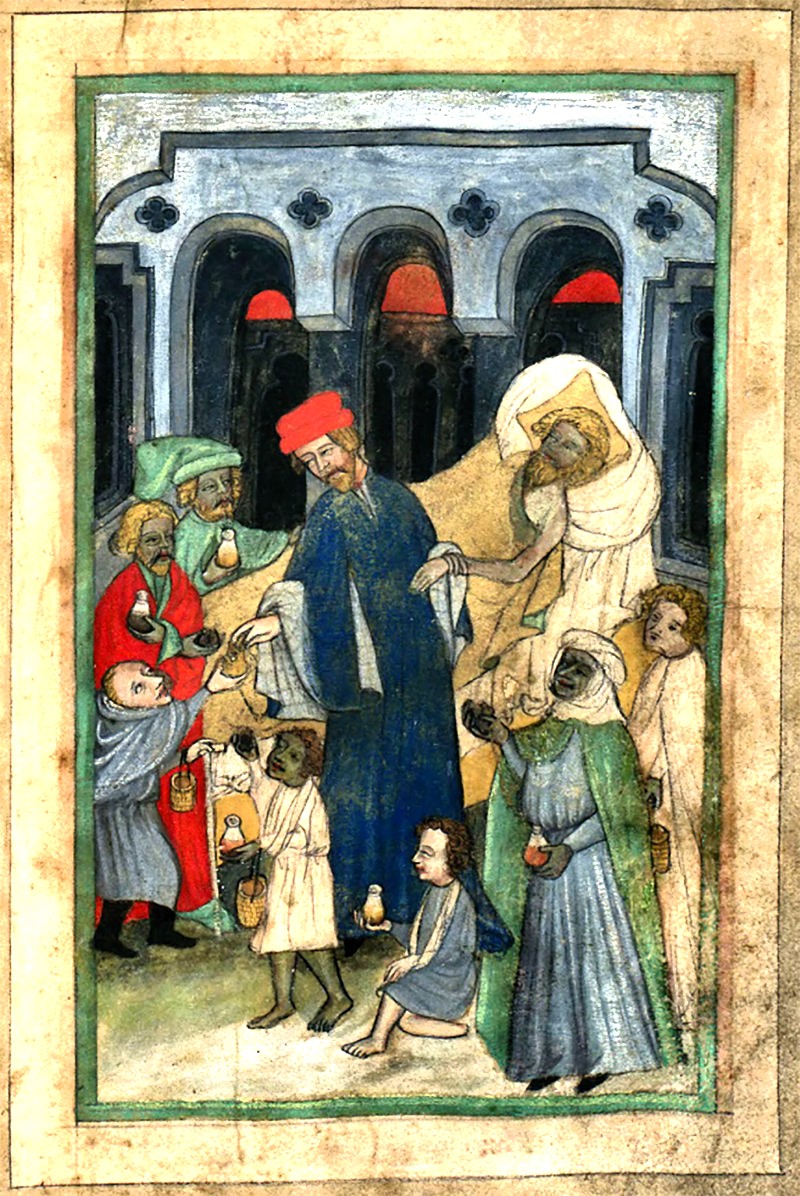
Avicenna’s medical writings were to be of great importance for Europe’s first medical school, founded in Salerno and in which several Muslim and Jewish physicians were active, while the writings of Hippocrates, Galen, Alī ibn 'Abbās, al-Jazzar, al-Malek, al-Haw, Rhazes, Isaac Israel, Abu-Bakr, Theodore of Antioch and Dioscorides Padanio, were translated and applied.
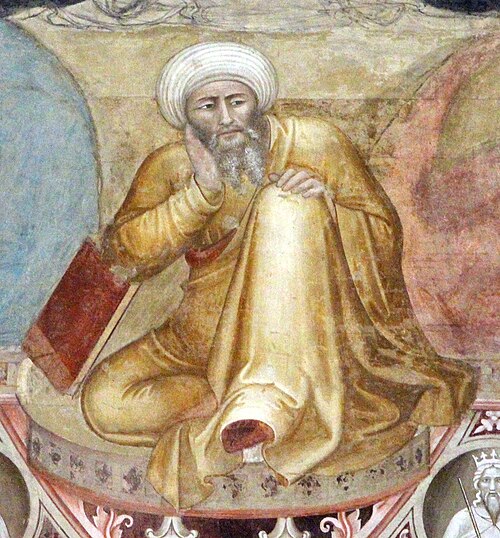
Averroës was born in Cordoba, but was later expelled to Marrakech. He became the foremost introducer of Aristotle in Europe. His opinion that bodies cannot arise after death was hotly debated. According to Averroës, the “personal” soul does not survive but merges into a larger unity, which also includes God, who does not have a bodily form.
He believed that the existence of God can be proved by logic and science and that no “revelation” is required to realize his presence in the creation. Knowledge and truth are immortal and identical with the Godhead. Averroë’s teachings were condemned and he was forced to flee to Morocco.
The Jewish philosopher Maimonides taught that God is present in all of His creation, in both spirit and matter. God’s all-embracing essence is incomprehensible to us mortals, but it makes it possible for Him (It?) to create from nothing. The divine force is one with motion, but nevertheless exists as an ultimate and immobile force both within and outside its own creation.
The most famous student and teacher at the University of Naples when Giordano arrived there had been the quiet titan, both in size and learning – Thomas Aquinas, often called "The Bull from the South". Thomas Aquinas was canonized 250 years before Giordano was enrolled at the university.
Incidentally, it is strange, especially considering the poor roads and perilous sea voyages of the time, how international the teaching staff of the major universities actually was. In Naples, for example, Thomas Aquinas had been taught by Martinus de Dacia, whose real name was Morten Mogensen and who was born in Ribe in Denmark. Mogensen had been a canon at Lund Cathedral, died in Paris and is buried in Notre Dame.
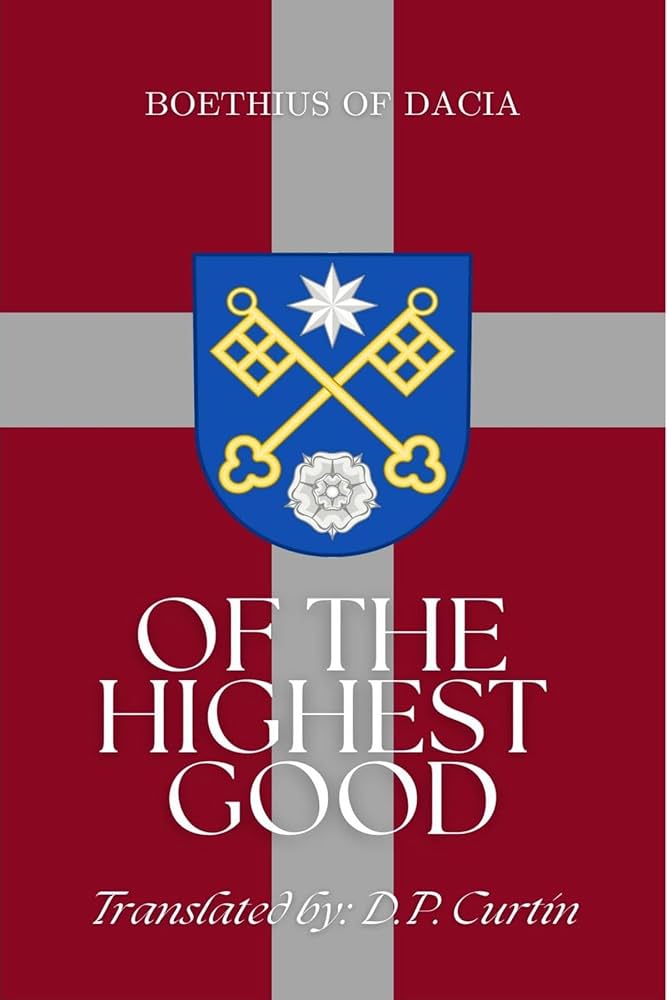
During his third stay in Paris, Thomas Aquinas debated with Boethius de Dacia, who was of Danish, or perhaps Swedish, origin. Boethius was dismissed from the University of Paris and ended his life as canon in Swedish Linköping.
Thomas Aquinas attacked Boethius because, unlike him, he made a great distinction between faith and knowledge. According to Boethius, they were two different paths to God, of which faith was the most reliable. In his book De summo bono, On the Highest Good, Boethius stated that what distinguishes man from animals is his intelligence and since this is the best in man, he should cultivate his intellect in such a way that he realizes that being good to his neighbour is the best way to serve and understand God. A way of thinking that Giordano came to share, but which led to Boethius having to leave Paris and seek refuge in Sweden.
Giordano would often write about and argue against both Aristotle and Thomas Aquinas, whose beliefs and philosophy were often a mere reflection of the views of Avicenna, Averroës and Maimonides, even if Thomas often attacked their teachings, for example in his great work Summa contra gentiles, Summary against the Gentiles. In this book, Thomas arranges all knowledge into two categories:
- Beliefs available to natural reason; namely, the existence of God, moral laws, and human immortality, and responsibility for others.
- Christian mysteries that go beyond human understanding and might be proven only by Christian revelation, such as the doctrine of the Divine Essence, the two natures of Christ, the power and authority of the Church, and the holy sacraments.
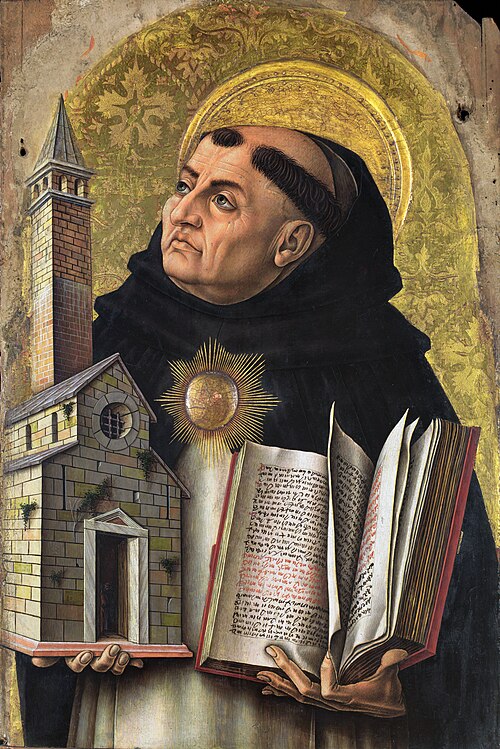
Here Giordano’s views differed from St. Thomas’ – God exists, but beyond human reason. He/It is the living force of the Universe, present in all its parts. The moral laws are not eternal, but are created in different places, among different groups of people, and for different purposes. However, Girodano agreed with Thomas that we humans have a responsibility for each other and the world in which we live. However, unlike Thomas Giordano rejected the death penalty, torture, and war, and did not, like Thomas, believe that monarchy was a guarantor of law and order
According to Giordano, the Christian mysteries had as much or as little truthfulness as, for example, Platonic philosophy or Hermeticism, but these, according to him, were nevertheless more logical.
Some of the Christian beliefs were obviously absurd, such as the virgin birth of Mary, the doctrine of transubstantiation, and the three-parted nature of God. Jesus is not identical with God and the Spirit has no form, but is rather synonymous with God in his all-encompassing, cosmic essence. Giordano added that the universe is infinite, has no center, and includes an enormous number of solar systems within which the planets move around their suns and may even harbour some form of life. Moreover, time has neither beginning nor end.
Interestingly, Thomas Aquinas dealt with the same questions in his influential writings Summa contra gentiles and Summa theologicae, Summary of the Science of God. They were all influenced by ancient philosophers, some of whom had come to the same conclusions as Giordano, some of whom had reached others.
However, Thomas Aquinas’ conclusion was definitive – we can prove the existence of God by logic, and even if some mysteries are beyond our comprehension, our personal faith, strengthened by the Papacy and its administration of the sacraments, helps us to rest safely in the certainty of God’s presence in his creation. Something Giordano could not possibly agree with
Giordano has been described as self-confident and arrogant, something that made him come into conflict with both mentors and friends. However, his knowledge and the ease with which he acquired all kind of knowledge were noticed early on. Perhaps he was greatly helped by the mnemonic methods that he had developed.
Mnemonics, memory training, was a sought-after knowledge and while Giordano was still a novice in Naples, he was summoned to Pope Pius V to instruct him in various methods of memory training.
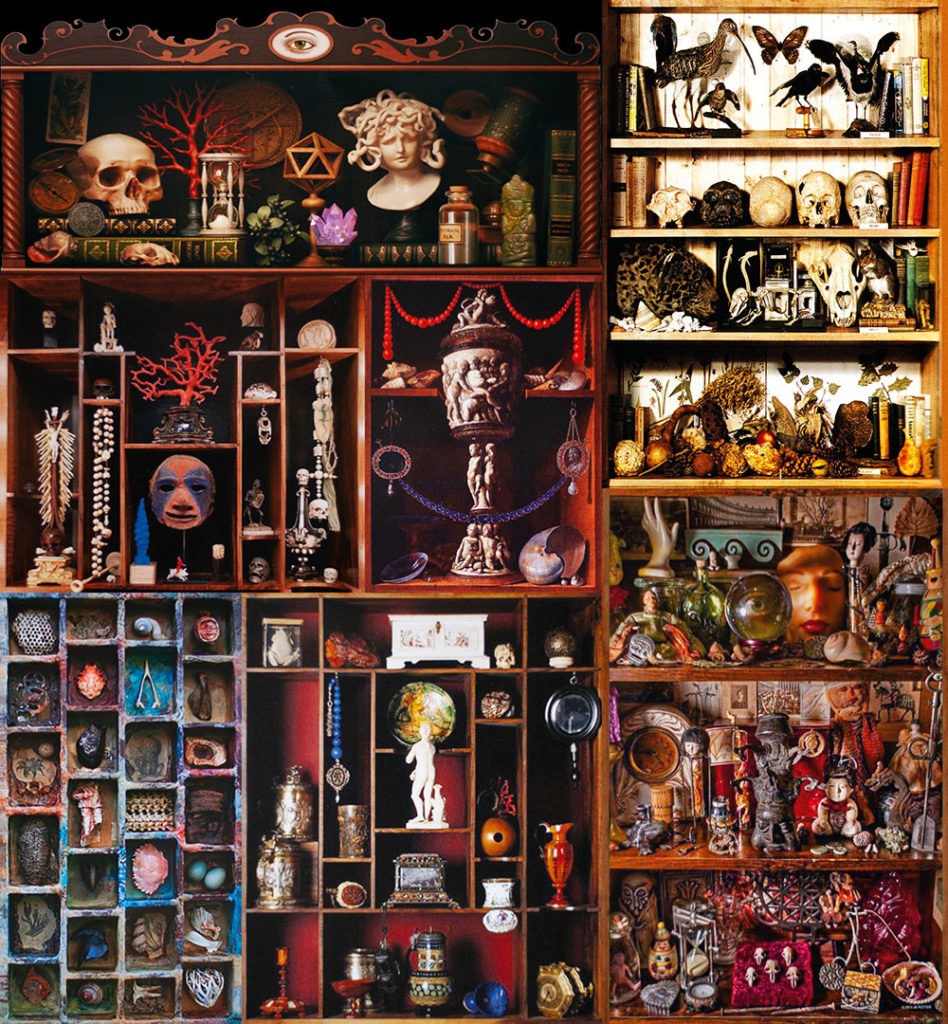
Like ancient Greek and Roman forerunners, Giordano seems to have primarily used “place-bound” mnemonics. The most common method then was to imagine a “memory palace” where rooms, walls, windows, statues, furniture, etc., each had been associated with certain names, phrases, events, or ideas, often by using different layers of symbolic images. To recall memories, you had to place them in your memory palace and you could then in your imagination pass through the rooms until you found where you had placed a certain “memory object”.
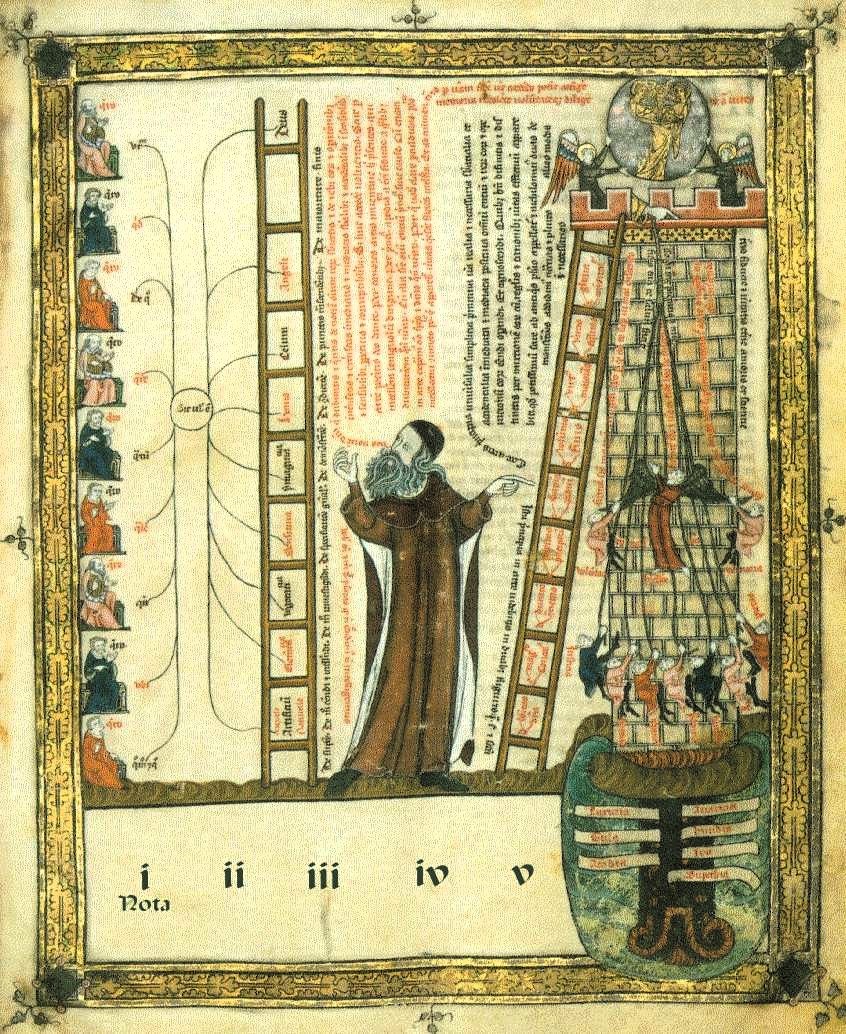
Giordano supplemented such site-specific mnemonics with his own mathematically constructed “mandalas” for which creation he had been inspired by the remarkable Ramon Llull (1232-1316). Another of the medieval thinkers who had been inspired by Arabic mathematics and philosophy.
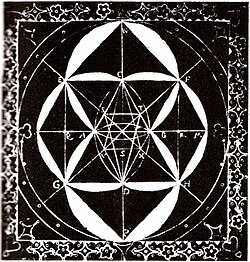
In his Ars compendiosa inveniendi veritatem seu ars magna et major, The Concise Art of Discovering Truth, or the Great and Greatest Art, Llull connected basic concepts through diagrams and figures in accordance with a kind of mechanical logic that he achieved primarily through the reading of Arab philosophers such as Al-Ghazali. Llull was born and lived most of his time on the island of Menorca, where in his time there were still a number of resident Muslims and Jews.
Llull strove to assimilate so much knowledge through his mnemonic methods that he would convince prominent Muslims to convert to Christianity. To get financial support for his ideas, he travelled around the European princely courts. He also bought a Muslim slave who taught him Arabic. On three occasions, Llull travelled to Tripoli and tried, without much success, to convert Muslims.
Llull argued that Christian missionaries could not possibly influence Muslims unless they first thoroughly learned their culture and language. In 1311, at the ecumenical meeting in Vienne, he succeeded in persuading Pope Clement V to order the establishment of Hebrew, Arabic, and Aramaic institutions at the universities of Bologna, Paris, Oxford, and Salamanca.
In Naples’ large monastic library Giordano devoured everything that aroused his interest, not least its many writings on magic and occult methods for predicting the future and transforming metals. Even if the Bible forbade all forms of magic, astrology and alchemy were practiced in most of Europe’s royal and princely courts, and experts in these fields were in great demand, as were the often very exclusive and lavish books that dealt with such subjects. Even Thomas Aquinas preached against magic, astrology and alchemy, his teacher, Albertus Magnus, was a recognized authority in these fields.
Giordano’s extensive knowledge of mnemonics and magic came in handy as he in later years wandered between different universities and princely houses. However, not all literature and knowledge were viewed kindly, and after his ordination to the priesthood in Naples, Giordano began to worry that evil tongues were slandering him, suggesting that he held heretical views and, perhaps worst of all, could be a Protestant in sheep’s clothing. When asked why he had no images of saints but only a crucifix in his cell, Giordano replied that he found such knick-knacks meaningless. What does a picture say? When it comes to spiritual things, it is something you carry within yourself, not something that is created from the outside. Such statements smelled of heresy and the fears seemed to come true when someone found one of Erasmus of Rotterdam’s writings in the lavatory filled with Giordano’s notes. When he heard that an indictment was being prepared against him, Giordano fled head over heels.
At first, Giordano dressed in civilian clothes, but when he arrived in Turin, he found it difficult to make a living outside his order. He sought out the Dominicans, who convinced him that he did not need to worry, and again he dressed as a Dominican, visiting Dominican monasteries while writing and publishing his writings. In Venice, Giordano, with the consent of the Dominicans, published a notable but now lost work – The Sign of the Times, which was apparently an attack on the growing Protestantism. He went on to Padua and Bergamo and finally ended up at the University of Lyon. For unknown reasons, he did after after a few years go straight into one of the strongholds of Protestantism – Geneva.
Perhaps Giordano had as usual become enemy with one of his university colleagues. In any case, he made contact with the infamous Italian Galeazzo Caracciolo, Marquis of Vico. The nobleman Galeazzo had early on come into contact with Italian theologians who later had converted to Protestantism, and as he often stayed at Charles V’s court in Augsburg, Galeazzo took the opportunity to immerse himself in the writings of Luther and Calvin. When the emperor became aware of Galeazzo’s heretical views, he left his family and fled to Geneva, where Galeazzo became a good friend of Jean Calvin, divorced his wife, remarried, became a member of the city's two-hundred-man council, and founded an Italian congregation.
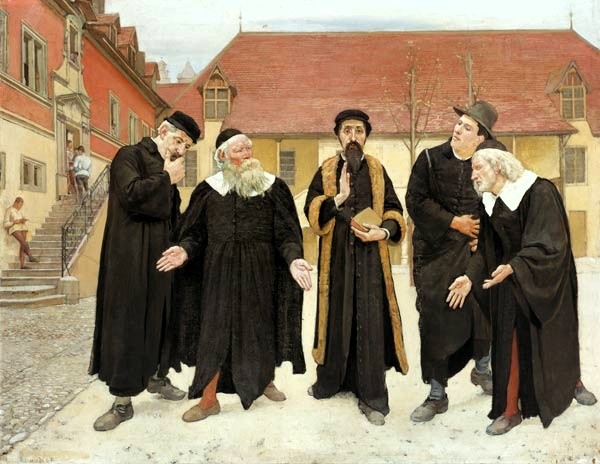
Galeazzo received Giordano with open arms, gave him a sword and civilian clothes, while Giordano enrolled as a teacher at the University of Geneva. Later, Giordano explained that
I had no intention of adopting their religion. I only wished to remain there so I could live in freedom and safety.
Calvin had returned to his native city in 1541, and during his first five years as town leader thirteen people were hanged, ten beheaded, and thirty-five burned alive. However, this was quite modest compared to Mary Tudor, who in 1555 burned 280 Protestants.
When Giordano arrived in Geneva 25 years later, everything was calm and quiet, though somewhat boring, Christmas had been abolished and a police force ensured that high morals prevailed among the citizens, many of whom had fled persecution in the surrounding Catholic countries, among them several well-known Italians.
Soon, Giordano found himself in trouble. He published a pamphlet attacking Antoine de La Faye, head teacher of philosophy and good friend of the university's powerful rector, Théodore de Béze. Both Giordano and his printer were immediately thrown into prison and the pamphlet were destroyed. After public confession and apology Giordano was exiled. He surely remembered how Michael Servetus was burned alive in 1553 for denying the Trinity, a dogma that Giordano did not believe in either.
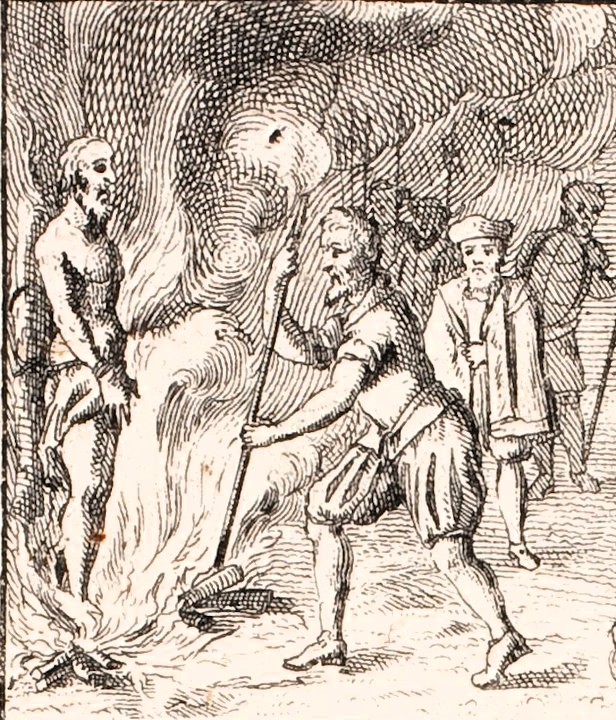
After returning to France, Giordano enrolled at the University of Toulouse, where he received a doctorate in theology. He wanted to improve his tarnished reputation by being allowed to wear the Dominican robes again, but when he contacted Catholic potentates to obtain guarantees of his Catholic faith, it was flatly refused.
As Giordano found the religious conflicts to be troublesome at the University of Toulouse, where he had been appointed lecturer in philosophy, he moved to Paris, where his contacts arranged thirty well-attended public lectures on theological subjects. Giordano´s reputation as a memory master eventually made him come into contact with King Henry III.
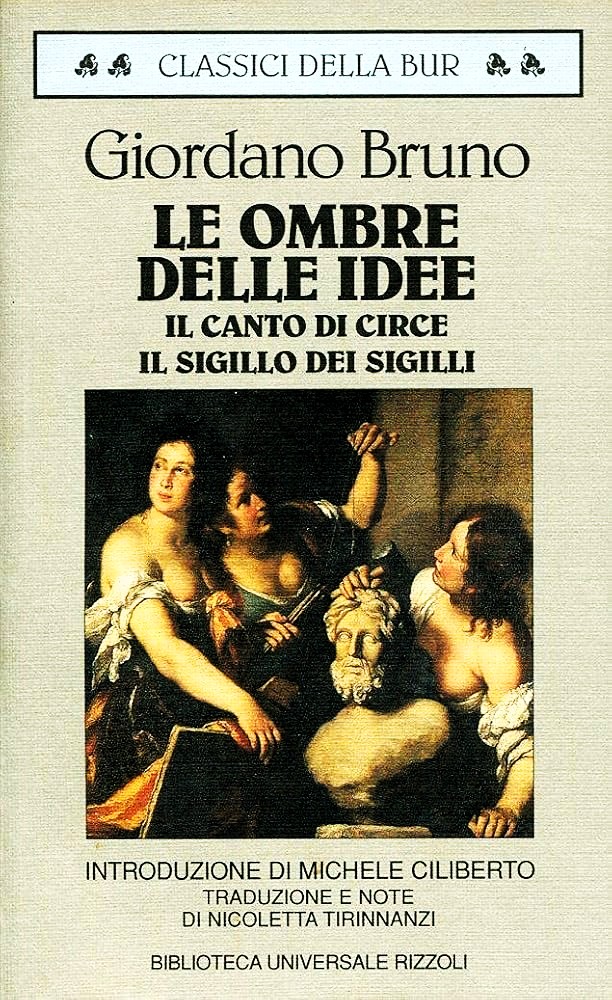
I got such a name that King Henry III called me one day to know if my memory was natural, or acquired by magic. I convinced him that it did not come from witchcraft but from organized knowledge; after this I had a book on memory printed with the title The Shadows of Ideas, which I dedicated to His Majesty. Immediately he gave me an extraordinary lecture assignment.
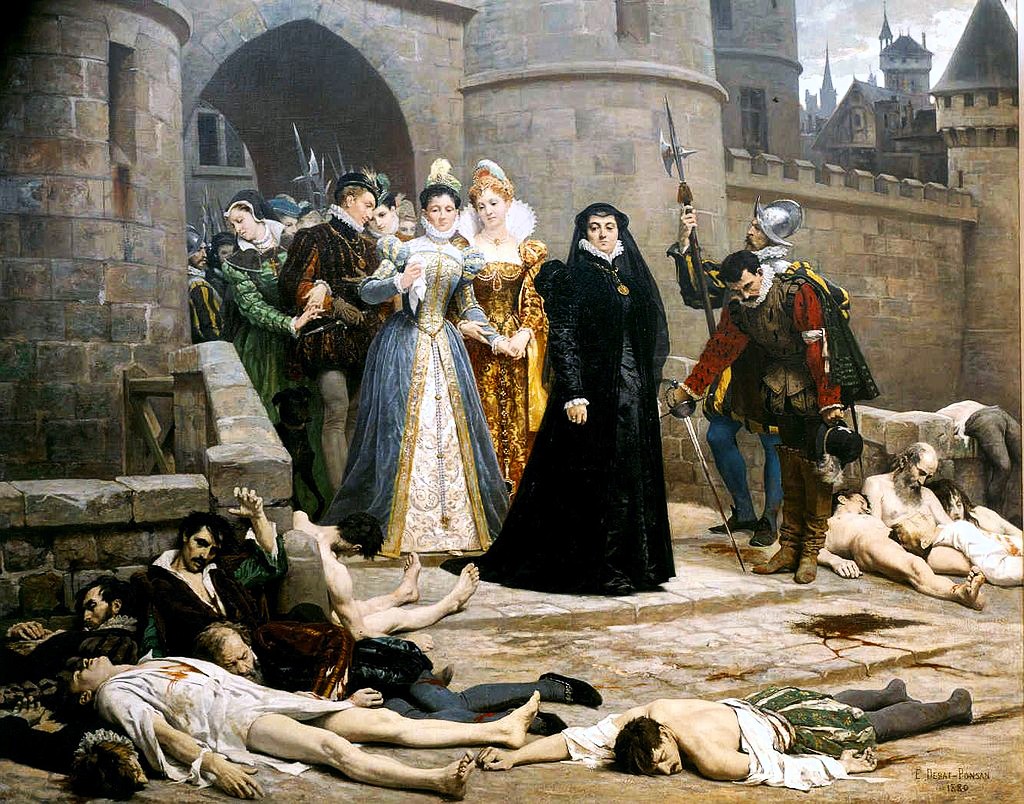
Henry III was a monarch entirely to Giordano's liking – educated, tolerant and extremely reluctant to wage war. This is in contrast to his fanatically bloodthirsty mother, Catherine of Medici, who, tired and irritated by the machinations of the Protestant Huguenots, had told her son Charles IX: “Then kill them all. Kill them all!" The consequence was the bloody San Bartholomew massacres when between 5,000 and 30,000 Huguenots, men, women and children, lost their lives.
In Paris, Giordano began a productive literary period. Among other things, he wrote three voluminous works on the art of memory, one of which, Circe's Song, which, in addition to being a philosophical treatise on mnemonics, introduced in an imaginative dialogue format a number of moral themes that Giordano would often return to in his later works, especially in his Spaccio de la bestia trionfante, Expulsion of the Triumphant Beast, which became the main reasons to why he was later sentenced to be burned alive.
In Circe's song, the sorceress Circe casts a spell on people turning them into animals. In a dialogue with her handmaiden Meri, she explains she did so to demonstrate how people harbour a bestial nature within themselves which is inadequately covered by a thin intellectual veneer. Circe emphasizes the importance of keeping memories alive in order to remind humanity of their capacity to assimilate knowledge, and here Giordano incorporates a variety of methods to improve memory.
At the same time, he emphasizes that if man does not cultivate his intellect, his bestial nature breaks out, and even if it then might take on moral and religious aspects, the result will unfailingly be violence and intolerance. The transformation of humans into bests is not a coincidence, but the result of stupidity and thoughtlessness that emerge from our denial of the divine symbiosis that exists between the universe and an individual. Something that becomes evident through a profound knowledge of the true nature of things.
Rumors began to spread about Giordano’s association with Henry III, whose tolerant attitude was suspicious to both Catholics and Protestants. The slander told how Henry III was engaged in homosexual and magical-satanic rites. Admittedly, Henry III, like his mother, Catherine of the Medici – who was known to be obsessed with astrology and prophecies – acted within a court culture that was heavily influenced by mystical and magical interpretations of the world. However, it seems that the rumors about Henry III’s homosexuality and involvement in magical rites were unfounded, and although Giordano Bruno was well acquainted with magical methods, he did in his writings generally demonstrate nothing but utterly contempt for them.
Incidentally, the magicians, alchemists, and astrologers who worked at the European courts were seldom the shabby charlatans they are often portrayed as. Most of them were profoundly serious practitioners of the magical arts, and the multitude of lavish books produced for the European princely courts testify to their authors’ familiarity with a multitude of writings in Latin, Hebrew, Greek, Aramaic, and Arabic, and even the influence of Indian philosophy. These books are also filled with in-depth and demanding instructions on how practitioners of magic should live and proceed.
At the same time, there was no shortage of ironic satirical writings about charlatans drawn to gullible princes. Rabelais did in his Third Book of Gargantua & Pantagruel makes fun of Master Trippa, who well versed in the numerous magical arts of his time, serves the princely houses through predictions and tricks, while he is completely unaware of his promiscuous wife’s escapades. With great expertise, Rabelais recounts Master Trippa’s activities, all the time allowing his protagonist Panurge to pour his contempt upon him.
Giordano Bruno was probably no stranger to throwing blue mist in the eyes of gullible patrons, but at the same time, like Rabelais, he was open in his contempt for magical charlantry, for example in his play The Candlemaker, which he published in Paris.
In its original, the play is rather incomprehensible since Giordano used a language that poked fun at the jargon of uneducated people, as well as that of pretentious intellectuals. Through his play, Giordano wanted to portray the deceitfulness of his time. How people hide the true selves and seduce each other through their overconfidence in money and magic.
The comedy takes place in Naples where Bonifacio confides in his friend Bartolomeo that he is in love with Vittoria. Bonifacio is avaricious and Bartolomeo a cunning alchemist, who together with his friend, the wizard Scaramuré, claims to be able to make Bonifacio desirable. Another acquaintance of Bartolomeo is the scribe Manufurio, who helps Bonifacio with the writing of love letters to Vittoria. He does it in such a way that Bartholomeo's cynical servant Sanguino characterizes the letters as being written by a devil who expresses himself
like a grammuffo [thicket?] or catacumbaro [burial place?] and poisons heaven and earth with its delegante [?] and latrinesco [shit-latin].
In the course of their efforts, Bonifacio and Bartolomeo are constantly deceived, robbed, and beaten. This despite the fact that the greedy Bonifacio believes that money will save him from every mishap:
Money is everything. Anyone who lacks money lacks not only stones, herbs, and words, but also air, earth, water, fire, and life itself.
The wiser Vittoria scoffs at Bonifacio and asserts that, contrary to time, money has no power.
Time takes away everything and gives everything; Everything changes, nothing is destroyed. Anyone who waits for time, wastes time. Time is always there, available to do whatever we want with it. Time is relentless, it continues to change everything without giving anything, but at time also restores balance and whoever knows how to take advantage of it succeeds in life.
According to Vittoria, Bonifacio does not know himself and therefore things are constantly going badly for him. His overconfidence in the power of wealth means that he has not understood that it is judgment, diligence and perseverance that are rewarded. Anyone who assumes that money is everything easily falls prey to fraudsters, thieves and prostitutes.
At the end, Bonifacio disguises himself as the handsome artist Gioan Bernardo, Vittoria’s friend, believing that through this disguise he will be able to seduce her with the magic tricks that Bartolomeo has provided him with. Instead, Bonifacio is confronted with his wife Carubina, whom Vittoria disguised herself as.
In the spring of 1583, Bruno traveled to England and with a letter of recommendation from Henry III he was graciously received as a guest of the French ambassador, Michel de Castelnau. Along with Giordano, Giovanni Florio was also a guest at the French embassy.
Florio was well known in England and introduced Giordano to his intellectual acquaintances. Florio had translated Montaigne and Boccaccio into English and published an extensive Italian-English dictionary. It was certainly Florio who introduced Giordano to the handsome and influential poet and soldier Philip Sidney, who was a close friend of Queen Elizabeth. Sidney was a member of the hermetic circle of John Dee, Elizabeth’s court astrologer and advisor, although there is no evidence that Giordano met with Dee.
Giordano was considered to be one of Europe’s foremost connoisseurs of Hermetism. This was a philosophical tradition that derived from a legendary, Egyptian figure – Hermes Tismegistus, who sometime in Ptolemaic times had been created by combining the gods Hermes and Thoth. This religious-philosophical system encompassed a wide range of esoteric knowledge, with aspects of alchemy and astrology. The writings attributed to Hermes Trismegistus are generally called Hermetica and were written during a period ranging from 200 BCE to 1200 CE.
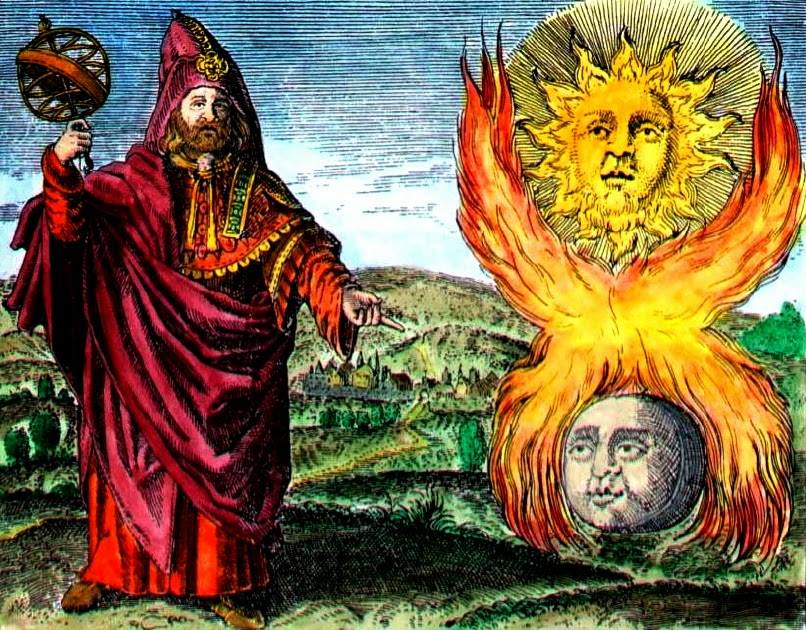
Hermeticism came into vogue in Europe after Renaissance philosophers such as Giovanni Pico della Mirandola and Marsilio Ficino had come across Greek texts transferred from Constantinople and other Greek territories being conquered by the Turks. Giordano considered Hermetism to be a source of ancient wisdom that could be harmonized with Christian teachings and classical philosophy. The Hermetic emphasis on the divine nature of humanity and the potential for spiritual enlightenment aligned well with the ideals of the Renaissance and Giordano ideas about human dignity and the pursuit of knowledge.
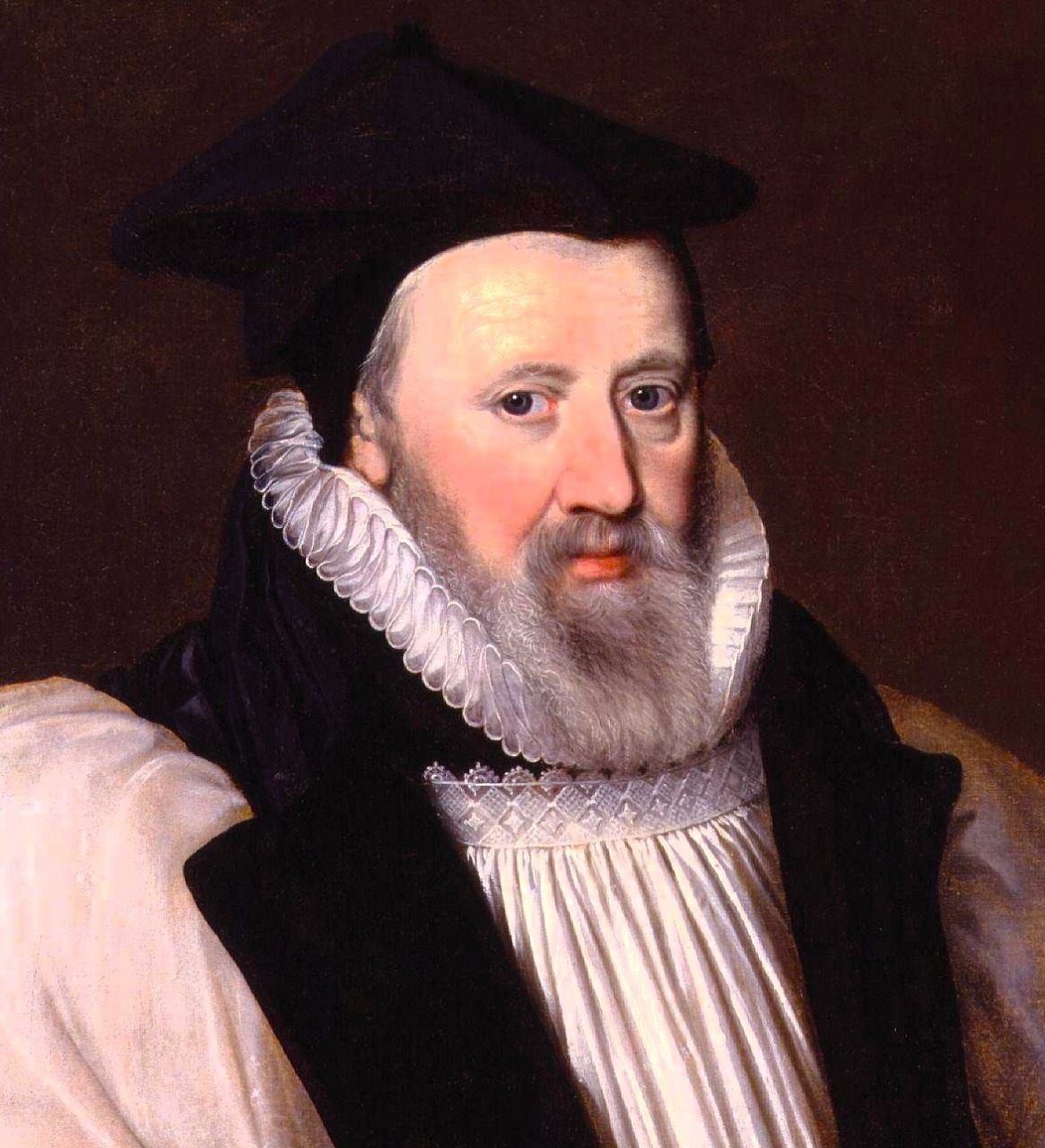
Giordano lectured at Oxford on esoteric subjects, but soon came into conflict with George Abbot, later Archbishop of Canterbury. Abbot mocked Giordano for supporting
Copernicus’ opinion that the earth was spinning and the sky stood still; when in fact it was his own head that was spinning around and his brain that was not standing still.
In addition, when Abbot accused Giordano of plagiarizing and misrepresenting Ficino’s hermetic works, and after being denied permanent employment at Oxford University, an enraged Giordano left England and returned to France.
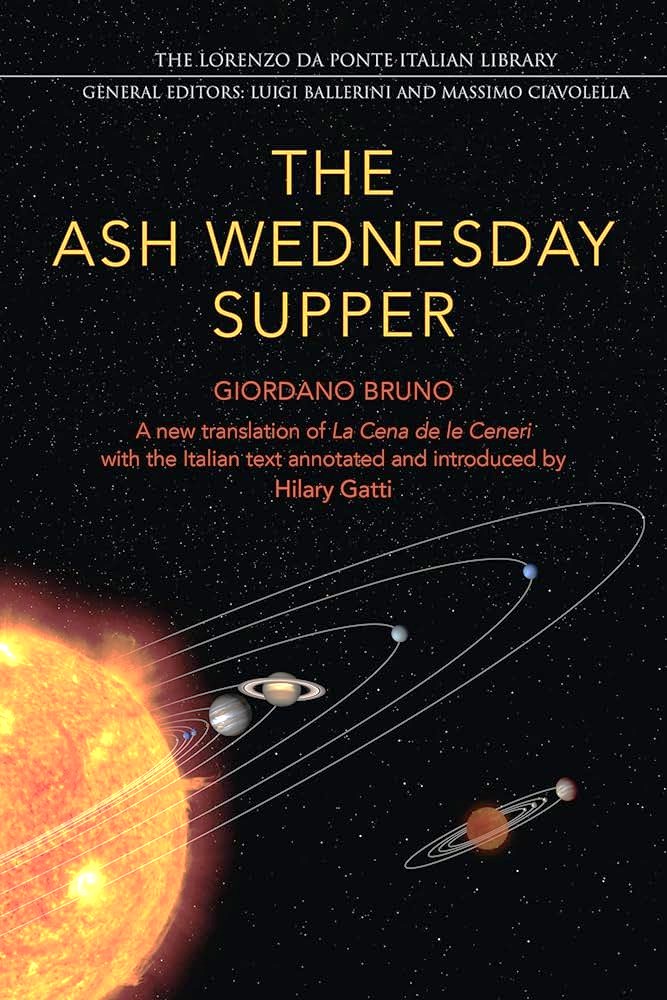
However, he had in London previously written and published his six most acclaimed “moral dialogues” – La cena de le ceneri, The Ash Wednesday Supper, De la causa, amministrazione et uno, About Cause, Management and Unity, De l'interno, Universo et ordini, Abou the Interior, the Universe and Order, Spaccio de la bestia trionfante Expulsion of the Triumphant Beast, Cabala del cavallo peagaseo, Kabbalah of the Pegasus Horse, and De gli eroici furori, Abot the Heroic Furies. Note that all these works were written and published in Italian. Some of them were printed in secret, while their title pages claimed that the books had been printed in Venice or Paris, several of them were smuggled into Italy. Some of the works caused offense already in England, especially The Ash Wednesday Supper
That work is divided into five dialogues with four protagonists, among whom Teofilo can be considered the author’s spokesperson. The nobleman Sir Fulke Greville invites to supper on Ash Wednesday Teofilo, Giordano himself, Giovanni Florio, a knight and two Lutheran academics from Oxford. It seems that the dinner really took place and before the Venetian Inquisition, Giordano stated that it had been at the French ambassador's home.
Before the dialogue begins, Giordano excuses himself by asserting that it was not his intention to offend either the academic community or the English nation. His target had exclusively been the opinions expressed by the two academic dinner guests.
In The Ash Wednesday Supper Giordano takes us far beyond the heliocentrism of Copernicus. Without being an astronomer, he says he has intuitively sensed that the stars we see in the sky are only apparently stationary. Out there in the Universe are an infinite number of suns that are constantly moving in accordance with laws we have not yet learned to understand.
These flaming bodies proclaim the glory and majesty of God. As we look at them, we are inspired to seek their cause. They are the true and living traces of an infinite force. We realize that we cannot seek this power far beyond ourselves, it is in fact quite close, yes – it is within us all and there it is greater than ourselves. Just as beings who might exist in other worlds do not find the ultimate cause beyond themselves, they nevertheless have it within them. The moon is no more heavenly to us, than we are to the moon.
The divine is thus within us, within each of us, including the inhabitants of other worlds, and just as we observe the moon in the sky, so the earth will appear as an alien object if viewed from the moon.
When he wrote The Ash Wednesday Supper, Giordano was well aware that he thereby came into conflict with the institutions of the Church, that he denied the Holy Scriptures. His purpose was to try to reconcile “true philosophy” with Christian faith, or at least to explain that they were not in conflict with each other. According to him, religious writings dealt with moral questions and then used explanatory metaphors that were linked to the reality in which their authors lived. This was the reason why Jews, Christians, and Muslims drew different conclusions from their holy scriptures, but beyond the metaphors there was a real reality common to all.
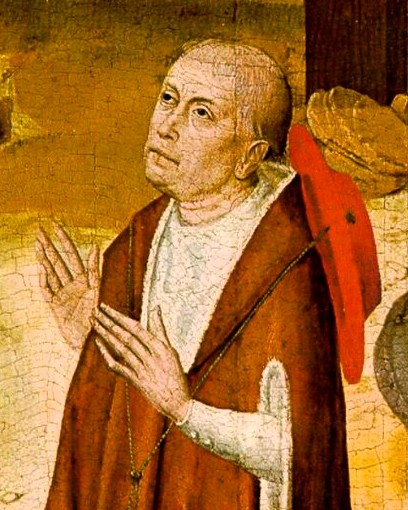
Giordano readily admitted that his ideas about an infinite universe were not at all unique. They had been hinted at earlier in several Hermetic writings. The well-read Giordano also pointed out that the German Catholic Cardinal Nicolaus Cusanus in a pamphlet De Docta Ingnoranitia, On Learned Ignorance, had already in 1440 hinted at the possibility of an infinite universe and extraterrestrial life. Giordano called him “the divine Cusanus”.
The 1913 edition of the Catholic Encyclopedia stated:
The cardinal’s astronomical views were scattered among his philosophical treatises. They demonstrated complete independence from traditional teachings, based as they were on numerical symbolism, letter combinations, and abstract speculation. According to him, the earth was a star like other stars and not the centre of the universe. It was not at rest and its poles were mobile. The celestial bodies were not strictly spherical, nor were their orbits circular. The difference between theory and real appearance was explained by the influence of motion. If Copernicus had been aware of these claims, he would probably have been encouraged to publish a monumental work of his own.
Back in Paris, Giordano continued with his habit of making enemies. He again appeared as a Dominican and officially expressed his admiration for Thomas Aquinas, but could not refrain from publishing an anti-Aristotelian pamphlet in Latin, called Centum et viginti articuli de natura et mundo adversus peripatetico' s One Hundred and Twenty Theses on Nature and the World directed against the Peripatequeans. Perípato was the name of the Athenian garden where Aristotle had given his lectures.
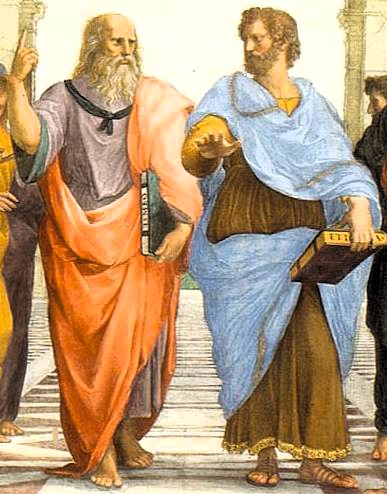
When Giordano presented his pamphlet at the Collège de Cambrai, the lecture degenerated into a violent riot. Aristotle was still popular among Parisian students, while Giordano had come to resent Aristotle's lack of ”spirituality, something he had found to be stronger in Plato. This makes me think of Raphael’s fresco The Athenian School where Plato points to the sky, while Aristotle points to the surrounding world.
Under the leadership of a young lawyer, Roul Callier, who had shouted that Giordano was a “Brutus”, his lecture ended with a general uproar. The ongoing French political and religious crisis and the lack of support from the hard-pressed Henry III caused Giordano to leave France for Germany.
In Germany, he worked for two years as an employee at the University of Wittenberg, where he mainly lectured on Aristotle’s philosophy. However, Giordano soon found Lutheran intolerance suffocating and sought refuge in the court of Rudolf II in Prague. He assumed that this original emperor, with his aptitude for both occultism and modern science, would receive him with open arms, but even there Giordano proved too controversial to be employed at the famous Universitas Carolina.
He dedicated to Rudolf II a pamphlet with the Latin name Articuli centum et sexaginta adversus huius tempestatis mathematicos atque philosophos, One hundred and sixty Theses directed against Current Mathematicians and Philosophers. In his dedication, Giordano wrote to the emperor that he believed that in order to solve the world’s problems, tolerance in both religion and science was necessary:
The religion I practice excludes discord and does not incite controversy. Philosophy should be freed from predetermined authorities and traditions, which have been elevated to normative precepts. I have sought refuge from the stormy waves at the free altar of philosophy and desire fellowship only from those who want to open our eyes. I don't like to hide the truth I see, nor am I afraid to openly assert my opinions.
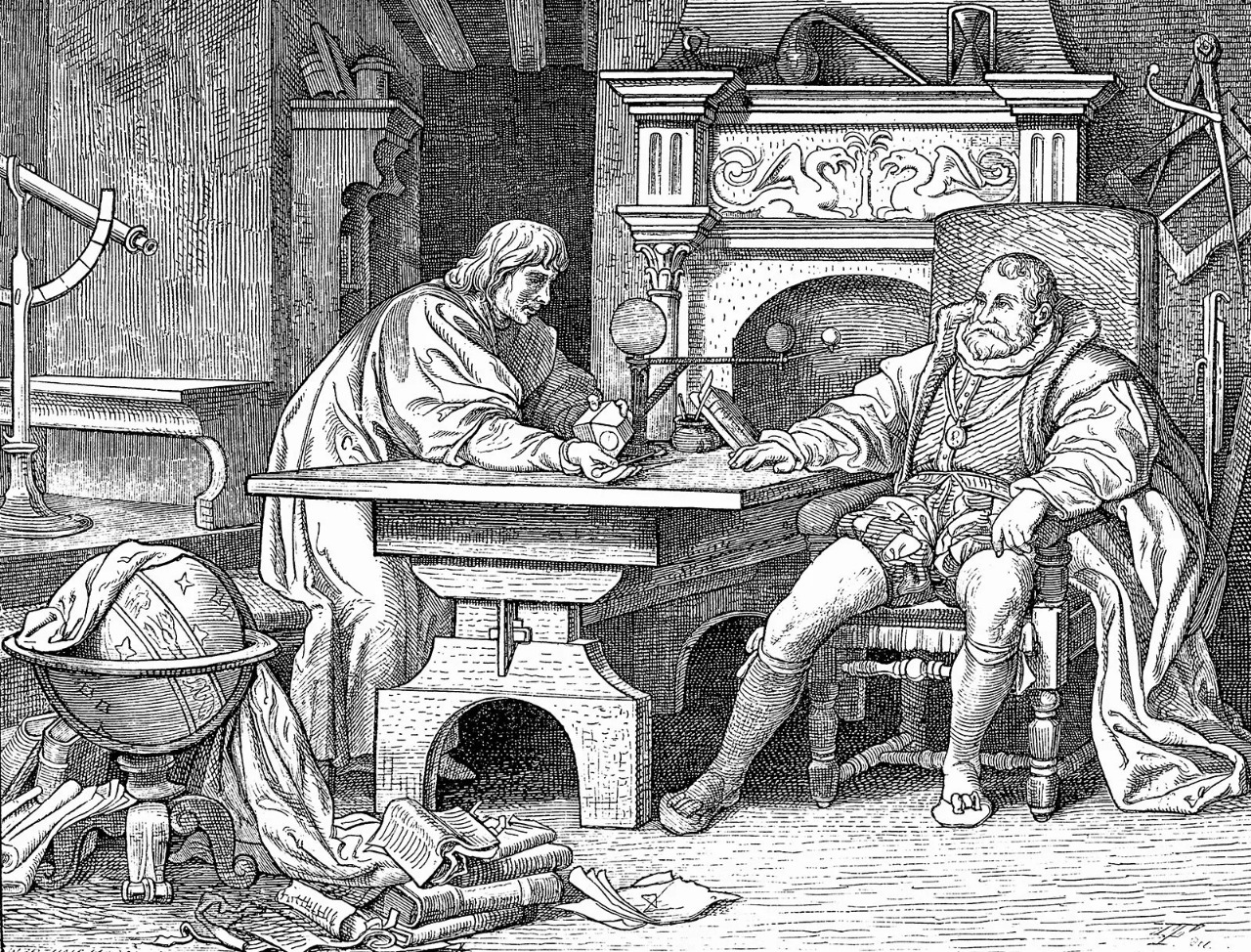
To show his appreciation, Rudof II gave him 300 thalers, the equivalent of four years’ wages for a skilled craftsman, but that was all. Giordano went to the University of Helmstedt where he was offered a position at The Academia Julia. After the death of the academy's founder, Giordano was excommunicated by the head of the city's Lutheran church, but despite the excommunication he was allowed to remain in Helmstedt and wrote several works on magic.
According to this book, “magician” was the same as keepers of knowledge stewards in other cultures, in a bygone era and such wise men had all believed in the presence of a Divine Oneness, which he defined as a “Cosmic spirit”, a “World Soul”, as well as an ”Inner Mind”. Magic al practice searched for a universal principle that gave life, movement, and meaning to the entire Universe. The ancient magician strove to communicate with this presence through “intermediate stages”, an activity that Giordano described as the ascension from the particulars to an all-embracing Deity. A path from the multifaceted to the One. Such an activity was no stranger to the multitude of magical instruction books in circulation at the princely courts of the time, propagating methods that were applied by a permanent staff of astrologers and alchemists.
Magic, according to Giordano, was the study of the “multidimensional” web that constituted the Universe. A tapestry consisting of faith, signs and symbols, that actually could be perceived with the help of our senses. However, our concepts and our attention had to be honed with the help of all the imagination and knowledge we find in literature and through an open conversation with like-minded people.
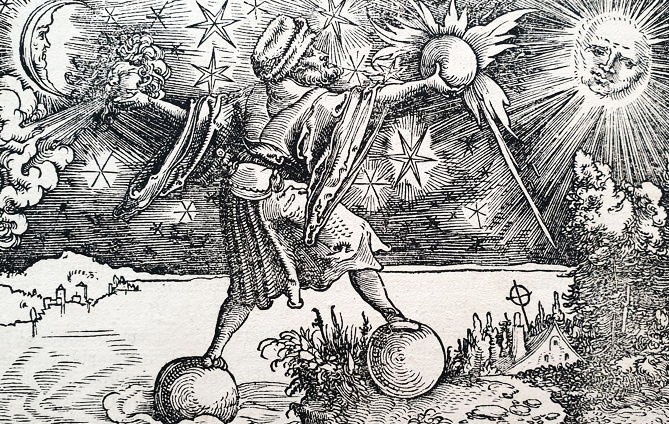
In 1591, Giordano left Helmstedt and settled for a time in a monastery in Frankfurt where he wrote the so-called Frankfurt Poems, the culmination of his philosophical research.
Perhaps Giordano’s methods of memory training were an attempt to master the chaos of small things and to put them in harmony with the eternal infinity of the Universe. All in accordance with Hermetism’s basic idea that the small reflects the big, and vice versa.
In the poem Minimum, Giordano stated that all matter was in a state of constant change, thus giving life to an infinite Universe. The atom, the smallest part of matter, was animated by its motion by the same Spirit whose laws governed the universe. Thus minimum and maximum coincided—atom-God; finite-infinite.
Physical reality could not be separated from a metaphysical one. In the Universe, everything was connected and governed by the same laws. All in accordance with the hermetic clause “as above, so below”.
While in Frankfurt, Giordano received an invitation from the Venetian patrician Giovanni Francesco Mocenigo, who had read the poem Minimum with interest and wished to be taught the Art of Memory.
The Venetian Inquisition was not as strict as its Roman counterpart and the Republic of Venice was considered to be the most liberal state on the Italian peninsula. Giordano made the fatal mistake of returning to Italy and arrived in Venice in 1592.
He settled in the home of Giovanni Mocenego. For two months, Giordano served as tutor to the inquisitive Mocenigo, who generously paid him for his services and subsistence. Careless as always, the eloquent Gordano let his opinions flow freely. On May 21, he informed Mocenigo that he intended to return to Frankfurt for a short time to have some of his works printed. Mocenigo assumed that Bruno was looking for an excuse to interrupt his lectures, before the stipulated time had expired, and had his servants arresting him.
Mocenigo now began to wonder if he could not get into deep trouble by rumours about his association with Giordanao and therefore decided to file a written complaint with the Inquisition in which he accused Bruno of blasphemy, contempt for religion, distrust of the Divine Trinity and transubstantiation, belief in the eternity of the world and the existence of infinite worlds, practice of magical arts, belief in metempsychosis, i.e. transmigration of souls, denial of Mary’s virginity and the existence of divine punishments.
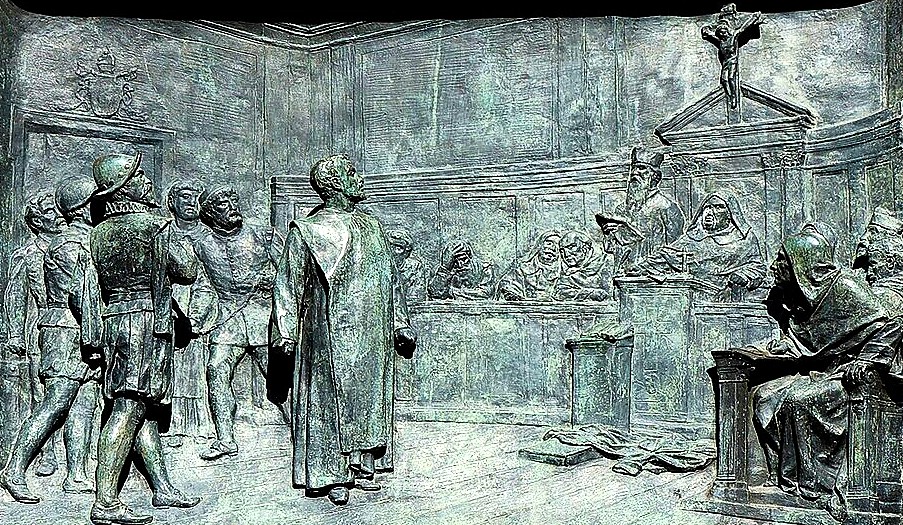
It is possible that Giordano did not consider himself to be anti-Catholic, but rather assumed himself to be a reformer capable of influencing the papacy. Perhaps he was obsessed with a sense of self-fulfillment, or thought he was accomplishing some kind of “mission”. In any case, he willingly allowed himself to be taken away by the soldiers of the Inquisition and boldly stood up for his own defense. The carefully kept records of the Venetian Inquisition have been preserved.
As a skilled and experienced lecturer, Giordano defended himself with great aptitude. As he gradually realized that his life was at stake, Giordano’s behaviour became increasingly dramatic – he waved his arms, fell to his knees and, like an practised actor, modulated his voice.
After initially referring to his published writings, Giordano gradually began to refute everything he could deny, often remaining silent and even lying about certain sensitive points of his teachings, convinced that the Inquisitors could not possibly be aware of everything he had done and written.
Giordano justified the differences between his expressed views and Catholic dogma by arguing that a philosopher, who reasoned in accordance with “natural enlightenment”, could draw conclusions that contradicted matters of faith, without being considered a heretic. In any case, after asking for forgiveness for his mistakes and shortcomings, Giordano declared himself willing to retract everything he had written that the Inquisition had found to be in conflict with the Church’s teachings.
The Venetians were inclined to let Giordano go free, but Pope Clement VIII who considered himself to be a champion in the battle against Protestant heresy and was reluctant to let an internationally known freethinker like Giordano Bruno get away so easily. In February 1593, the Roman Inquisition ordered Giordano’s extradition to the Roman Inquisition and, after a few days of hesitation, his request was granted by the Venetian Senate.
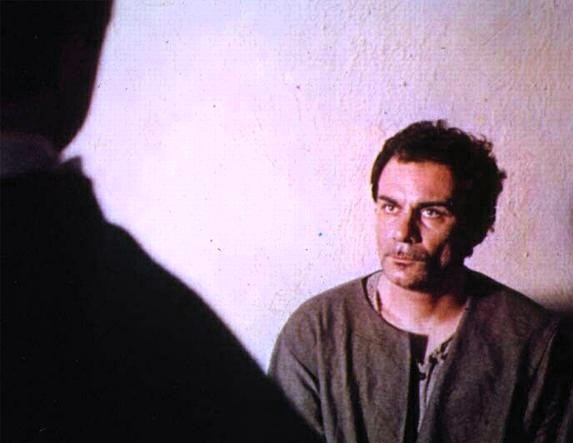
The process dragged on. At papal request, prosecutors carefully read Giordano’s writings and he was apparently tortured in the spring of 1597. Despite this, Giordano’s defense and assertion of his heretical views became increasingly outspoken and eloquent. The Roman court proceedings have disappeared, or been destroyed, and are preserved only in summaries. One thing is certain, however, and that is that they were followed with the greatest attention by the Pope. On several occasions, Giordano asked to be allowed to explain his positions in private with Clement VIII. Increasingly, it seems that Giordano came to regard himself as a right-thinking, ancient Roman fighting against an unjust authority.
The Inquisition carefully inquired about Giordano's views on sexuality and he boldly claimed that it was given by God and could therefore be enjoyed by every earthly being. He could therefore not consider sexual intercourse to be sinful.
He also gave a detailed account of his views on the origin of the Universe, its infinity, and the impossibility of characterizing God as a figure, let alone as a existing in the form of an incomprehensible Trinity.
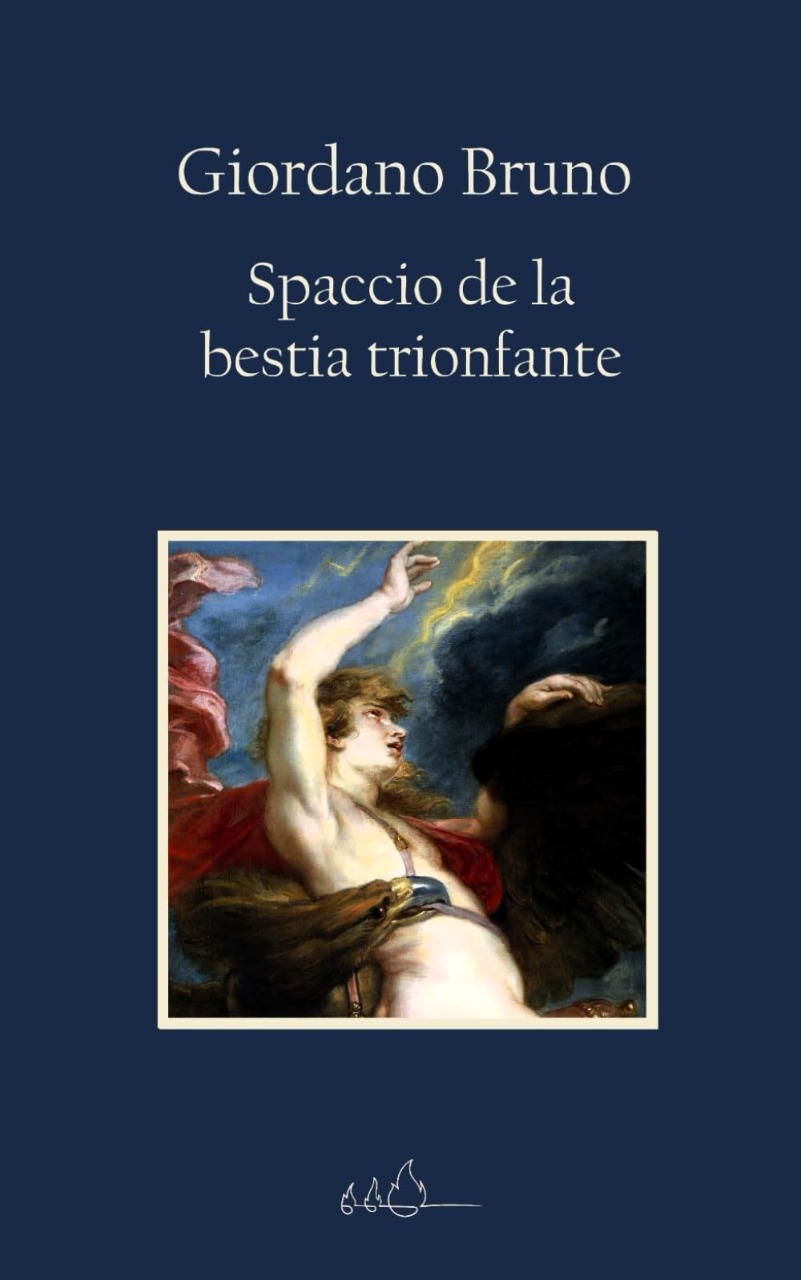
Over time, the main accusations came to concentrate on what Giordano had written in his Spaccio de la bestia trionfante, Expulsion of the Triumphant Beast.
Like so much else Giordano had written, it is a dialogue in the form of a moral-philosophical, allegorical text. Three interlocutors, Sophia (Wisdom), Saulinus (a fictional character) and Mercury (messenger of the gods), discuss the implementation of a reform ordered by Jupiter. It was a matter of renewing the Kingdom of Heaven and putting an end to its prolonged decay. Old vices had to be purged and replaced with new virtues. The allegory is complicated; vices and virtues are described with reference to astrology and the signs of the zodiac, its vicissitudes becoming emblems of human faults and defects.
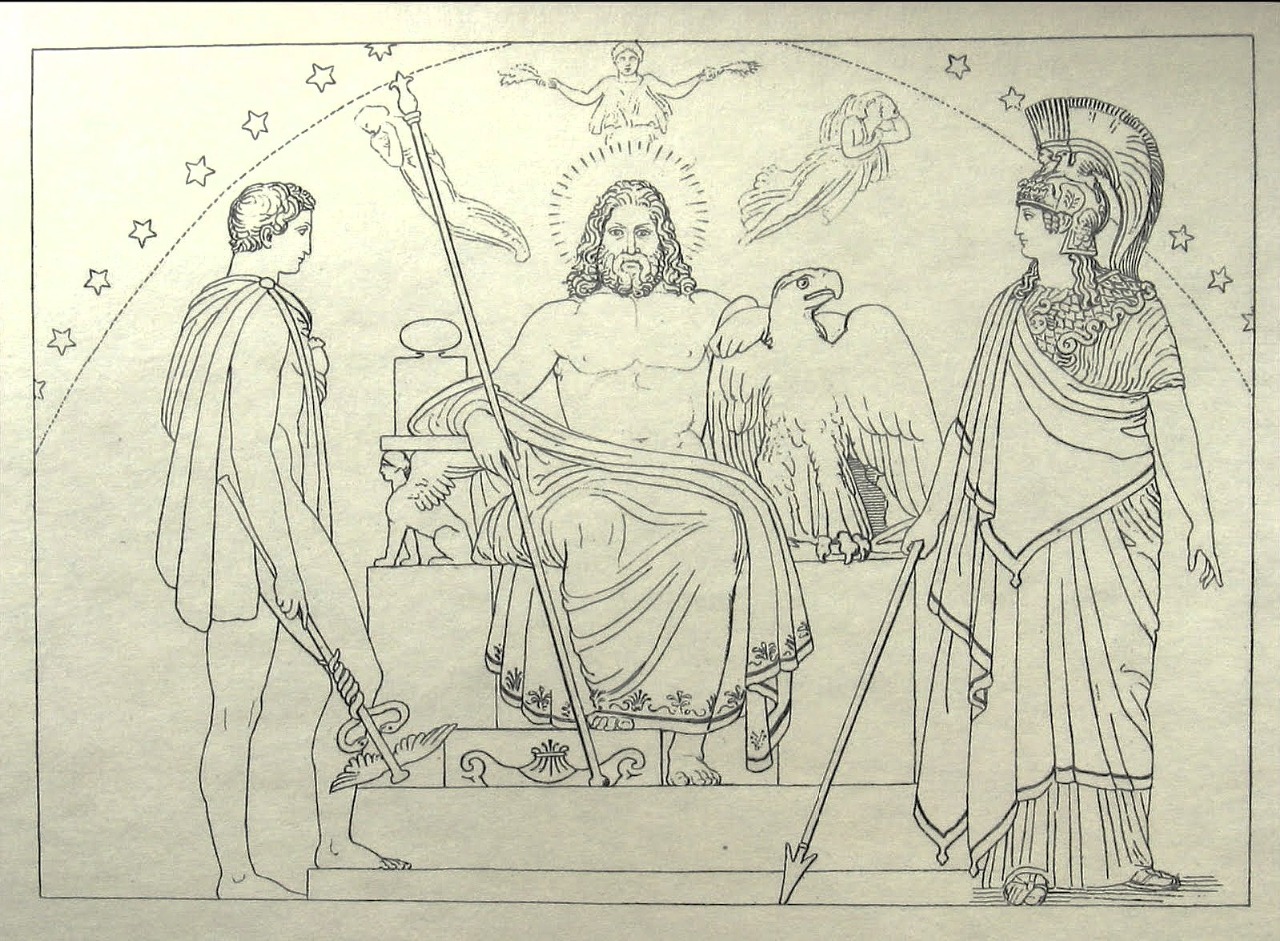
Everything in the universe is constantly changing, and it is in the nature of things to move from one extreme position to another. Truths are immersed in time, they sink and rise. Giordano, through his mouthpieces, took up the ideas of Hermeticism and explained that ancient Egyptians considered that
nature was nothing but the presence of God in things. God is all in everything, but in nature the divine manifests itself in various forms, some of which seem to have common features and are therefore regarded as gods. The divine communicates with man in innumerable ways and has innumerable names. Wisdom is required to discern what exists beyond the multifaceted aspects of nature, beyond the flow of time, beyond the mutability of names, to discern the divine unity that underlies all things.
The universal law, like other virtues, has two aspects, one divine and one earthly, but their goal is common. The divine law is identical with religion in the sense of “binding together”, from the Latin re-ligare. It is rites and ceremonies that hold our societies together and characterize human thinking.
It was opinions like these that were taken most seriously by the Inquisition. It seemed that Giordano had questioned the Catholic religion, even the entire Christian religion, and tried to replace it with a new paganism – without Church, Pope, Sacraments and Bible. The accusations were summarized in short sentences, among which the main accusation of the instituting of a new religion did not appear. According to the Inquisition the accused had
• attacked the Papacy and its clergy;
• denied the dogma of the Trinity and the divinity of Christ;
• asserted views contrary to the Catholic faith regarding the virginity of Mary, Mother of Jesus;
• asserted views that contradicted the Catholic belief in the transubstantiation of the sacrifice of the Mass.
• Contrary to the words of the Bible and divine revelation, the accused had furthermore claimed the existence of a multitude of worlds and their eternal permanence, thus denying both Creation and the Last Judgment, and had also
• claimed the existence of transmigration of souls and thus denied the existence of Heaven, Purgatory and Hell; and
• been engaged in magic and divination.
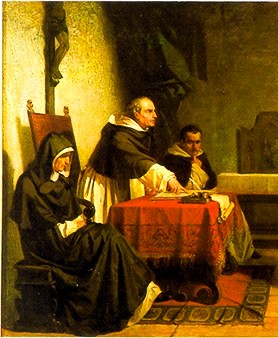
The Pope affirmed the court’s view that the seriousness of the crimes required the death penalty.
After the fire had died down and the crowd had dispersed, the executioner, his servant and scoundrels gathered up the ashes of Giordano Bruno and threw them into the Tiber.
But there I stood alone in the square, which after the rain shone in the moonlight, watching how the great heretic, after four hundred and twenty-six years, sternly looked down at me. Could not Clement VIII and his henchmen have known that it was Giordano’s ideas about the infinity of Universe and time that would triumph and become part of every person’s thinking? It was Giordano Bruno who came to represent reason, faith and empathy, not the Pope and his executioners.
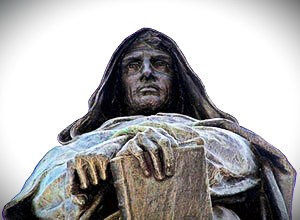
I find the statue of Giordano Bruno by the Grand Master of Freemasonry, Ettore Ferrari, to be among the most impressive of all those I have been confronted with in Rome. Freemasons? Ferrari was actually the head of the Freemasons’ Grande Oriente d'Italia and it was no coincidence that it was he who created the sculpture and on its base inscribed the words
A BRUNO - IL SECOLO DA LUI DIVINATO - QUI DOVE IL ROGO ARSE
To Bruno – the century he predicted – here where the pyre burned.
As an indictment, Giordano is facing the Vatican.
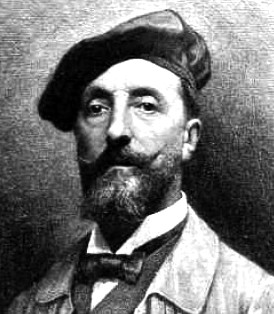
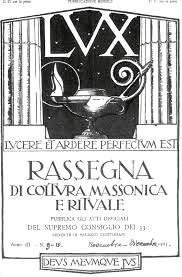
On April 20, 1884, Pope Leo XIII (Gioacchino Pecci) had issued an encyclical called Humanum genus, Humanity. It was published during the rise of industrialization and Marxism and in the aftermath of Italy’s military conquest of Rome and the following collapse of the Ecclesiastical State on September 20, 1870.
The Pope felt powerless against the onslaught of the new age, with its godlessness and moral decay. The encyclical was essentially a condemnation of Freemasonry. The Pope stated that the end of the 19th century was a dangerous era for the Roman Catholic Church. Its survival was at stake, and this was mainly due to the ideas that the Pope for some reason primarily connected with the harmful influence of Freemasonry – naturalism, popular sovereignty and the separation of Church and state.
.jpg)
Humanum genus accuses Freemasons of promoting religious indifference, mainly by advocating a public education that denied the educational role of the Church and thus placed the morality of young people in the hands of the laity. Since 173, the Papacy had forbidden Catholics to become Freemasons.
The Freemasons fought back against Humanum genus and decided to erect a statue of Giordano Bruno, on the spot where he had been burned alive. A prophet of tolerance, the achievements of the new age, scientific truths and democracy had in the very centre of Rome been sacrificed by backward-looking and superstitious dark forces.
The monument was financed by private donations, mainly through fundraising initiated by Rome’s student associations. The Roman City Council approved on December 10, 1888, by 36 votes to 13, that the location of the monument should be Campo di Fiori.
Representatives of the Catholic Church protested violently against what they considered to be a blatant violation of the Catholic faith. But in vain, money for the statue poured in from all directions, not least from famous cultural figures such as Victor Hugo, Mikhail Bakunin, Henrik Ibsen, Herbert Spencer, Ernst Renan, Algernon Swinburne, Giosuè Carducci, and Cesare Lombroso.
In front of a large crowd, the statue was unveiled on June 9, 1889. Since thousands of individuals and students associated with anti-clerical movements had gathered in Rome, the Vatican closed its museum and urged local churches and congregations to lock their gates to avoid confrontations with, or incidents provoked by what it considered to be an atheist mob, which nevertheless turned out to be calm and peaceful.
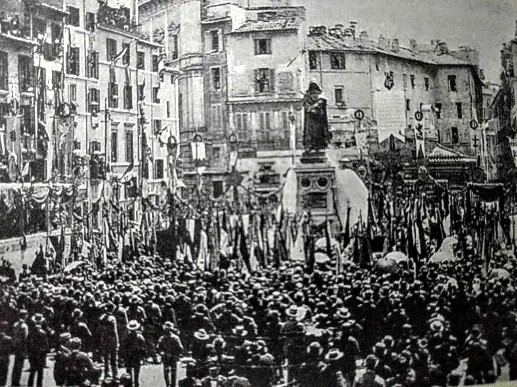
After the statue was consecrated, Leo XIII fasted for an entire day, which he spent kneeling in front of the Vatican’s statue of St. Peter, praying fervently for an end to the struggle against the Catholic faith. Shortly before the statue’s installation, the Pope had threatened to abandon Rome and seek refuge in Austria. Francesco Crispi, who later became prime minister, declared that:
If His Holiness were now to leave Italy, it would be better if he never returned.
The Vatican had a hard time digesting the reproach it felt it had suffered by the erection of Giordano Bruno's statue. When The Lateran Pact, which regulated the relationship between State and Church, was signed by Benito Mussolini and Pius XI, the Vatican requested that the statue had to be removed and replaced with a Chapel of Reconciliation for the Sacred Heart of Jesus. Mussolini refused, well aware that the ideologue of fascism, the philosopher Giovanni Gentile, was a great admirer of Giordano Bruno.
The strife surrounding Giordano Bruno has now subsided and there he still stands, mightily towering over Campo di Fiori’s market stalls and crowds of tourists, or in solitary majesty during Rome’s mysterious nights, when the city seems to live a life of its own, beyond human understanding and presence.
Bruno, Giordano (1997) Le ombre delle idee. Il canto di Circe. Il sigillo dei sigilli. Segrate: La Biblioteca Universale Rizzoli. Bruno, Giordano (2017) Spaccio de la bestia trionfante. Segrate: La Biblioteca Universale Rizzoli. Bruno, Giordano (2022) Candelaio. Roma: Di Renzo Editore. Bucciantini, Massimo (2015) Campo dei Fiori: storia di un monumento maledetto. Turin: Giulio Einaudi Editore. Ginzburg, Carlo (1980) The Cheese and the Worms: The Cosmos of a Sixteenth-Century Miller. London: Routledge. Heer, Friedrich (1974) The Medieval World: Europe from 1100-1350. London: Cardinal. Lawrence-Mathers, Anne (2025) The Magic Books: A History of Enchantment in 20 Medieval Manuscripts. New Haven, CT: Yale University Press. Manuel, Frank E, and Fritsie P. Manuel (1979) Utopian Thought in the Western World. Cambridge, MA: The Belknap Press. Rabelais (1974) Gargantua & Pantagruel. Harmondsworth, Middlesex: Penguin Classics Russell, Bertrand (1974) History of Western Philosophy. London: Unwin University Books. Yates, Frances A. (1981) Giordano Bruno and the Hermetic Tradition, Chicago: Chicago University Press. Yates, Frances A. (2001) The Art of Memory. Chicago: Chicago University Press.