It is the first Advent, Christmas is approaching.
And there were shepherds living out in the fields nearby, keeping watch over their flocks at night. An angel of the Lord appeared to them, and the glory of the Lord shone around them, and they were terrified. But the angel said to them, “Do not be afraid. I bring you good news that will cause great joy for all the people. Today in the town of David a Savior has been born to you; he is the Messiah, the Lord. This will be a sign to you: You will find a baby wrapped in cloths and lying in a manger.”
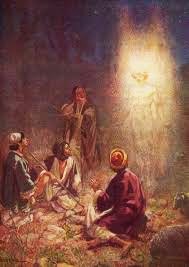
Suddenly a great company of the heavenly host appeared with the angel, praising God and saying,
“Glory to God in the highest heaven,
and on earth peace to those on whom his favour rests.”
"On earth peace to those on whom his favour rests”? In February 2022, Putin's Russian forces began a full scale attack Ukraine and the bloody war has now been going on for more than three years. The last war in Gaza began on October 7, 2023 after Hamas terrorists had attacked settlements in southern Israel, a war of retaliation began and has now caused the deaths of an estimated 70,000 Palestinians, half of them women and children, and 170,000 injured, while 2,000 Israelis have been killed. Almost daily I read about, or even meet with people who wholeheartedly defend this bloodbath on an entire ethnic group.
Meanwhile, more than 61,000 people have died in Sudan during a war that shows no signs of abating. More than 35,000 have died from malnutrition and preventable disease, while 26,000 have died as a direct result of the reckless violence between army factions supported and armed by Saudi Arabia, the Arab Emirates and a host of other international stakeholders (Sudan is rich in oil and other natural resources).
All this while people's desperation is growing all over the world, frustrated as they are with a galloping climate crisis, at the same time as unscrupulous politicians are enriching themselves, while making entire ethnic groups into scapegoats for their own greed and failed policies.
Journalists and whistleblowers who have ventured to expose cheating, corruption, and manipulations are harassed, threatened with death, imprisoned or killed. Why all this slaughter, all this violence and contempt for human beings?

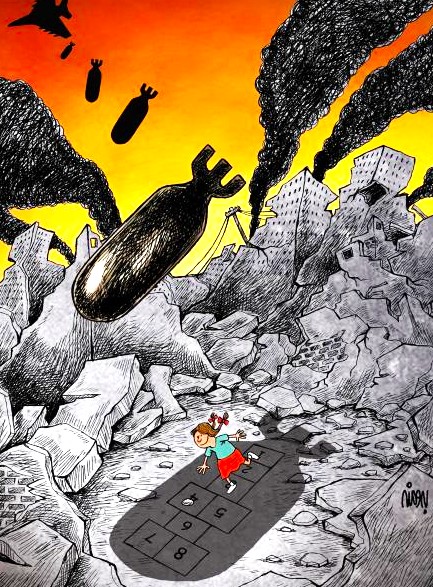
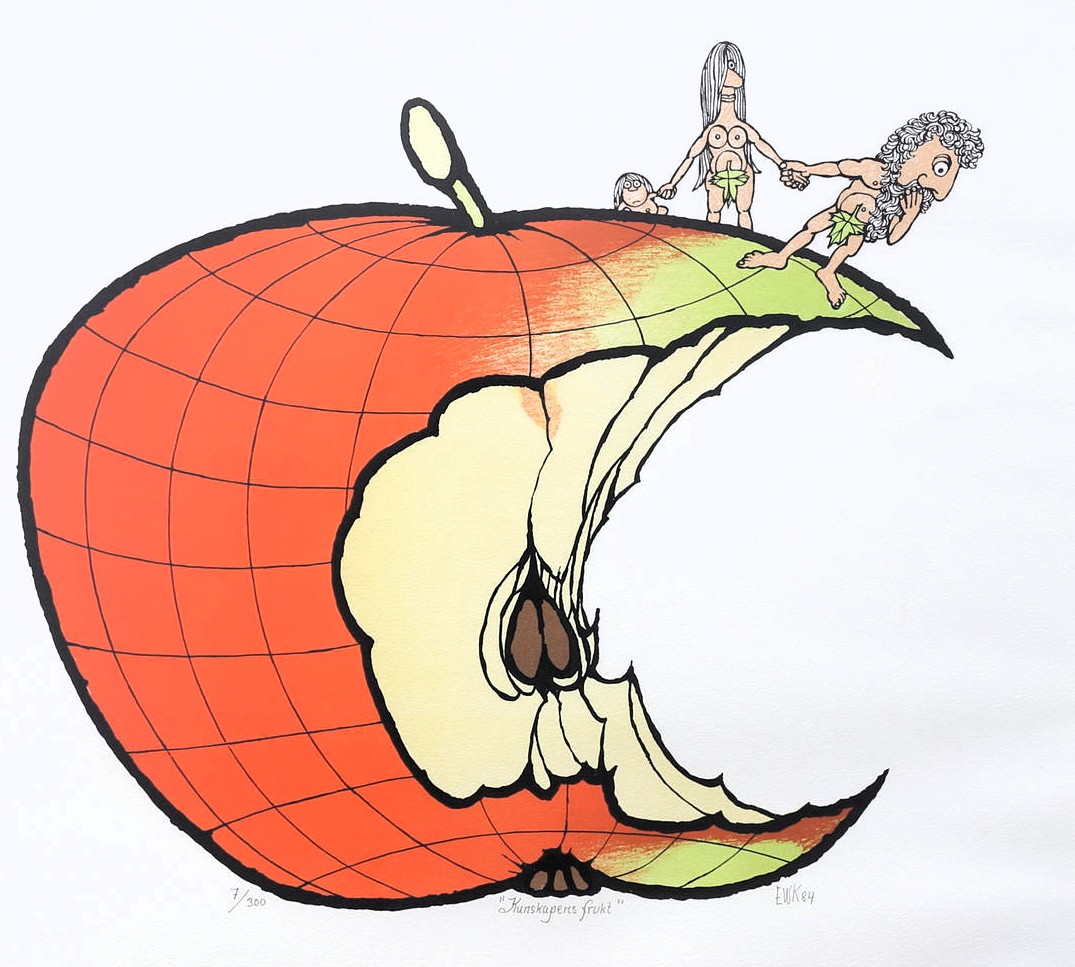
Why is our animal species, Homo Sapiens, so incredibly prone to violence? Why are we capable of torturing and wiping out so other members of our own fellow species, in the most sophisticated fashion, whilst cynically allowing others to die of starvation and hardship, which could easily have been prevented? Konrad Lorenz wrote:
All the advantages that man has gained from his ever-deepening understanding of the natural world that surrounds him, his technological, chemical and medical progress, all of which should seem to alleviate human suffering... tends instead to favour humanity's destruction.
In my youth, I read Konrad Lorenz's (1903–1989) nicely written books about his association with various animals – King Solomon's Ring and Man Meets Dog.
Perhaps it was because we had both dogs and budgies that I appreciated Lorenz’s sympathetic depictions of his interactions with animals. His insightful manner of observing and learning from animal behaviour could also shed light on our own lives. I remember how he described the affection of dogs, how they were prepared to sacrifice their lives to defend their master, while he would hardly do the same for them.
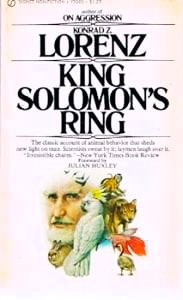
Lorenz described how animals' instincts were developed already by their birth could made them fly and/or move fast and easily. However, this instinct was not enough for their guaranteeing their future existence. Young animals must had to be “shaped and fostered”, i.e. to learn as quickly and efficiently as possible how their own species looks and behaves. The young animal must be able to distinguish between what is dangerous and what is harmless. It also has to acquire certain meaning-bearing movements and sounds; growls or singing.
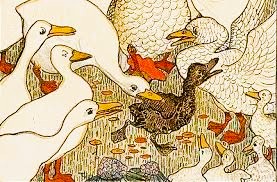
Lorenz was also well acquainted with the less pleasant characteristics of animal behaviour. He was among the first to use the word bullying to describe not only how pack animals in unison attack and drive away their enemies, but also how they mistreat creatures of the same species who look or behave in a different manner. Something that Hans Christian Andersen's Ugly Duckling had already experienced.

https://www.youtube.com/watch?v=RCX-mPstrPU
In his work On Aggression, Lorenz argued that animals, especially males, are biologically programmed to fight for natural resources and defeat other males in order to limit the load on local resources. However, Lorenz did not claim that aggressive behaviour is in any way more powerful, widespread, or more intense than other more peaceful traits, such as mating rituals and care of the young. However, aggression is fundamental to all animal behaviour, as are other more empathetic, caring traits. However, there's no denying that aggression is part of both animal and human conduct, a feature engrained in our DNA.
According to Lorenz, it is important for humans to ventilate their aggressive urges, hopefully in small doses, otherwise they might threaten to be accumulated and eventually explode in aggressive outbursts. Lorenz argued that “today's civilized man suffers from insufficient outlets for his aggressive urges” and suggested that low levels of aggressive behaviour could prevent more harmful expressions of human violence. According to a well-known Freudian recipe, aggression was for Lorenz an expression of frustration, arising from suppression of our instinctive desires – our need to assert ourselves, our search for sexual gratification, the desire to be noticed and listened to. Lorenz’s recipe for lowering aggressive stress was to participate in and watch adrenalin rising sports and endeavours, as well as similar engaging, violence simulating activities.
It is when Lorenz left his geese, rats, and baboons and wrote about humans that he ended up on a somewhat thin and slippery ice. Most of his examples of human aggression did not originate from his own observations, but were based on social anthropological studies carried out by other researchers. Some of his examples were furthermore of a rather dubious scientific value.
For example, much of the argumentation in On Aggression was based on Sydney Margolin’s “psycho-analytical and psycho-sociological studies” on the situation of U.S. Prairie indigenous populations, in particular the Utes.
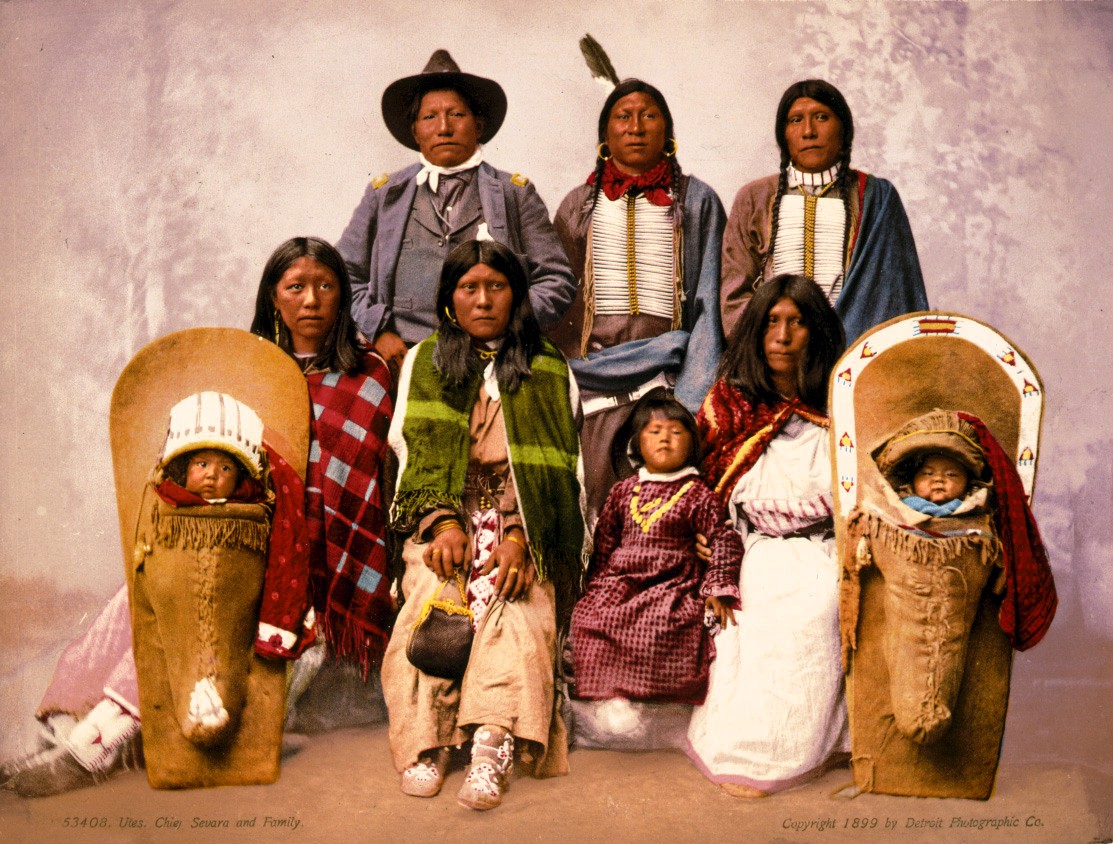
Margolin stated that this people suffered from an excess of aggressive drive, which they under the ordered conditions of present-day reservations were unable express, since they had been devoid of an earlier existence characterized by wars and raids on other tribes. It appears as if such aggressiveness had become a common cultural attribute among the Ute, maybe even a hereditary trait.
Based on such rather strange generalisations Lorenz could declare that: “Ute Indians suffer more frequently from neurosis than any other human group.” An oversimplification that social anthropologists have had no problems in debunking. Later studies among the Ute have furthermore proven that they are no more aggressive than other human beings, though poverty and alcoholism have taken their toll among them, just as they have among many other socially deprived and discriminated indigenous peoples.
As matter of fact, On aggression contained little of the necessary, cautious, critical, and scientific detachment that is necessary if applied to human beings. It has to be accounted for that even if Homo Sapiens is an animal species not only are the biological attributes of humans unique, like their very specific brain power, but also their ontogenesis is unique, i.e. the developmental history of an organism within its own lifetime. Humans interact with their cultural milieu and surrounding environment and are able to drastically change both themselves and their surroundings
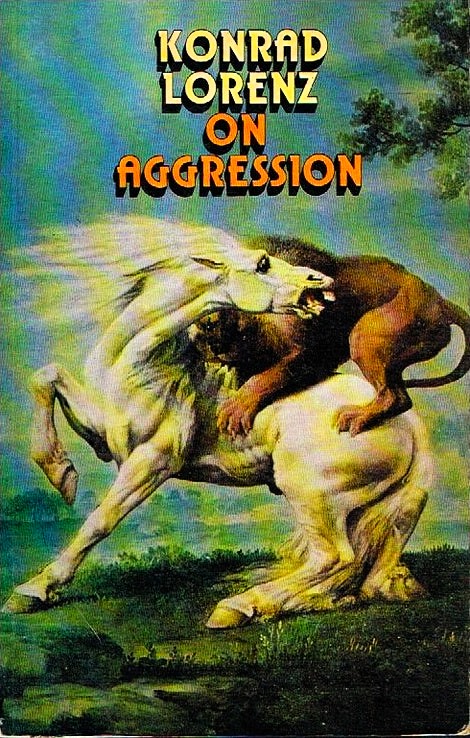
Critics have noted that while Lorenz acknowledged the role of culture in human life, he underestimated its effects on individual development. Our indivual behaviour can of course be traced to genetically determined instincts and while considering wars and genocide it is quite seductive to assume humans to be incurably aggressive.
However, it is doubtful whether Lorenz is right to equate animal and human aggression, where the former adopts ritualistically predetermined behaviours while human aggression is far more complex. Human empathy can even manifest itself in the protection of other species, but at the same time can human aggression “go completely wrong” and result in war and mass extinction.
However, Lorenz simplified conception of human aggressiveness might serve as a “scientific” proof of human’s incurable aggressive traits and might thus encourage politicians to advocate increasingly harsh punishments for wrongdoers. After all, if such people cannot be cured, why not lock them up permanently, or simply kill them?
Apart from recommending sports and other “fervent” activities. Lorenz could actually to a much minor degree emphasize the evolution of educational and social systems and thus the assertive, explorative, and creative nature of humans, which enables us to change ourselves and our societies in a flexible, emphatic manner, while adapting to a constantly changing material existence, which we share with other animals
Admittedly, a study of animal behaviour, ethology, can be enriching in understanding human existence, but it must be combined with, and not allowed to prevail over, studies of human neurophysiology and psychology.
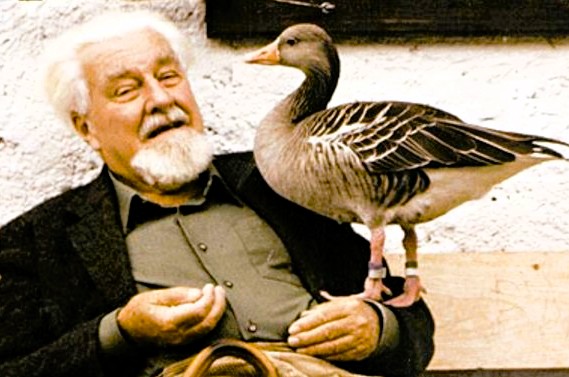
In 1973, Konrad Lorenz shared with Karl von Frisch and Nikolaas Tinbergen the Nobel Prize in Physiology/Medicine “for their discoveries concerning organization and elicitation of individual and social behaviour patterns.” It is interesting to note that the Nobel Committee's motivation did not expressly refer to animal behaviour but seemed stress findings concerning human behaviour.
Lorenz and Karl von Frisch were Austrians and, as older scientists in behavioural research, they both had a somewhat obscure past in connection with the Nazi takeover of Austria, whose population was generally more fanatical supporters of the Nazi Party's anti-Semitism than inhabitants of its country of origin.
Unlike Lorenz, von Fritsch had had problems with the Nazis after he had defended Jewish colleagues against their abuses, although he had nevertheless occasionally maintained views that the Nazis cherished, namely that people with hereditary mental defects should be "purged", in which way was initially unclear. Even Nikolaas Tinbergen had held some now quite unacceptable views on human "racial breeding", although they had not been as extreme as those previously claimed by von Fritsch, and especially Lorenz.
Tinbergen and Lorenz cooperated, but after the war it took time for them to patch up their friendship, especially since Tinbergen had spent the war interned in a German concentration camp.
Lorenz's association with the Nazis had been worse than it had been in von Fritsch's case. In 1938, when he applied for a university professorship, Lorenz had joined the Nazi Party. In his application for party membership, had written: "I can say that all my scientific work is devoted to the ideas of the National Socialists." At the time, Lorenz's scientific writings were undeniably contaminated by Nazi sympathies and included support for the then prevalent ideas of "eugenics," often articulated in pseudoscientific metaphors.
Among other things, Lorenz's studies of "bird hybrids", genetically manipulated domestic birds, had led him to believe that "domestication" of wild animals could give rise to dysgenia, i.e. a reduction in the occurrence of traits that are considered either as socially desirable, or being generally adaptable to their environment. Lorenz applied such ideas to the human race, arguing that "urbanization" and "racial mixing" could have similar negative effects on Homo Sapiens and during the war he was a consistent supporter of Nazi eugenics, "racial refinement."
In the Polish, Nazi-occupied Poznań, Lorenz did under the leadership of Professor Rudolf Hippius devote himself to "racial studies", mainly on Polish political prisoners. Poznań was the centre of the Polish branch of the Nazi Gestapo, the Geheime Staatspolizei, the Secret State Police, whose SS members waged a violent struggle against Polish resistance fighters, intellectuals, and Jews.
The goal of Hippius and Lorenz's "scientific" studies was to determine whether "biological" characteristics of "German-Polish half-bloods" and "pure Slavs" made them suitable to be classified as "Reich Germans," or whether they should be deported and, in the worst case, killed.
After the war, Lorenz claimed that he had nothing to do with the Nazis' devastating racial ideology, but when he was relentlessly confronted with devastating evidence, Lorenz was forced to admit that he had been a party member and worked as a psychologist in the Nazi regime's Rassenpolitisches Amt der NSDAP. National Socialist Workers' Party's office for racial policy.
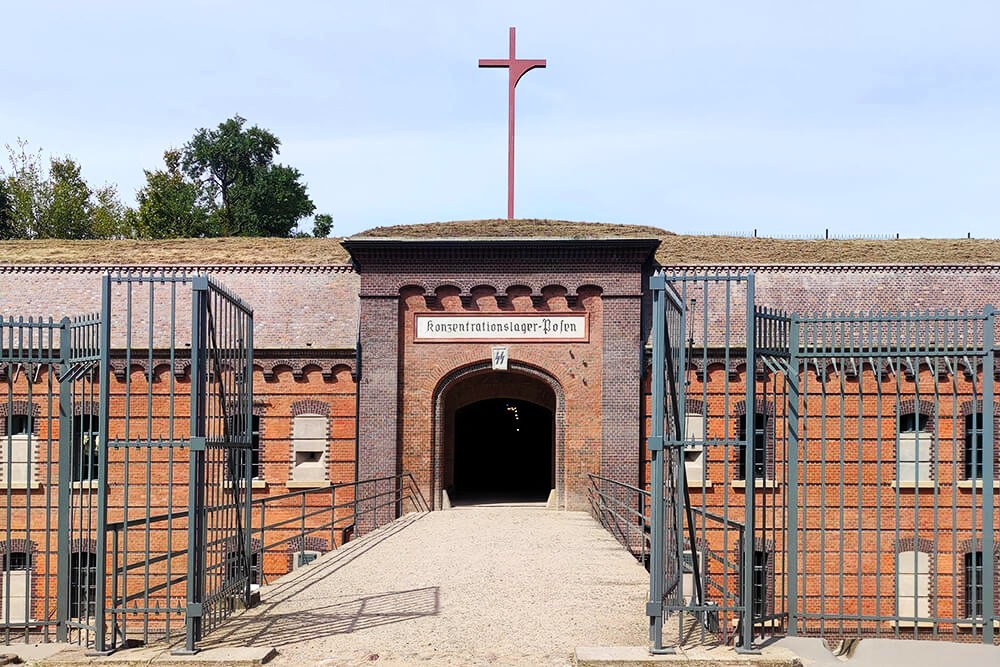
In his defence, Lorenz described how he had once witnessed the transportation of concentration camp inmates from Fort VII near Poznań, something that made him "realize the complete inhumanity of the Nazis." A statement that indicates how difficult it has been for Nazi accomplices to explain how it came about that they worked for the Nazis. Lorenz wrote "with deep regret":
I did a very ill-advised thing soon after the Germans had invaded Austria: I wrote about the dangers of domestication and, in order to be understood, I couched my writing in the worst of Nazi-terminology. I do not want to extenuate this action. I did, indeed, believe that some good might come of the new rulers.
However, I suspect that Lorenz's complicity with the Nazis was worse than that. It is hard to imagine that while Lorenz was working with political prisoners in collaboration with Fort VII near Poznań, he could have been unaware of what was taking place within its walls. Considering the well-known crimes against humanity that every day were committed inside this notorious fort, it appears to be almost pathetic when Lorenz claimed that it was a single prisoner transport that made him aware of Nazis brutality.
In fact, Fort VII was among the worst of the German concentration camps. A place that became infamous not only for the systematic, grotesque torture and inhuman suffering of thousands of prisoners, but also as being the site of one of the first experiments with the mass killing of human beings. In November 1939, a special "experimental bunker" was built within Fort VII in which several groups of mentally ill persons collected from hospitals of Owińska, Dziekanka and Grobla were gassed to death by carbon monoxide, which was piped into the bunker.
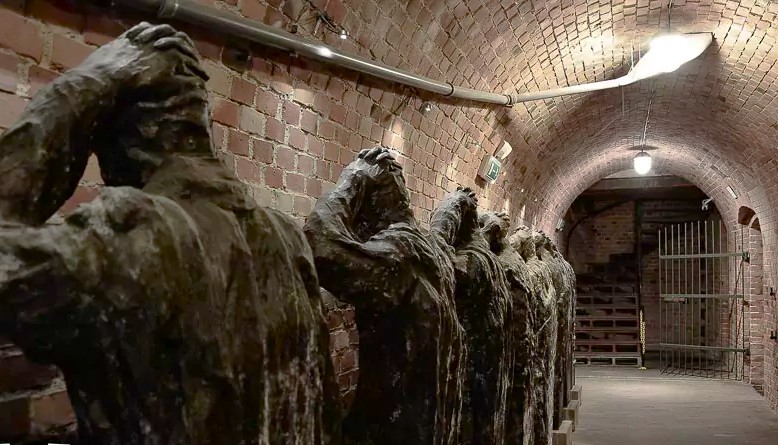
Fort VII was used as a "prison of assembly" where suspected opponents to the Nazi regime were interrogated under torture, some were executed on the spot, by being hanged in Cell 58, gassed to death, or shot by the so-called Death Wall. Others were murdered during mass executions in nearby forest areas – Palędzie, Zakrzewa, Dąbrówka and Dębienek, while most of the prisoners were transferred to various concentration camps. Between 17,000 and 40,000 prisoners were "treated" in Fort VII, few survived, either killed within the fort or were sent to their deaths within various concentration camps. Only one prisoner managed to escape.
An account of both well-known and lesser-known German and Austrian psychiatrists and other doctors who worked under the Nazi regime makes it obvious that very few could avoid contributing to its crimes against humanity, especially within the extensive and well-organized euthanasia program, several of these collaborative medical doctors were also active in concentration camps, and on the front lines. Their role was central and crucial to the Nazis' policies, plans and principles.
Psychiatrists, along with many other doctors, rather than taking a passive, or even active position of resistance, facilitated the resolution of many of the regime's ideological and practical challenges. The psychiatrists played a particularly prominent and central role in two specific categories of crimes against humanity, , namely sterilization and euthanasia. It was psychiatrists, many of whom were respected and influential professors, who sat on planning committees for both processes and who provided the theoretical support for what was going on.
It was psychiatrists who reported their patients to the authorities and coordinated their transfer from all over the German Reich to gas chambers located within six psychiatric institutions—Brandenburg, Grafeneck, Hartheim, Sonnenstein, Bernburg, and Hadamar. It has been estimated that over 200,000 individuals with mental disorders (as well as some Roma/Sinti, Jews and homosexuals classified as "socially deviant") were executed in this manner.
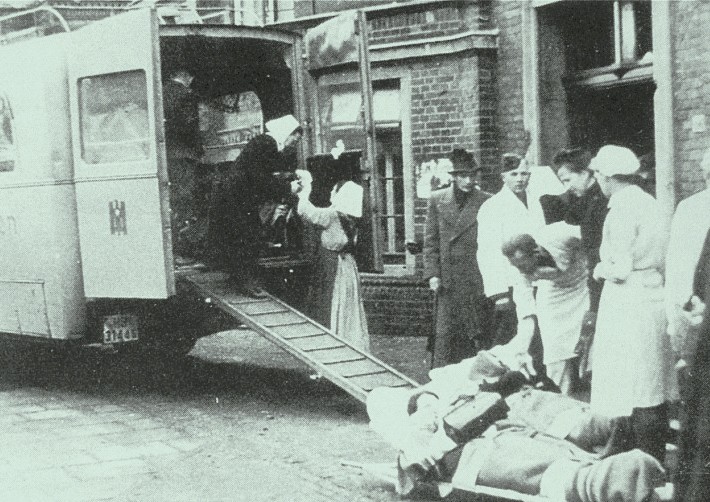
Several of these notorious perpetrators of violence and representatives of the medical profession were able to undisturbed continue their professional lives and/or research activities after the war. One of many examples is the Austrian neurologist Johann Asperger (1906 – 1980) author of more than 300 publications on mental disorders, especially among children.
The now well-known Asperger syndrome became famous thanks to a dissertation he wrote during World War II, which included a description of what is now categorized as part of the autism spectrum disorder (ASD). His description of the syndrome is convincing and I have myself, in a more or less pronounced form, found signs of it in several of my students
- Difficulties in adequately using and understanding language, which often leads to a "one-sided" communication
- Difficulties in relationships with other people. Lack of empathy and a resulting absence of deep relations with comrades, colleagues, and peers.
- Difficulties to cope with changes in the local environment and everyday routines.
- An intensive immersion in special interests.
- Repetitive body movements and other stereotypical behaviour, combined with a certain clumsiness.
Aspberger's work and observations were largely lost, or rather overlooked, for decades, but was in the 1980s "rediscovered" by the British psychiatrist Dr. Lorna Wing and Aspenerger has since then by several psychiatrists been hailed as the "father of neurodiversity."
In any case, discussions about students with "aspberger" were provided with a lot of space during first my time as a teacher, somewhat later be replaced by what was then called "children with letter combinations". Attention and hyperactivity disorder – ADHD was described as a disability that meant that children had difficulty in concentrating, sitting still, as hindering their immediate impulses.
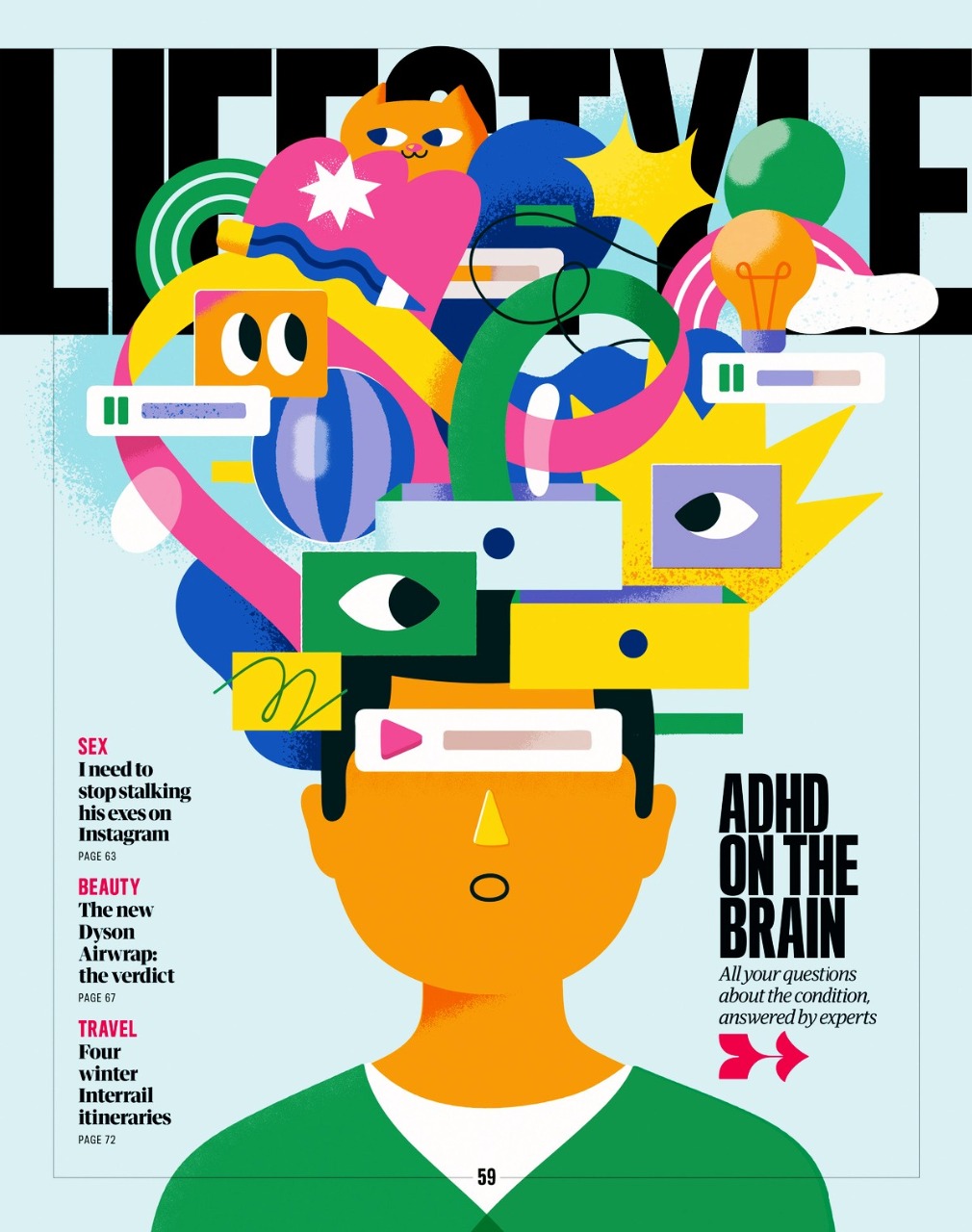
The fact that people increasingly began to doubt Asperger's analyses may to some extents have to do with his murky past under the Nazi regime. Aspberger's academic career benefited from the fact that he was offered a place in fields previously dominated by dismissed Jewish doctors and scientists.
Aspberger's immediate boss and main beneficiary was a certain Dr. Franz Hamburger, a fanatical, prominent and long-standing member of the Austrian branch of the Nazi Party, the NSDAP, for whom Aspberger always expressed a great admiration. He signed his letters with the formal Heil Hitler and joined several organizations affiliated with the Nazi Party, though without becoming a member of the NSDAP. It seems that Aspberger chose a middle ground between staying away from the Nazi Party, while at the same time he allied himself with its policies and followed the orders from its representatives.
A dark side of Aspberger's activities was that he publicly legitimized a "eugenic" policy including forced sterilizations and, on several occasions, actively collaborated with the program of "euthanasia" for children, although he also occasionally prevented the killing of certain children.
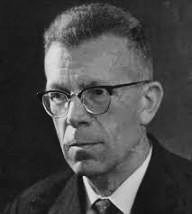
So, was Asperger a criminal or a conscientious researcher, a spokesman for brilliant and original ideas? The answer is that he was probably both, and was also himself encumbered with what through his efforts came to be called the Aspberger syndrome.
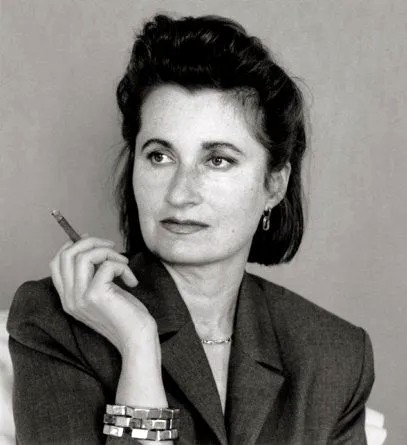
With some anticipation I am looking forward to read an already acclaimed, but not yet published novel by Alice Joll – The Matchbox Girl, which, a documentary-based novel about an autistic, mute girl who in World War II ‘s Vienna is treated by Dr. Aspberger. A famous writer and Nobel Prize winner who actually was treated by him was Elfriede Jelinek, whose writings I have never really been attracted to.

A distinctly demonic psychiatrist and mass murderer was Dr. Imfried Eberl. Based on his experience as medical director at the Brandenburg psychiatric facility for euthanasia, where during his one-year leadership, 8,601 patients were gassed to death, Eberl was commissioned to organize the Treblinka execution camp. Unlike, for example, Auschwitz, which additionally was a labour camp, Treblinka was exclusively focused on killing Jews – as many and as effectively as possible. After its record-breaking fast construction, Eberl led the "work" in Treblinka for six weeks, but was dismissed for "inefficiency" because he had not been able to dispose of the hundreds of thousands of corpses accumulated by the liquidation factory, which however was effectively solved by his successor, Franz Stangl.
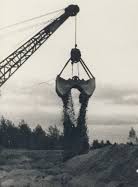
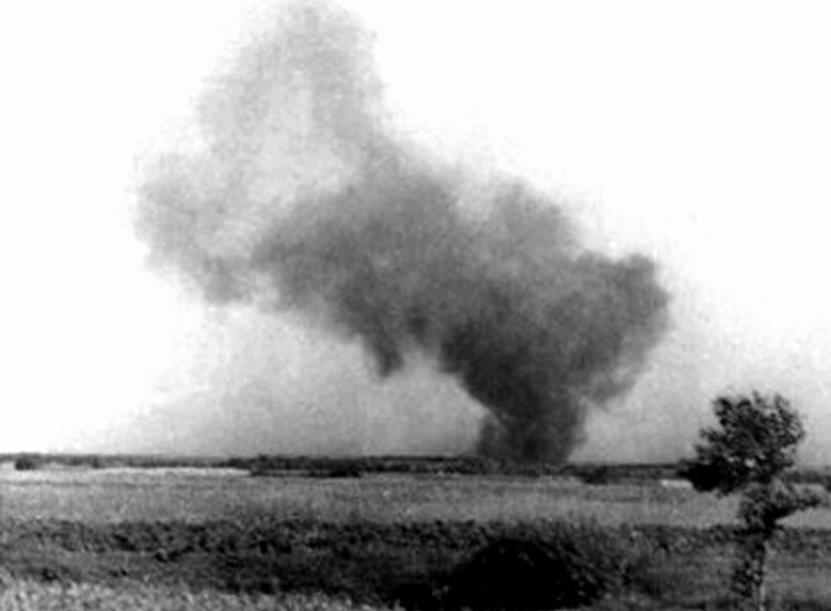
However, his dismissal did not detriment Eberl's career, although he had not been able to dispose of the corpses in Treblinka, no less than 280,000 people had been executed during his short time as commandant. He showed no remorse or anxiety whatsoever for his murderous activities, other than that during his time as a mass murderer he felt "overworked".
After the war, Eberl kept his name and even sought to renew his medical license, although he was then identified as the horrifying executioner he had been and while awaiting trial, he hanged himself in his cell (certain that he would be sentenced to death) on February 15, 1948.

In some respects, Eberl was predestined for his role as a murderous psychiatrist. His parents had been fanatical supporters of Georg Heinrich von Schönerer (1842 – 1921). A prominent Austrian advocate of German nationalism and convinced anti-Semite. Schönerer exerted a great influence on the young Adolf Hitler, who with appreciation mentioned him in his Mein Kampf, though he laments that “he was often very much mistaken in his judgment of men.”
Schönerer"s movement had strict criteria and demanded that its members be "full-blooded Germans." No party member was allowed to have relatives or friends who were Jews or Slavs, and if anyone wished to marry, the intended consort/bride had to document her/his "Aryan" ancestry and be checked for any health problems. Schönerer was by his supporters addressed as the Führer and his supporters used the Heil salute with a raised right arm, something that Hitler and his Nazis later adopted.
In 1888, Schönerer was temporarily imprisoned for leading the looting of a Jewish-owned newspaper office and violently attacking its employees. A caricature of Schönerer's, as well as Hitler's later, comfortable prison life makes me associate with the Trump supporters who stormed the Capitolium. The same strange types, not least the caricature's horned Schönerer admirer, are reminiscent of the Capitol-storming MAGA supporters who were later so scandalously acquitted by President Trump.
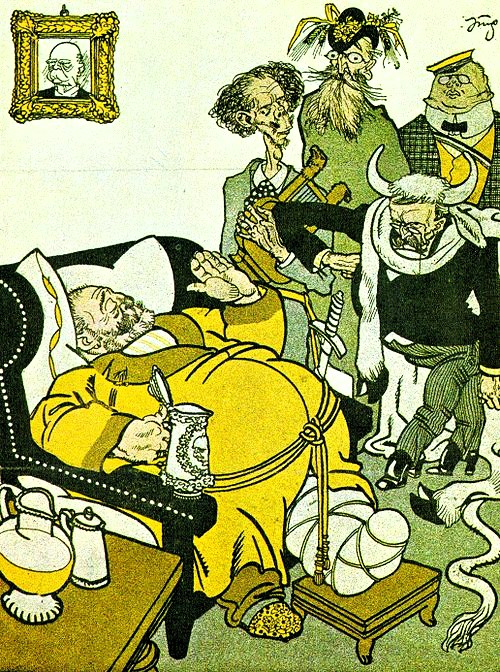
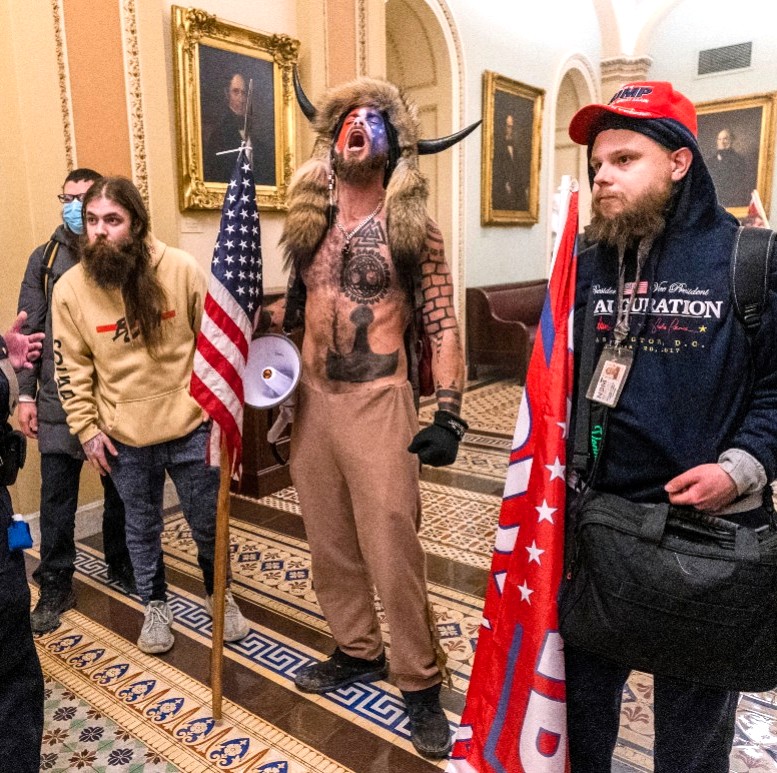
I often wonder what makes people capable of preaching, applying, and even worshipping violence. At the same time, I marvel at how people who under other conditions would live routinised lives as professional, law-abiding and calm citizens suddenly, as subjects of violent, dehumanizing regimes, can be turned into cold-hearted demons. No such government has ever suffered from any lack of willing executioners and submissive accomplices.
Robert Jay Lifton explained Nazi executioners' and especially accomplice medical doctors' ice-cold cruelty and indifference to the suffering of others with the term doubling, explaining that such people distinguished between their everyday personalities and their murderous selves, perceiving themselves as faithful subordinates to a government, performing their duties in the service of all-powerful leaders. Like someone who comes home and hangs up his uniform and puts on his comfortable everyday clothes, they transformed from being Mr. Hyde to become a family loving and entirely decent Dr. Jekyll. A paradox superbly portrayed in Jonathan Glazer's film The Zone of Interest, about the family life of Auschwitz commandant Höss in his comfortable villa right next to the Inferno of the extermination camp.

Don't we all suffer from some kind of double nature? We live our everyday lives, which are usually conflict-free, but deep down among our inner shadows there might rest a hurt beast of dissatisfaction and anger, which when circumstances change for the worse in a stroke can rush forward and bare its fangs.
For most of us, life proceeds calmly and quietly, marked by the routines of repetitive weekdays, but like a bolt from the blue, or like an outburst caused by a suppressed ache throbbing within us, anger can flare up with such an overwhelming force that it might surprise us. Even such a divine being as Jesus could, according to the Gospels, yield to outbursts of anger.
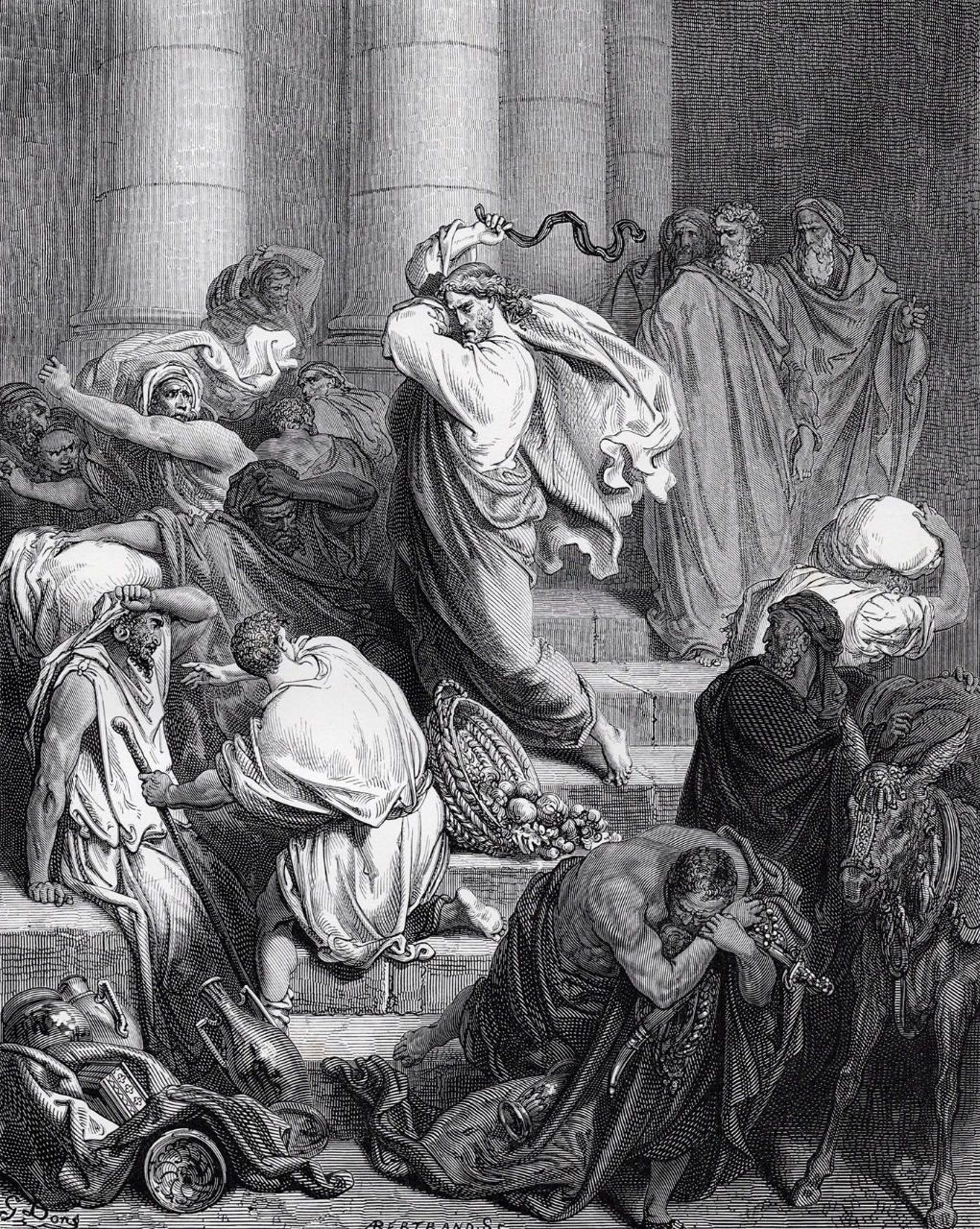
This can happen when we have been confronted with glaring injustices and abuses which we have endured or that others have suffered. Our anger might be triggered by abusive words and condemnations, or when we have been silenced and relentlessly criticized, insulted by insensitive government officials, or when we or others have been subjected to violence, or grotesque condemnations.
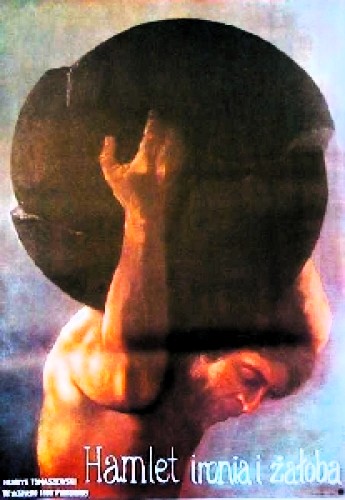
When an uncontrollable rage strikes us, we may attack our opponents with the rage of a trapped animal, or simply want to give up all fighting, like Hamlet in the incomparable Shakespeare monologue:
To be, or not to be, that is the question: Whether 'tis nobler in the mind to suffer the slings and arrows of outrageous fortune, or to take arms against a sea of troubles and by opposing end them. […] What dreams do the sleep of death give, when we have thrown off all the hustle and bustle, and cut the anchor of life? That thought stops us, and it is it that makes the life of misery so long. Who would endure the scourge of the world, the abuse of the tyrant, the insolence of the proud, the torment of despised love, the inertia of the law, the insolence of the bureaucracy, and the kicks that the fool gives the patient the merit?
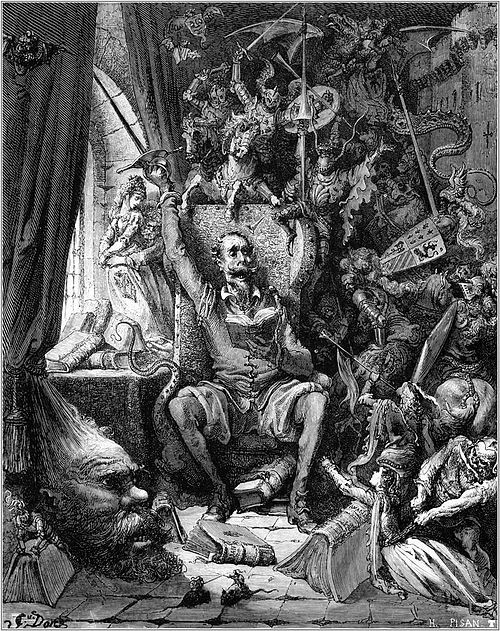
We rightly condemn the vile henchmen of Nazism and Stalinism, their unimaginable callousness and cruelty. But do we not forget how even a great idealism can overshadow the realities of life and care for others? Take, for example, Cervantes' immortally fantastic story about Don Quijite, whose brain has been damaged by the countless idealistic heroic stories he has immersed himself in, and how in his confusion he goes on a rampage against both imaginary and real abuses and cruelties. How Don Quixote in his confusion commits the most uncontrollably insane acts, is subjected to ridicule and various antics, but nevertheless in all his madness remains a kind of hero. His great life tragedy does not occur until the end of the novel when the Knight of the Sorrowful Countenance realises that his life has been a ridiculous misunderstanding.
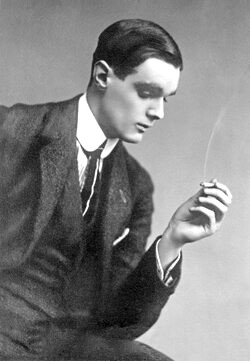
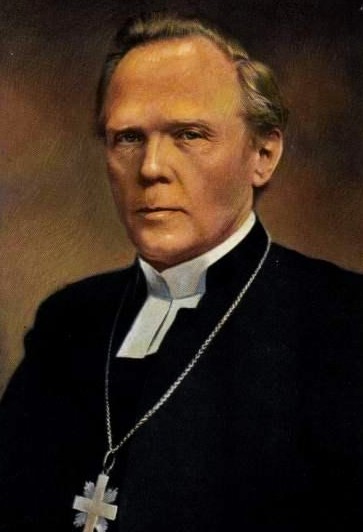
I think of the sovereign Don Quixote when I read about the idealistically tolerant and multi-skilled Swedish Archbishop Nathan Söderblom, who in 1930 received the Nobel Peace Prize for his ecumenical peace work. Despite this, this magnanimous giant could not accept his tormented son Helge's acting and homosexuality. In 1929, this embittered wretch was in a confused state of mind imprisoned in Paris and sent to Stockholm, where he spent the last three years of his life in mental institutions.
And it was even worse for the great Mahatma Gandhi's son, Harilai, who wholeheartedly participated in his father's struggle for an independent India, but wanted to go to England for higher studies in the hope of becoming a lawyer, just as his father had once done. However, Mahatma Gandhi firmly opposed this, believing that a Western education for his son would not be helpful in the fight against British rule over India. This led to severe tensions between Harilal and his father and he eventually rebelled against the Mahatma’s decision and renounced all contact with him.
When asked about the relationship with Harilal an embittered Gandhi confirmed "Harilal may be my son, but his ideals and mine are different and we have been living apart since 1915." In June 1935, Mahatma Gandhi wrote to Harilal, accusing him of "alcoholism and debauchery" and over time his accusations became even worse. In other correspondence, Mahatma Gandhi stated that Harilal's problems were more difficult for him to deal with than the struggle for an independent India, and his accusations against his son were getting worse.
Harilal died at the age of 59 from tuberculosis in a municipal hospital in Mumbai, four months after the murder of his father in 1948. Harilal had not revealed to the staff that he was Gandhi's son and it was only after his death that his family found out about his hospitalization.
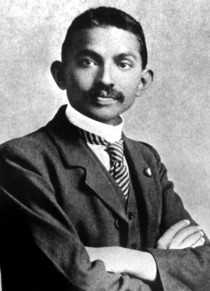
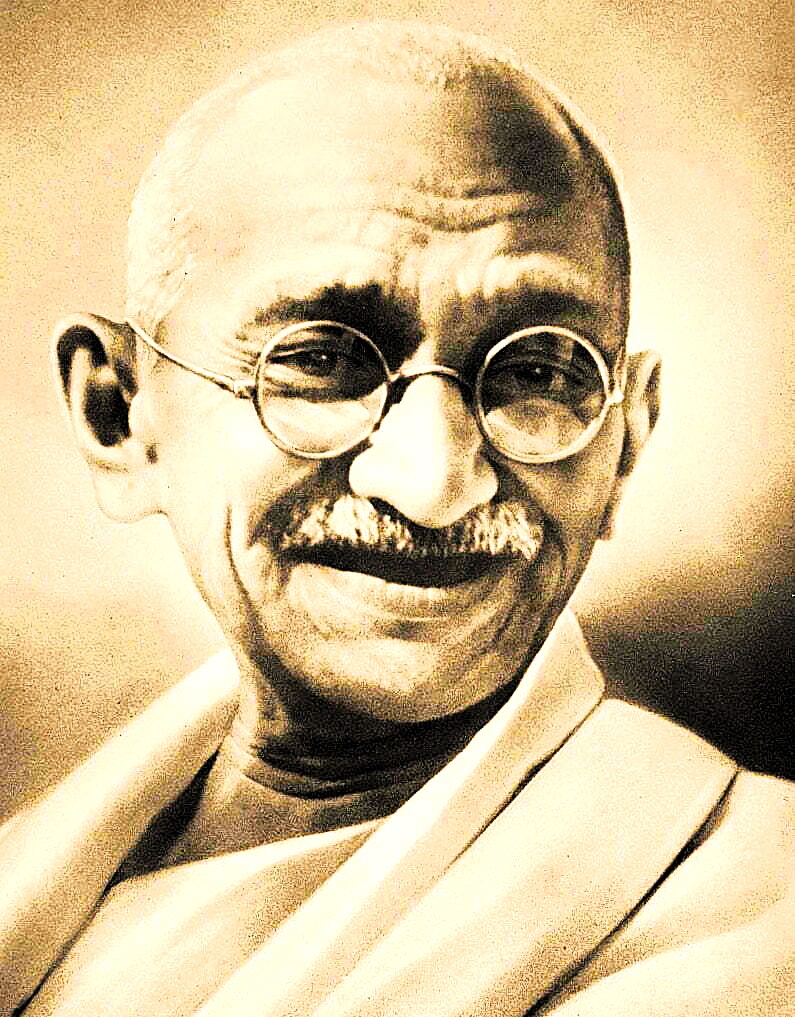
However, Söderblom's and Gandhi's father problems pale in comparison with acts of insanity committed by several of today's leaders. Despite everything, the Swedish bishop and the Indian prophet of non-violence and self-sacrifice were both great idealists working hard for the good of humanity. Something I find hard to believe that many of our contemporary leaders are doing.
When I read about the Aspberger syndrome and consider the lack of empathy demonstrated by admired warmongers such as Putin, Netanyahu and not least Donald Trump, I can't help but think about how individual men, who certainly suffer from some kind of mental disorder. puts our whole world in danger. How they and their activities have become a counterpoint to Christmas's good news of peace on earth and concern for its inhabitants.
I have just returned from Prague, where people dressed as angels and St. Nicholas wandered among people in streets and squares. However, they were followed around by the eerie demon Krampus and his monstrous attendants, rattling pieces of metal and bells to make their presence felt. A picture as good as any of these times when the joyful message of Christmas is tarnished by crimes against humanity in places like Ukraine, Gaza and Sudan, while for political reasons they are swept under the rug and/or denied by the likes of Trump and Co.


I read about how Trump's Secretary of War, Pete Hegseth, recruited from the poison-spreading TV channel Fox News, ordered the killing of all survivors of American attacks on supposed "drug botas" in the Caribbean Sea. Of course, this was denied, but I assume that the brutal order was entirely in line with the behaviour and language that thrives under President Trump's leadership.
This strange man's way of thinking is frightening, not least because of his binary imagining of good and evil, where the good stands for bitter attacks on everything that might threaten Trump's power and self-sufficiency.
Hegseth heads what was once called the Department of Defence, but has now become the War Department, in order to "radiate strength and determination," as the President's executive order dictated. A president who in the Israeli Knesset, during a visit to his friend "Bibi" Netanyahu, coldly and in his usual, carelessly messy way, blurted out:
We make the best weapons in the world. And we've got a lot of them. And we've given a lot to Israel, frankly. And I mean, Bibi would call me so many times — "Can you get me this weapon, that weapon, that weapon?" Some of them I never heard of, Bibi. And I made them, but we'd get them here, wouldn't we? And they are the best. And you used them well.
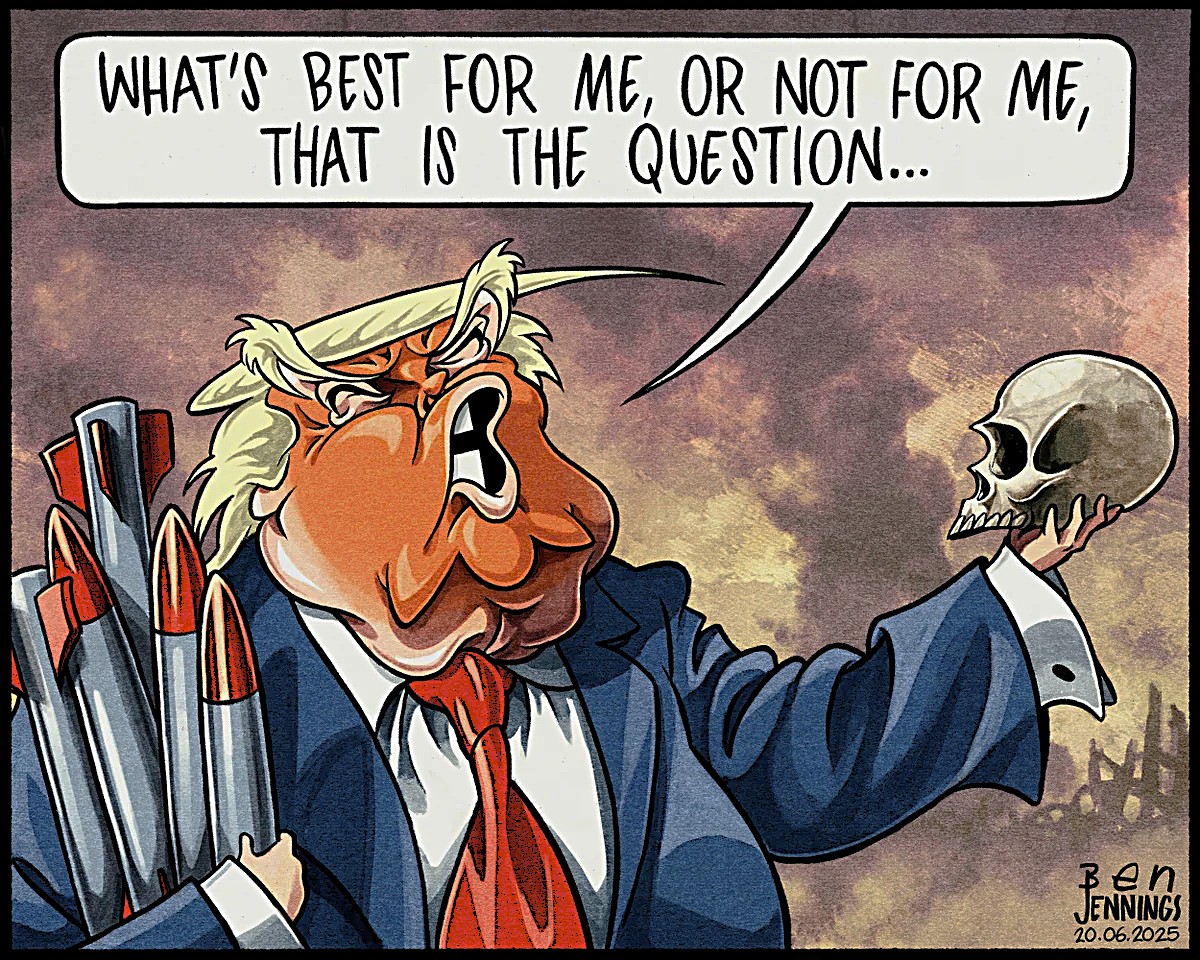
Like a violent schoolboy, Trump indulges in films about brutal martial arts and considers aggressiveness to be a solution to all kinds of problems, whether it be social exclusion within megacities, or domestic drug consumption. Attack "external" factors – immigrants, foreign drug cartels, etc. and beat them down with a language characterized by force, violence and use of armed forces, then all domestic problems will be solved.
Trump's rhetoric emphasizes themes such as crisis, division and disloyalty. He presents himself as an outsider and likes to talk about himself as an unusually intelligent man who solves any problem on his own. Trump claims that he, sometimes he does like Caesar talk about himself in the third person, is fighting against a corrupt political establishment, even though he and his regime are actually part of just that. Trump is trying to provide an impression that he cares about people's feelings of vulnerability, their worries and insecurities. A game that makes him stuff his speech with emotional appeals and promises to restore an imaginary and now lost national "greatness". Messages encapsulated in vulgar, simplistic and tediously repetitive language.
Despite this obvious acting, Trump's miserable use of language seems to resonate with a wide audience and reinforce a hollow and non-binding message. Complex questions are boiled down to simplified statements about good and evil, spiced with bland words like "always" and "never". Trump’s followers are encouraged to consider Trump's political opponents to be forces of evil and what he claims to be external threats as existential dangers to the entire nation. Armageddon is just around the corner, but like a Messiah Trump alone will save the United States from this imminent threat. Lies, empty promises and grotesquely exaggerated claims are used to celebrate Trump’s glamour and questionable achievements and warn of fictitious dangers.
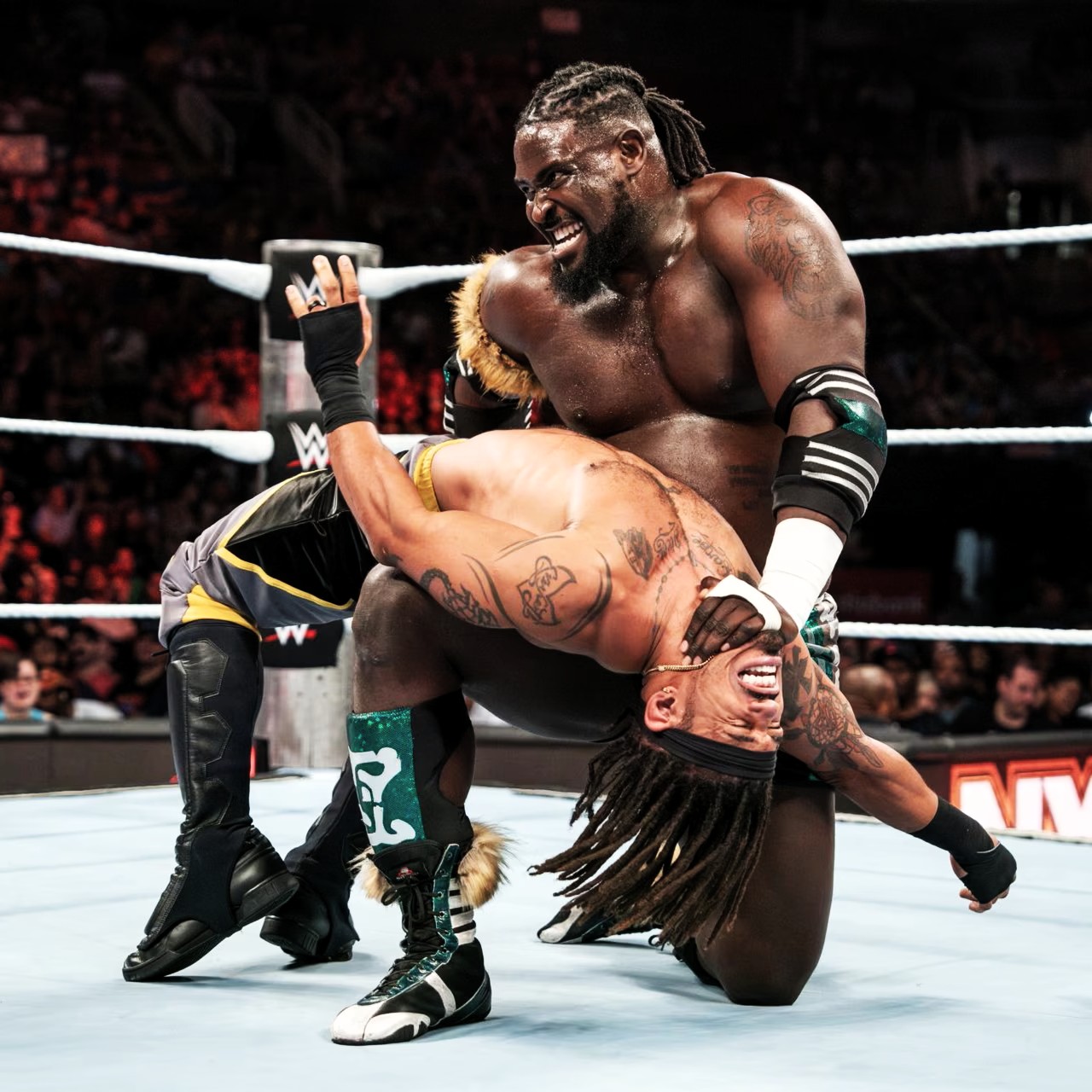
The question is whether Trump really believes in all this or whether politics for him is some kind of show. As the big fan he is of so-called professional wrestling, Trump knows very well what the term kayfabe means.
Professional wrestling is in fact a show, where the brutality is fake. However, part of the matter is that wrestlers flatly deny accusations that their matches are "fixed" and accordingly tend to remain in their characters, even when they are not performing within the wrestling ring. This is because several of them seem to believe that their fans would otherwise let them down. Habitués of professional wrestling generally appreciate kayfabe, i.e., the blurred line between reality and acting.
Perhaps Trump's world is a form of kayfabe, where both friend and foe do not really seem to know what is real and what is just for show. Where truth and lies have lost their true values and everything has become a form of acting.
I suspect that Trump's world, as well as the one of those who voted for him, is a result of what the French philosopher and multi-tasker Guy Debord (1931-1994) called the society of spectacle, La société du spectacle. A world where what was once authentic has been replaced with performances/copies. What once was has by the commercial interests been transformed into a performance, a chimera/a commodity.
A society based on relationships between real people has now become something where everything can be calculated. Our present existence is based on utility functions that easily might be translated into economic values, based on questions such as "what is the use of this? What’s in it for me? How can I benefit from her, or him? How can I exploit everyone else for my own profit?"

There is a sinister reality behind Trump's populist rhetoric, his terrifying vision of a hostile world can be directly linked to a steadily increasing political hostility, and because it often contains direct or implied threats to perceived enemies, it breeds a very tangible atmosphere of fear and violence. Especially since Trump likes to throw the blame for social problems on specific groups, or individuals. A cynical and immoral language of power that has rubbed off on the outside world, completely in accordance with the saying: "If the U.S. sneezes, the whole world catches the flu."
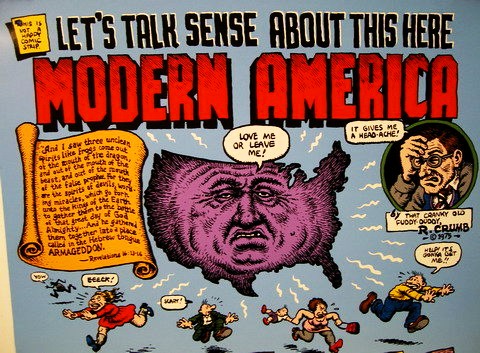
A few days ago, I read with horror and wonder the new U.S. National Security Strategy, hailed by the Russian government, in which the “European Union and other transnational bodies” are accused of that undermining
political liberty and sovereignty [through] migration policies that are transforming the continent and creating strife, censorship of free speech and suppression of political opposition, cratering birthrates, and loss of national identities and self-confidence.
The Security Strategy warns that “should present trends continue, the continent will be unrecognizable in 20 years or less.” The document describes a Europe deeply immersed in an economic decline overshadowed by a "clear possibility of the destruction of civilization."
The largely unrealistic document lists horrendous shortcomings that make one assume that is actually Trump's USA or Putin's Russia that it depicts, and not the so-far mainly decent Europe I live in, where threats, in my opinion, do not come from any liberal, social democratic flank, but from the reactionary so-called patriotic forces on which the National Security Strategy seems to place its hopes.
Trump's minions in the atrocious MAGA movement seem to believe that the Europe as we know it will perish, unless their friends in the "patriotic" parties of the far right, with fascist and Nazi corpses hidden in their closets, manage to take power and "revive" solid European traditions (whatever they may be?), regain “civilizational self-confidence” as well as abandon a” failed focus on regulatory suffocation.” I shudder at the thought.
American diplomacy should continue to stand up for genuine democracy, freedom of expression, and unapologetic celebrations of European nations’ individual character and history. America encourages its political allies in Europe to promote this revival of spirit, and the growing influence of patriotic European parties indeed gives cause for great optimism.

If the personality of a war criminal like Vladimir Putin to a large degree remains a mystery, Trump is like an open book. When Trump first came to power, I read a lot about him. I became most impressed by Tony Schwartz's account of the twelve months from the end of 1985, which he spent with Trump to ghostwrite his successful book Art of the Deal.
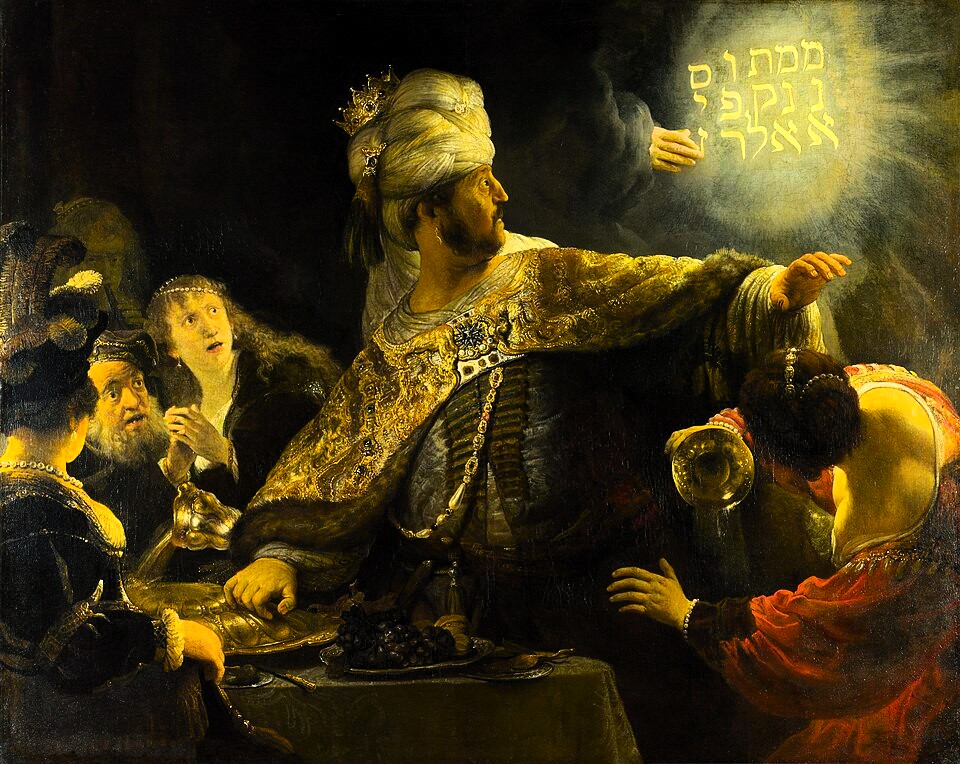
I have now also once again read Michael Wolff's Fire and Fury Inside the Trump White House, which depicted Trump's first hundred days in power, during his first term. To my surprise, I found how adequate Wolff's portrayal of Trump and his supporters still is, with the exception that everything is so much worse now that an aging Trump incomprehensibly once again has been elected to be the world's most powerful man. Even then, all the signs were written on the wall: MENE, MENE, TEKEL, UPHARSIN!
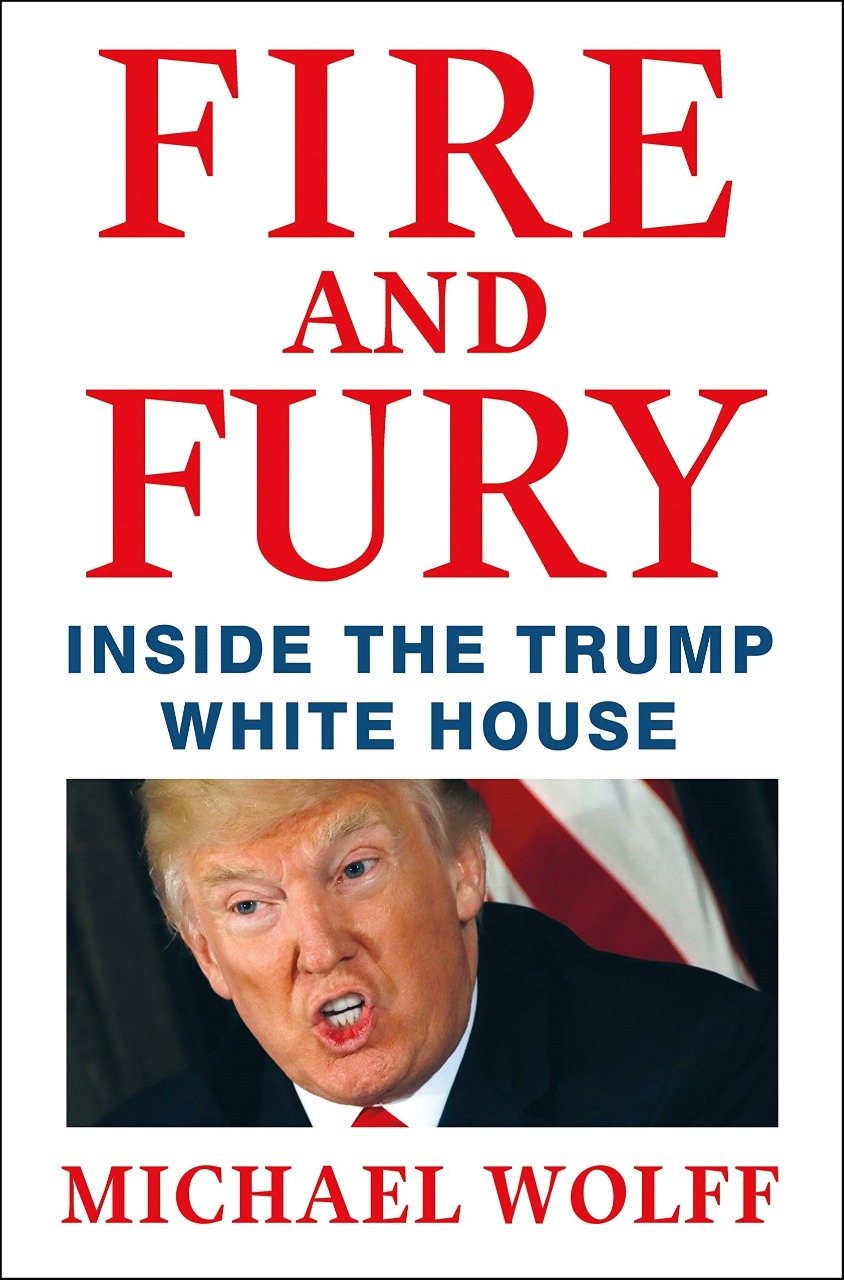
To his horror, Schwartz found in 1985 that Trump had an extremely limited patience. How difficult it was to get him to sit down and talk about his life, or even answer simple questions from Schwartz. For the most part, Schwartz had to be content with following Trump on his heels, listening in to his conversations with others. Although Trump later boasted about how much he had worked on the book, Schwartz stated that he had not written a single line, let alone read the entire book.
Lying is second nature to him. More than anyone else I have ever met, Trump has the ability to convince himself that whatever he is saying at any given moment is true, or sort of true, or at least ought to be true. […] He lied strategically. He had a complete lack of conscience about it. Since most people constrained by the truth, Trump’s indifference to it gave him a strange advantage.
Schwartz believes that difficult childhood turned Trump into the quite strange personality he has become. Behind his self-constructed façade as an admirable politician and skilled businessman, all of it stressed by bragging, bullying and obvious self-assurance, there is another Trump. According to Schwartz, Trump's inner world is haunted by the frightened child whom the adult man compensates and hides through bluffing and lying. The fundamentally tragic, but at the same time, dangerous President finds his mental origins in a relentlessly critical and harassing father and a distant and uncommitted mother, who neither could, nor would protect him.
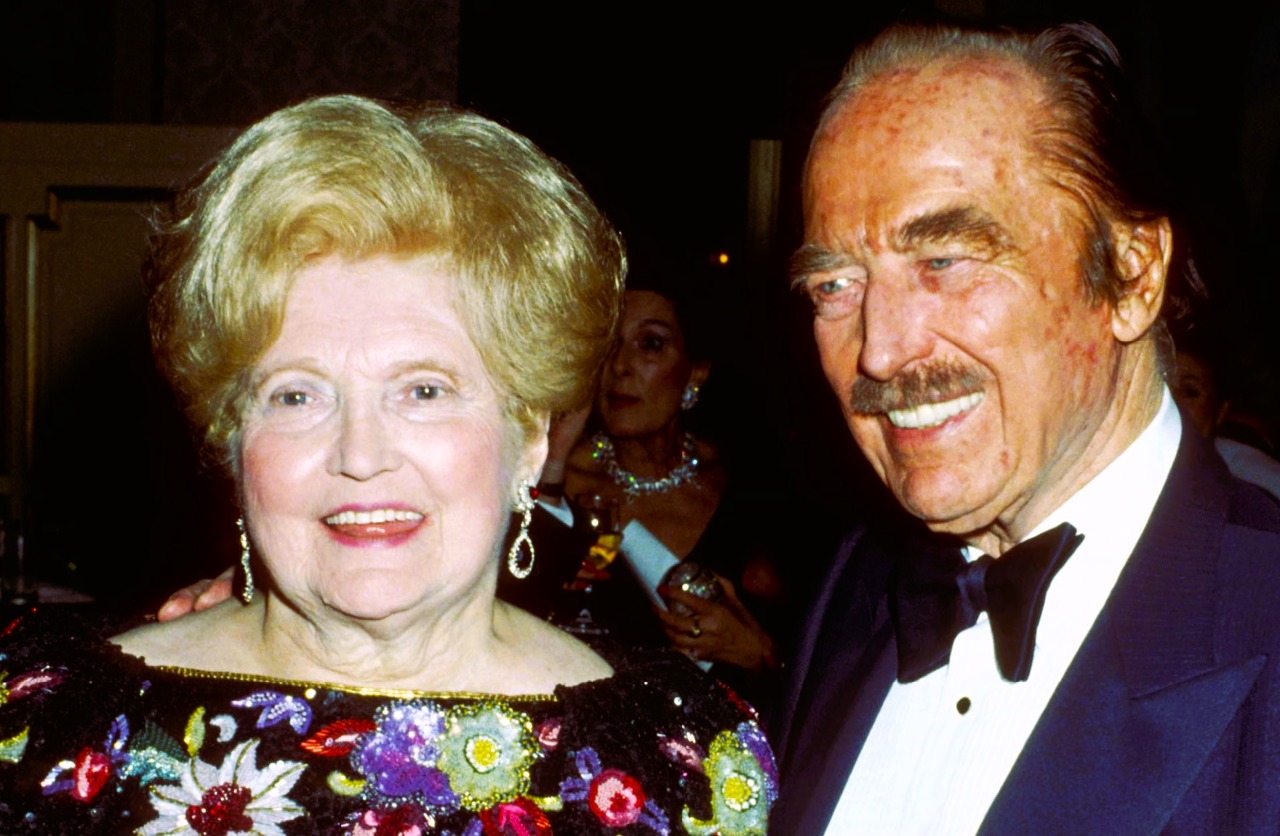
For those close to him the signs of Trump’s inadequacies are quite terrifying and the fate of the world now seems to be linked to a man who is stuck in delusions about his own excellence and makes sure to surround himself with flatterers who fuel his self-centeredness.
Schwartz believes that Trump actually has an absolute lack of interest in everything beyond power and money. This observation is in line with the impression of Trump conveyed by a man I just over a year ago met in the Dominican Republic. He is a millionaire and because he has major interests in an exclusive resort, he hosted Trump for more than a week, before he became president for the second time.
Trump was planning to make a couple of major investments in the Republic and the man, whom I met at a dinner arranged by a friend of mine who is an economist, told us that throughout this time, Trump demanded to be guided to various places and introduced to various key people. Trump's energy was astonishing and the man had to serve him continuously. What he discovered, however, was Trump's conspicuous disinterest in anything but presumptive profit opportunities. His speech and personal interest were one-sided – either you were a shabby loser, a liar, or you were the best och the best, a fantastic person. Slander and praise flowed from Trump's mouth, but it was difficult to know if he was really fully present, except when his interest had been aroused by the possibility of a lucrative deal.

A well-known saying states that the fish rots from the head, and in Trump's case, it seems that this obvious decay is spreading throughout the body of society.
I wrote that Trump is like an open book, which means that his intentions are for all to see. That's not quite true, some pages are sealed, but even they tell quite a lot about Trump's personality. We can easily perceive why he doesn't want to reveal his school grades, because they would reveal that he was a mediocre student and not nearly as intelligent as he claims (by the way, no one has ever seen the amazing IQ tests he so often refers to). Trump also hides his tax returns because they might expose shenanigans and perhaps even an occasional shady deal. He also thwarts the publication of anything that would disclose his intimate association with the paedophile Jeffrey Epstein. Perhaps, most of us would also like to hide away less honourable aspects of our lives, but few of us have a saying in the world's current and future destinies.
Many of those who have had a cursory knowledge of Trump and met him in person have experienced him as far removed from the bombastic and aggressive rabble rouser of televised mass rallies. On the contrary, Trump has come across as neither easily irritated, nor combative, he appears to be a rather calming person, quick to give praise to and flatter his occasional company. An enthusiastic optimism characterizes his intimate appearance, especially when it comes to anything that concerns himself and his open confidence easily rubs off on those he meets, as long as he is not contradicted.
Trump has furthermore been praised for his unexpected ability to manifest a certain humorous self-awareness. Privately, he apparently doesn't come across as a tough guy, rather like one of his long-time close collaborators, Steve Bannon, described him as – "a big warm-hearted monkey".
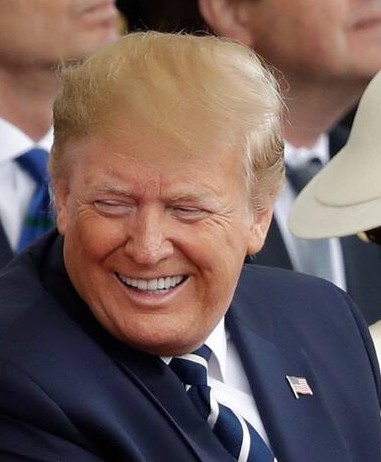
Most of Trump's appearance seems to be a peculiar mixture of surface and calculation. However, what soon becomes apparent, especially to those who work close to Trump, is his appalling ignorance. There is virtually no subject he masters, except possibly house construction, everything else he appears to have picked up an hour or so before a meeting and even then, it has generally been half digested. In addition, his interest and patience are extremely limited. Trump never reads any longer text and is reluctant to listen to others, unless they pay tribute to him, or pass on some gossip and slander.
However, Trump compensates for his lack of literacy and patience with other things. He is gifted with an overwhelming presence that he plays out like a star actor, relying on his intuition and on what he assumes to be the audience's interest. It has happened that people around him have been asked whether he is talented – is he knowledgeable? Is he capable enough for the demanding presidency? The answers can then often be: "I don't know, but there is no doubt that he is the big star of the entire show, its main attraction."
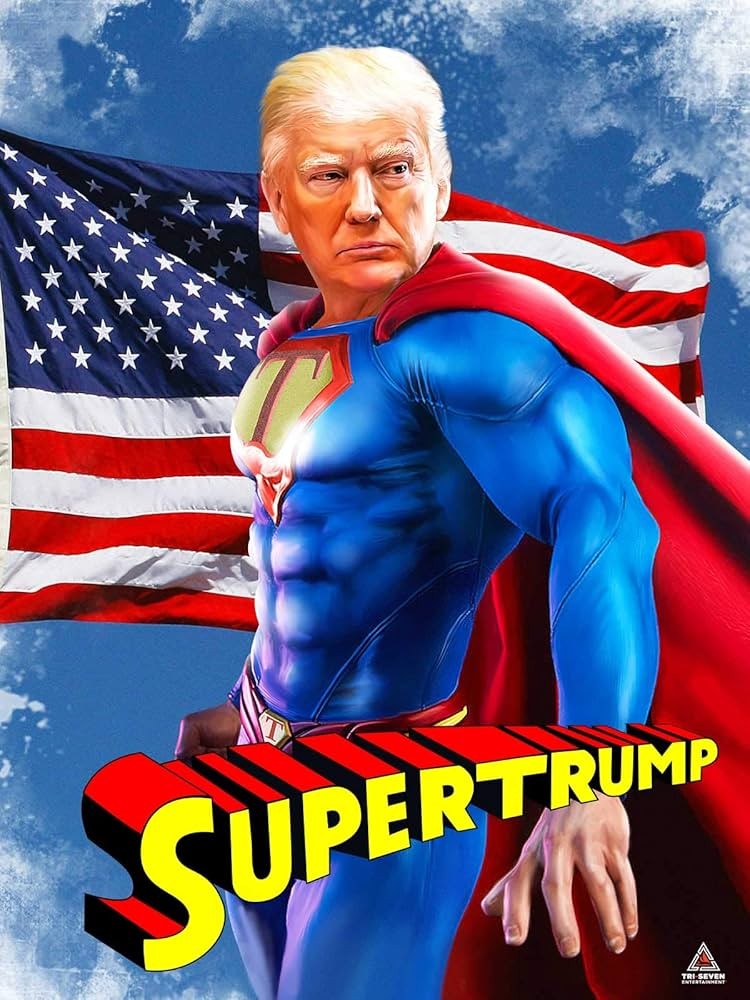
Trump seems to go through life guided by what appear to be a boundless belief in his own abilities, although this may be a hard-won conviction. "Great" men like Napoleon and Trump are probably constantly busy playing the role of themselves and probably, from time to time, need to relax from their demanding portrayal of a genius
This is perhaps what made Trump to get locks for the door to his bedroom in the White House, which he does not even share with his wife Melania. At the end of the day, the President of the United States does not allow anyone to enter his inner sanctuary, neither room service, nor wife or children, while lying in bed watching one of the three large TV screens, he has had installed. Maybe he also eats one or two cheeseburgers and makes long calls to someone he assumes he is familiar with at the moment. He rarely sleeps for more than four hours and his energy can therefore appear to be astonishing.
It is possibly that during lonely, nightly hours Trump is acquiring the "knowledge" he uses during the day. Or as Tony Schwarz stated back in 1985. Trump's short attention span has left him with
a stunning level of superficial knowledge and plain ignorance. That’s why he so prefers TV as his first news source—information comes in easily digestible sound bites. I seriously doubt that Trump has ever read a book straight through in his adult life.
Actually, Trump appears to be a very lonely man, despite all his quest for media attention, his huge ego, his "charm", his tendency to excessively praise people, and to speak well of and favour his children in particular (other "friends and acquaintances" he tends to get rid of when he doesn't need them anymore).
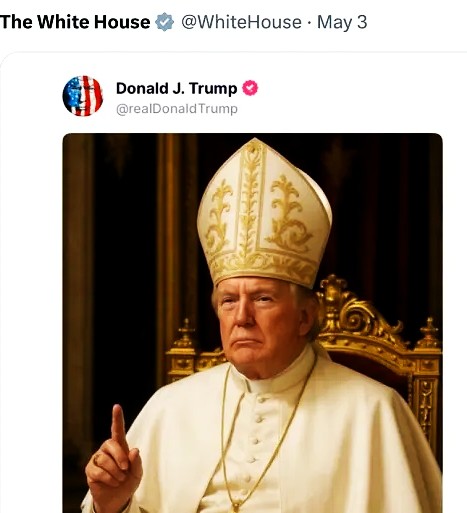
Since Trump had the bad taste to publish on his website an AI-generated image of himself as pope after Pope Francis' death, it was easy to identify him with Francis Bacon's roaring popes, trapped as they are within their own authoritarianism.
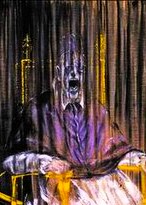
It is quite possible that Trump's self-centeredness is no different from that of so many others who have grown up in a controlled environment, characterized by economic wealth and superficial socializing. But what seems to be a rather specific characteristic of Trump is his apparent lack of "social discipline." He reveals himself more often than not as incapable of demonstrating accepted decency. It is known that he on a one-on-one basis can burst into embarrassing obscenities, without taking into account who he is talking to.
He is said to lack the ability to converse in a rational manner – in the sense of listening; a giving and taking of information. This means that Trump has a tendency to speak into the blue in an unstructured way and repeat himself over and over again.
If he wants something, Tump's attention can be both sharp and lively, but when something is expected from him, or a committed interest is requested on his part, he almost immediately loses patience and can become visibly irritated. An annoyance that might, especially if he is not finding himself in the spotlight, turn into uncontrolled anger and open contempt. The degrading invectives he takes pride in applying to his opponents are well known, as is his limited vocabulary.


There are also many indications that Trump was far from being a demanding father, though he was largely absent father during his children's upbringing. The eldest son was named Donald though Trump was reluctant to give him his own name since he feared that he "might become a loser." The magazine Vanity Fair reported after learning that his father had betrayed his mother with the actress Marla Maples, the then twelve-year-old Donald Trump Junior reproached his father by stating:
How can you say that you love us? You don't love us! You don't even love yourself. You just love your money.
After a long period of distancing himself from his father, Donald Junior, like his brothers and sisters, is now back part in the family business, enjoying all the power and wealth that this entails. In a 2004 interview with New York Magazine, Don Jr., as he is commonly known, explained after he had been reminded of his statement during his father's divorce:
Listen, it's tough to be a 12-year-old. You're not quite a man, but you think you are. You think you know everything. Being driven into school every day and you see the front page and it's divorce! THE BEST SEX I EVER HAD! And you don't even know what that means.
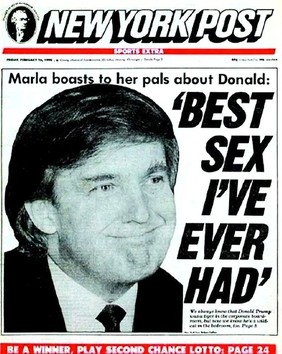
But now everything is different. Donald Trump Junior is a trustee and vice president of the Trump Organization, and runs the company together with his younger brother Eric. During their father's first presidential term, the brothers continued to make new deals and foreign investments, as well as accept offers of cooperation and payments from foreign governments, despite promising not to do so.
Don Jr. was active in his father's 2020 presidential campaign, gaining press attention for his unfounded and sometimes outlandish claims. After his father lost the election, Don Jr. advocated the so-called "stolen election conspiracy theory" and demanded an "all-out war" against the "falsified results." He also spoke at the rally that led to the storming of the Capitol and threatened Trump's opponents by stating we're coming for you.
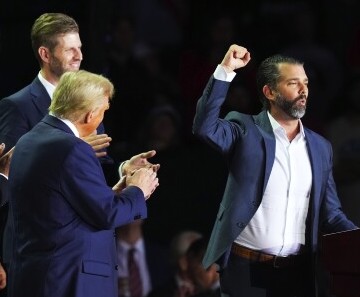
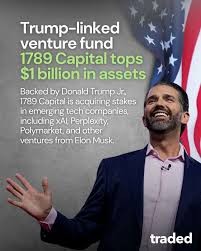
During Trump's second term, Don Jr. has avoided any political position and instead became co-owner and advocate for 1789 Capital, a venture capital firm focusing on products and companies associated with "conservative values."
1789 Capital describes itself as a firm promoting "patriotic capitalism" and invests in companies that are anti-woke and America First. 1789 Capital is thus, according to its own description, only interested in "entrepreneurship, innovation and growth" and has declared itself to be opposed to ESG or DEI.
ESG has long been a red rag for Donald Trump. It is an abbreviation of the words Environment, Social and Governance, indicating an investment principle that prioritises democratic corporate governance, as well as environmental and social considerations. Trump also abhors DEI (Diversity, Equity, Inclusion), an organizational framework that aiming at the promotion of a fair treatment of and full participation for people belonging to groups that have historically been underrepresented, marginalized, or discriminated against on the basis of ethnic/social identities or disability.
The newly started 1789 Capital has so far received contracts from the Trump administration of an estimated USD 735 million and is currently investing in the weapons industry, video games, e-cigarettes, online pharmacies, AI development, cryptocurrency forecasting companies, and conservative media production.
When I wrote that Trump was like an open book and that we are extraordinary well informed about both his official appearance, and the private persona of Donald John Trump, it does not mean that he is unique in that respect. Other authoritarian narcissists such as Adolf Hitler and Benito Mussolini have also had their personalities studied inside out.
Hitler has been described in a large number of biographies, of which I believe the two parts written by Ian Kershaw are among the best and most detailed. Then there are a lot of testimonies from those who have been more or less close to Der Führer. Particularly interesting among these are probably Albert Speer's carefully arranged memories of his former boss and friend. Even Hitler's personal valet Heinz Linge has described his boss in great detail and had nothing bad to say about him, other than that he had terrible breath.
Mussolini has also had his life mapped out in great detail, not least in eight voluminous biographies written by Renzo De Felice, and concerning this narcissistic despot there are also a great number of reliable eyewitness accounts. However, unlike what is currently written about Trump, almost all of these interesting writings cane come out after the death of the dictators.
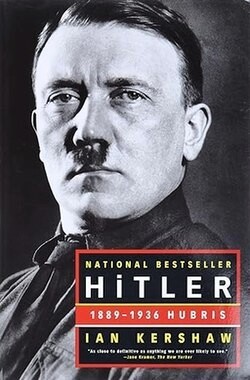
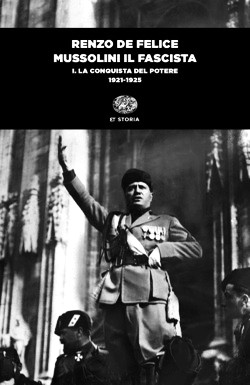
Another difference between these despots and Trump is, of course, that the victims of the two dictators' power madness and prejudices were far more numerous than what Trump will leave behind. Moreover, the American president is not a dictator, not yet at least.
Another interesting difference is that both Hitler and Mussolini wrote a quite a lot and were avid readers, as well as culturally interested, not least were they musically gifted; Hitler played the piano and Mussolini the violin. Like Trump, however, they were in their own eyes great men and at the height of their power surrounded by officially, boundlessly admiring minions.
Their trivial humanity, however, became evident in their pathetic defeat. Hitler's neurotic self-deception and outbursts of anger are skilfully interpreted by Bruno Ganz in Oliver Hirschbiegel's film Der Untergang, The Downfall. While Mussolini in Carlo Lizzani's Ultimo atto, The Last Act, in Rod Steiger's impressive portrayal, with his mistress Claretta Petacci aimlessly wanders around the Italian countryside, abandoned by his men and chased by partisans.
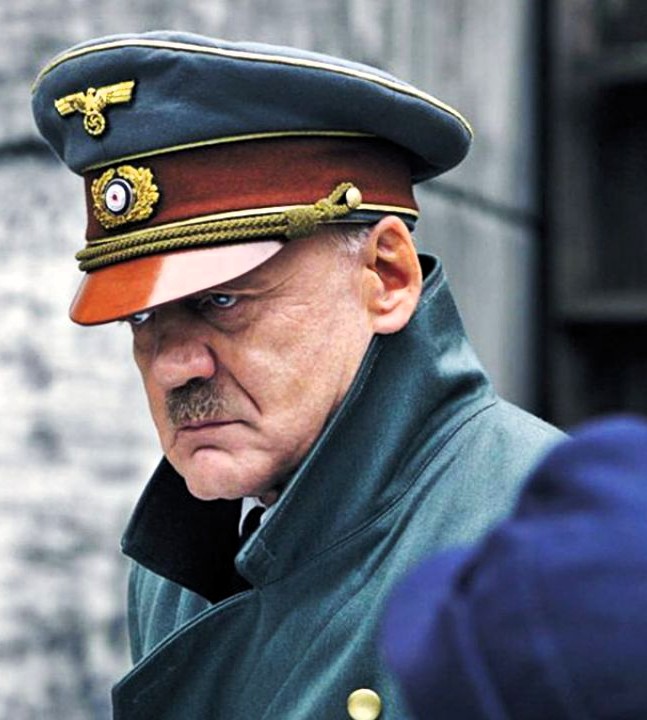
When books and films portray despots like Hitler and Mussolini as human beings and not as demons of authoritarianism and madness, they are occasionally accused of doing just that – describing them as if they were human beings and just like us endowed with emotions such as bitterness, sadness and anger.
For sure, Hitler was a monster, but the terrible truth about him was that he was also a human being, worshipped and admired by millions. I think it is useful to regard perpetrators of violence as individuals, as when Åsne Seierstedt titled her book about the mass murderer Anders Breivik – One of us: A story about Norway. The awful fact about all these tyrants, murderers, heroes and saints is that they are/were all human beings, neither demons nor gods.
We find it difficult to describe hated or loved people for what they really are and might thus more or less consciously use animals to help us describe them; hungry as a wolf, cunning as a fox, industrious as an ant, pious as a lamb, stubborn as a donkey, brave as a lion, and much more like that. We are thus all ethologists who draw similarities between animals and humans, just like Konrad Lorenz and his ilk.
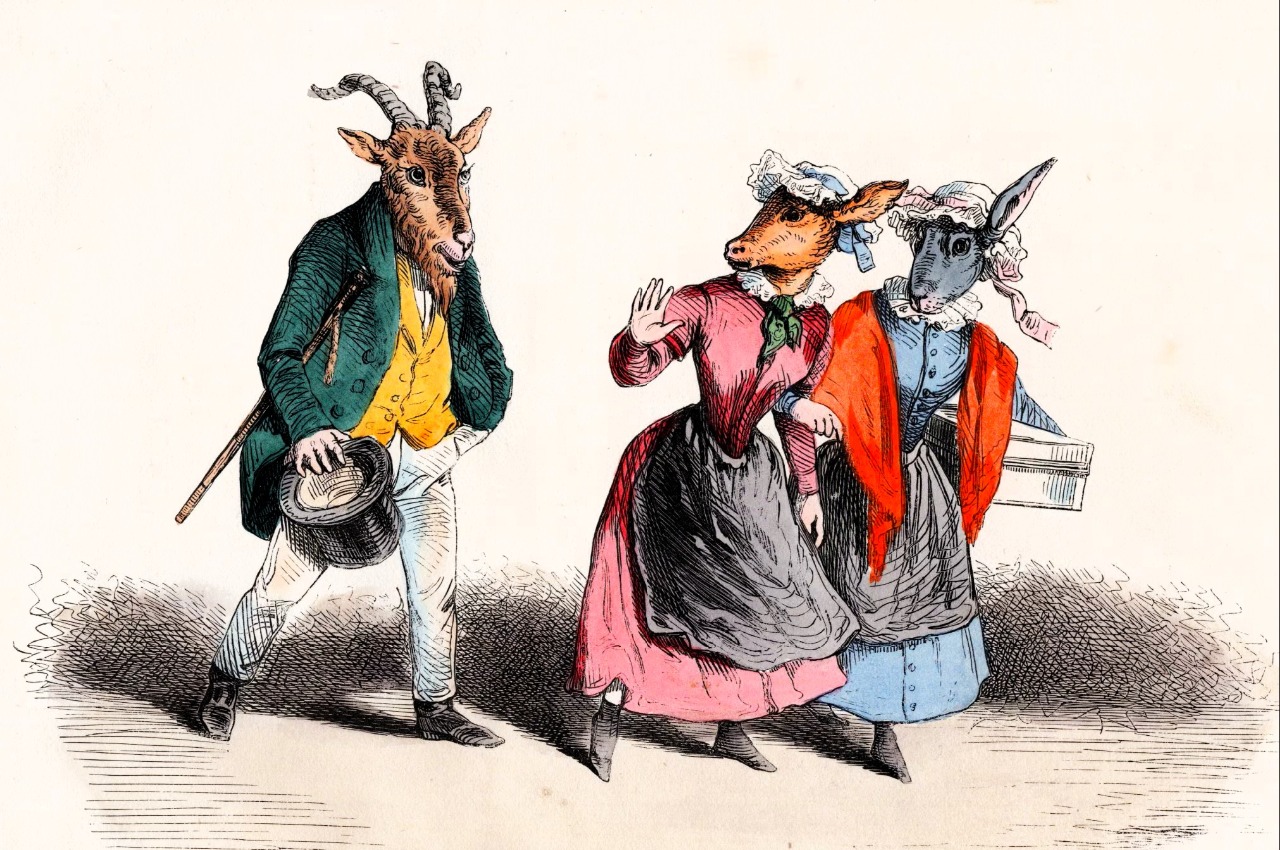
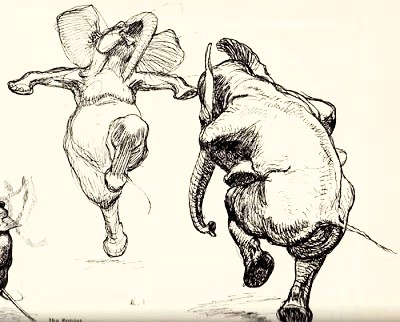
What am I when I write my blog posts about how the big elephants are dancing? If not, an insignificant little ant who could easily be crushed by their heavy feet.
To return to the ethologists' findings and possible allusions to human society, I cannot avoid telling you what I learned some time ago.
An anthill is a perfectly coordinated structure and can thus be likened to a kind of organism, a collective brain in which each individual insects is perfectly integrated into a whole that would not function without the coordinated activities of all members of the anthill community. The centre of an anthill is always the abode of the child-producing, constantly courted queen, guarded, fed, and defended she lives deep down in the artificially constructed hill’s interior, its sovereign and raison d'être.
Sacred scriptures and oral traditions around the world have celebrated the diligence and cooperation of ants. In books and nature films, we witness their constant zeal and endless work.
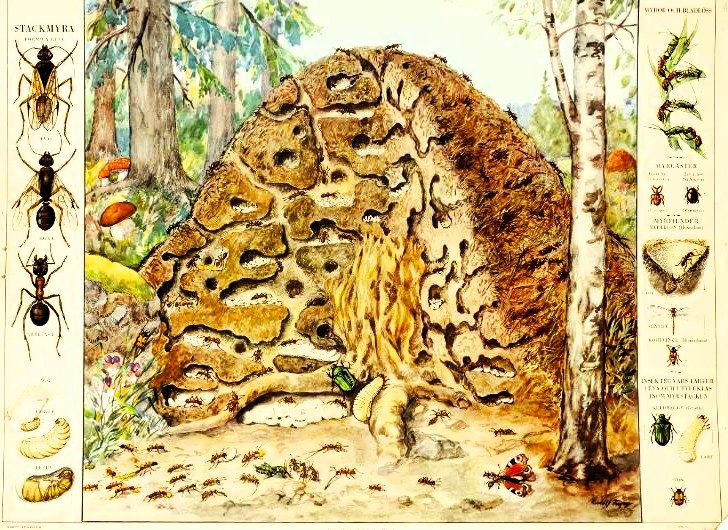
Imagine my surprise when I a few years ago learned that about a quarter of red wood ants, formica rufa, apparently do not work at all, while their congeners work day and night, with only short rest periods.
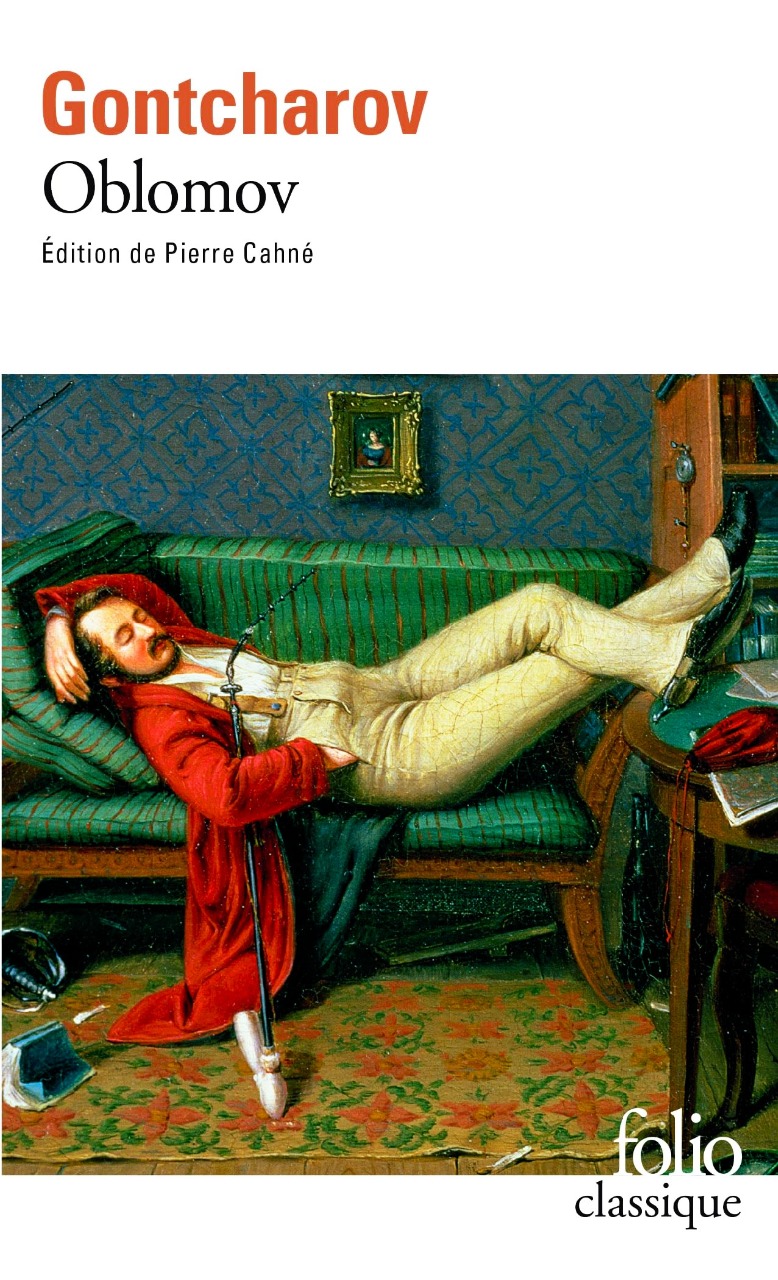
Who are these lazy ants? What is their function/justification? Sure, we know such species from our workplaces and they might also appear in our own family. In any case, they abundantly present in film and literature – Oblomov, Homer Simpson and the popular Swedish lazybone Kronblom, just to name a few of them. They can easily be perceived as a burden on development and evolution, but they are apparently present throughout the animal kingdom and even among industrious ants and bees.
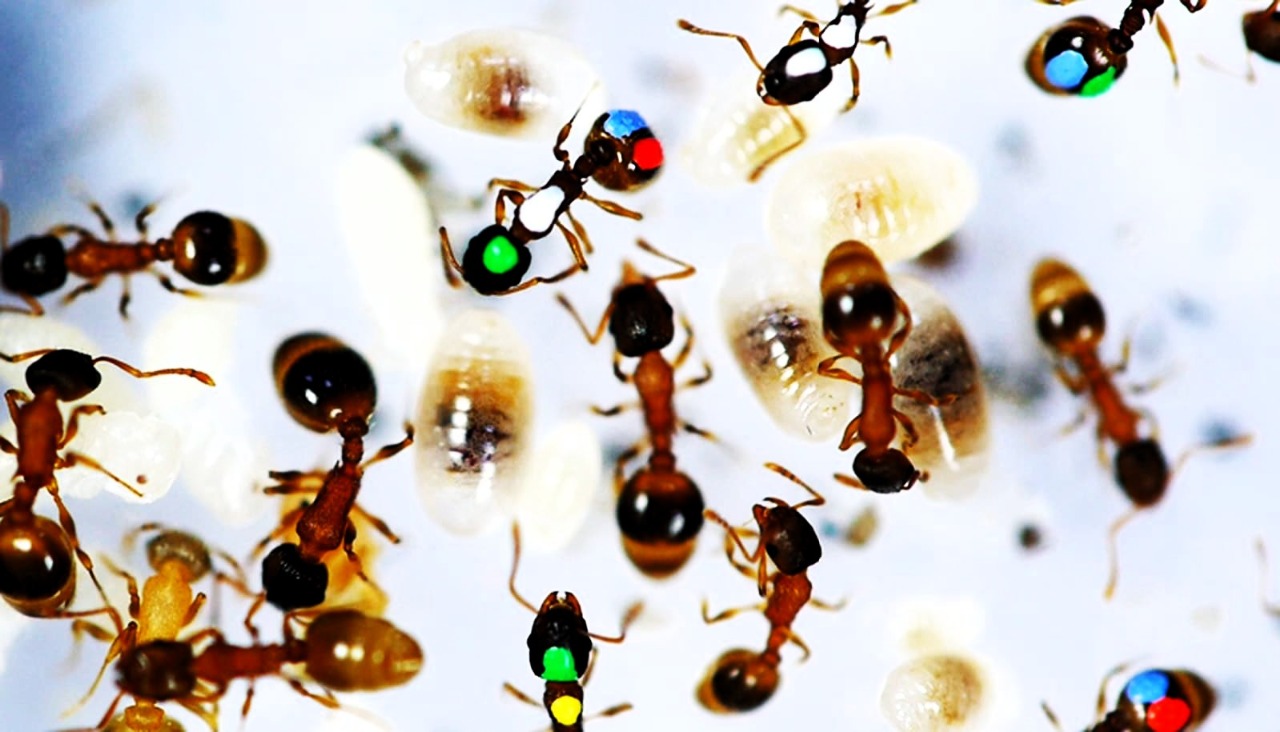
Ants rank as some of the most successful animal species on Earth, especially considering that they inhabit almost every corner of our planet. Is it possible, then, that refusal to work can be an important task in the world of ants?
PhD student Daniel Charbonneau and his supervisor Professor Anna Dornhaus at the University of Arizona coloured a large number of ants to find out what their tasks could be; where and to what extent they were working. They found that while over 70 percent of the ants occasionally took short breaks, 25 percent did not seem to be doing any kind of work at all.
Longer and more thorough studies might possibly be able to unravel the mystery of these lazy ants and their possible benefit to the entire ant colony. Possibly, they may function as some kind of replacement labour force, they are under all conditions fed and cared for by the other diligently working ants, but so far this is only a hypothesis that has not yet been empirically confirmed.
I think of those ants when people around me are wondering why I write my blog posts, about, for example, Donald Trump and Konrad Lorenz. Maybe I am doing some kind of good after all, although it's hard to prove what it could be, and that's how I've ended up where I started – Konrad Lorenz was perhaps right when he stated that our human behaviour is more connected to animal instinct than we realize. But I can't help wondering what use men like Trump, Putin and Netanyahu can have, what might compensate for all the evil they are causing. In any case, they are not contributing to any Christmas peace.
Brenner, Marie (1990) " After the Gold Rush", in Vanity Fair, September 1. Charbonneau, Daniel and Anna Dornhaus (2015) "Workers 'specialized' on inactivity: Behavioural cosistency of inactive workers and their role in task allocation," in Behavioral Ecology and Sociobiology, Vol. 69, issue 9. Deichman, Ute (1996) Biologists under Hitler. Cambridge, MA: Harvard University Press. Debord, Guy (1995) The Society of the Spectacle. New York: Zone Books. Dinkar, Joshi (2007) Mahatma Vs Gandhi. Mumbai: Jaico Publishing House. Evans, Richard Isidore (ed.) Konrad Lorenz Lorenz: The Man and his Ideas. New York: Harcourt Brace Jovanovich. Grahber, Michael (2006) Irmfried von Eberl Euthanasie Arzt und Kommandant von Treblinka. Frankfurt am Main: Peter Lang. Hamann, Brigitte (2010). Hitler's Vienna: A Portrait of the Tyrant as a Young Man. London: I.B. Tauris. Kater, Michael H. (1989) Doctors under Hitler. Chapel Hill: University of North Carolina Press. Kershaw, Ian (2001) Hitler 1889-1936: Hubris. London: Penguin Books. Kershaw, Ian (2001) Hitler 1936-1945: Nemesis. London: Penguin Books. Lifton, Robert Jay (1986) The Nazi doctors: medical killing and the psychology of genocide. New York: Basic Books. Linge, Heinz (2009) With Hitler to the End: The Memoir of Hitler's Valet. Barnsley, South Yorkshire: Pen & Sword Books. Lorenz, Konrad (2002) On Aggression. London: Routledge. Mayer, Jane (2016) "Donald Trump's Ghostwriter Tells All", in The New Yorker, July 18. Murray, Conor (2023)", in Forbes. October 18. Speer, Albert (1970) Inside the Third Reich from Within. London: Weidenfeld and Nicolson. The White House (2025) National Security Strategy of the United States. Washington D.C. outhouse (2025) Van Meter, Jonathan (2004) "Did Their Father Really Know Best?" in New York Magazine, December 3. Wolff, Michael (2018) Fire and Fury Inside the Trump White House. New York: Henry Holt and Company.