
Grönköping's Weekly recently published an interview with the city's mayor, Mårten Sjökvist, in which he expressed his opinion that, among other things,
a lot is happening in the world right now, and old opinions need to be reconsidered, not least when it comes to how states and cities should be governed. The question is whether we should have so much political chit chat, or instead seek out strong men and women who can lead us in times of crisis.
He proposes that Grönköping should henceforth be governed by a city council, which composition should be decided by him alone and have him as chairman, "preferably for life". In this way, we can "get things done and avoid a lot of unnecessary bickering and bureaucracy".
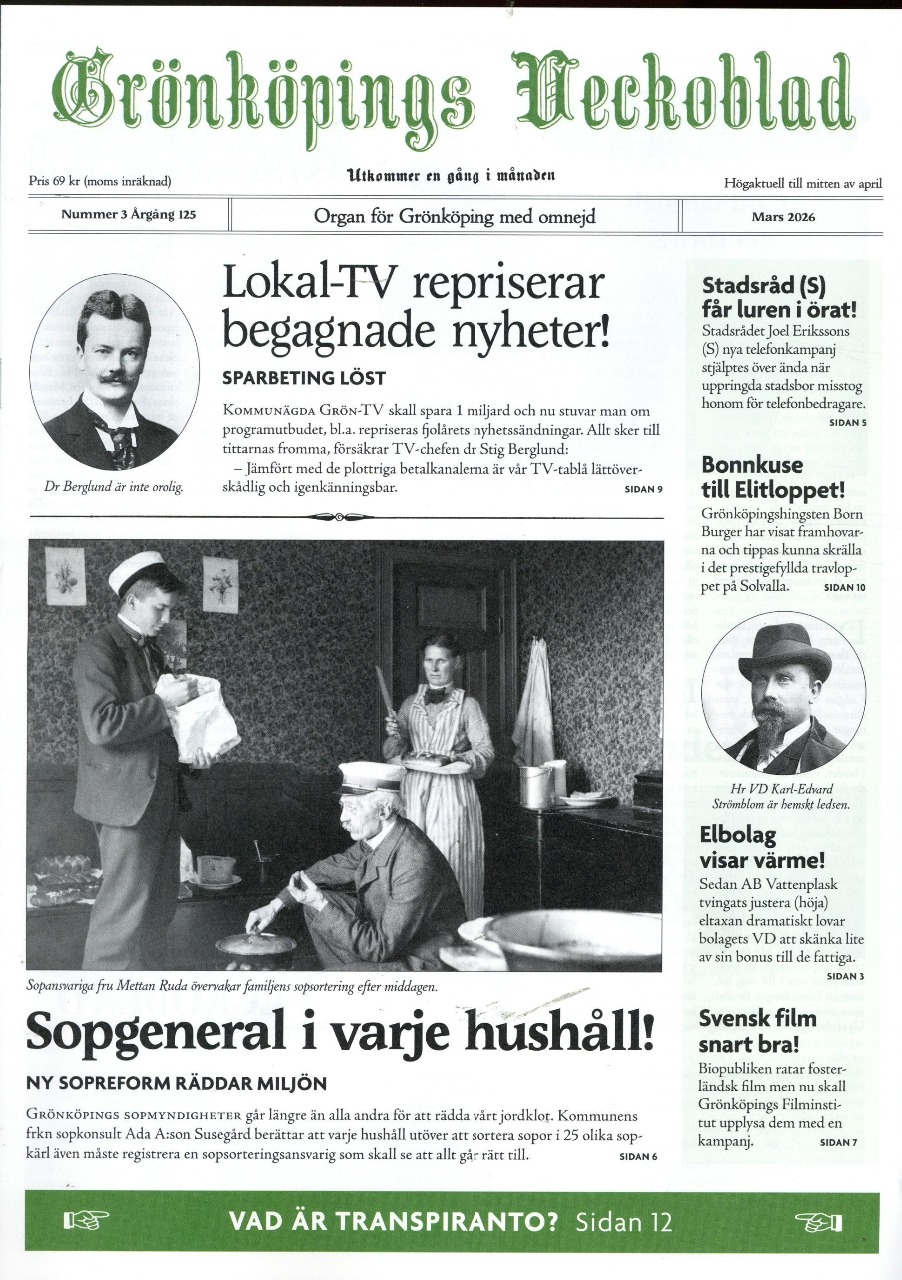
In addition to those "deserving citizens" he intends to appoint to the council Mr. Mayor Sjökvist wants to make room on the board for some "cultivated people", such as his "future son-in-law" the poet A. Vesterlund and his daughter Doris Sjökvist. Mr. Mayor Sjökvist concluded the interview by stressing how important it is to keep up with changing times, something we see "not least on the other side of the Atlantic". With that said, Mr. Mayor Sjökvist returned to sketching the triumphal arch he hopes will be erected on the Town Hall Square.
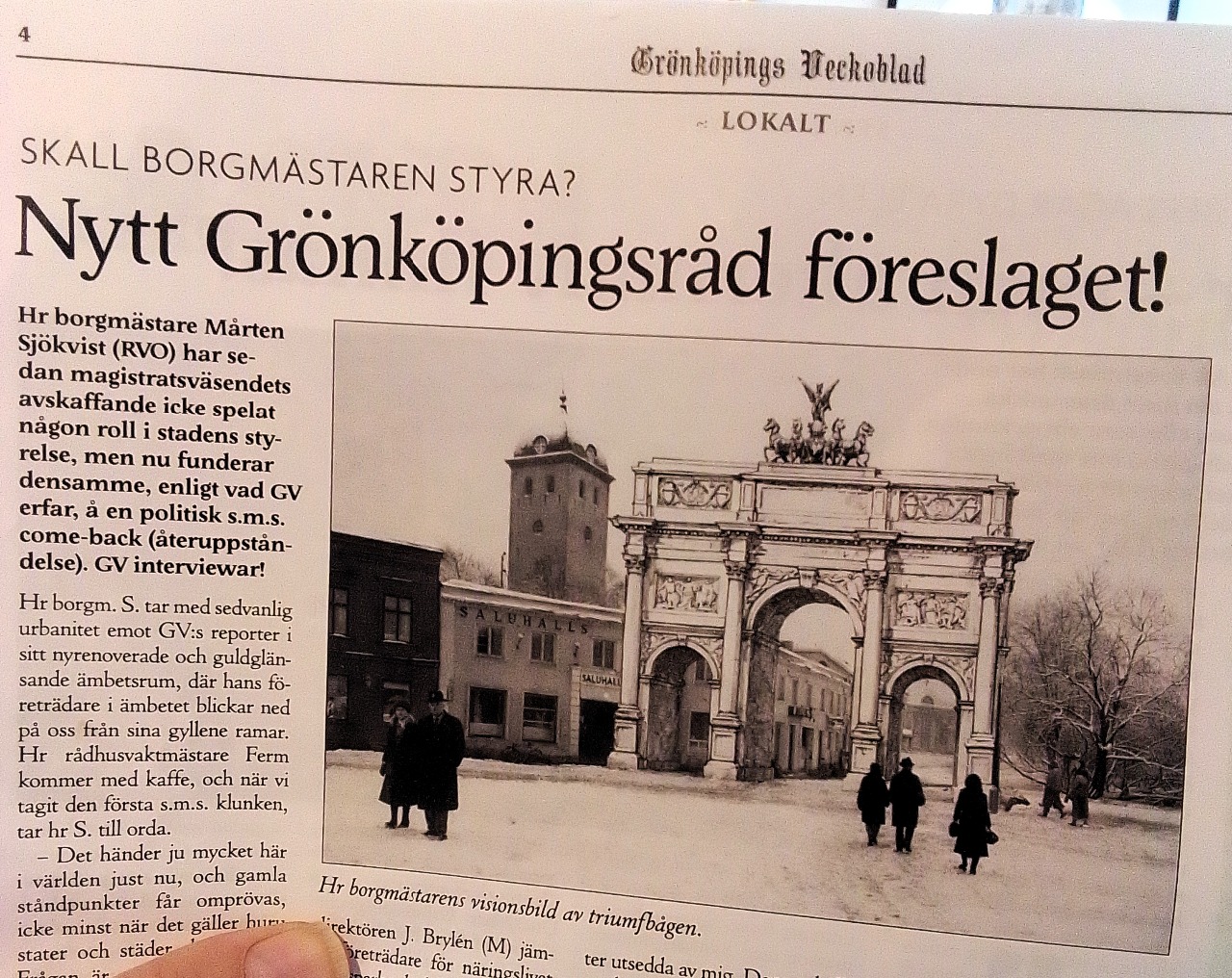
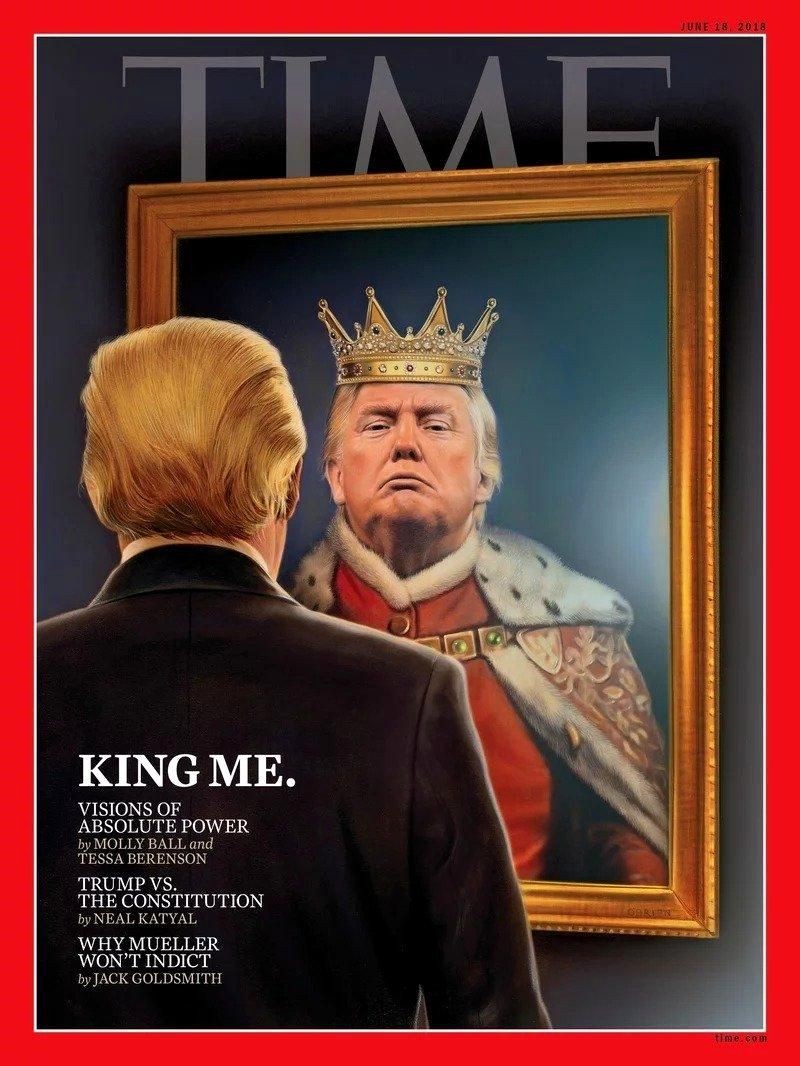
It is quite easy to realize on whom Grönköping’s Weekly poured its customary irony and I thought the last statement was just a made-up allusion to Trump's bombastic redecoration of the White House with gold, marble and a huge ballroom. Imagine my surprise when I saw on TV on Wednesday (April 14th) how the US President's press secretary Karoline Leavitt showed a placard with the triumphal arch that this incomprehensibly narcissistic fool plans to erect in Washington.
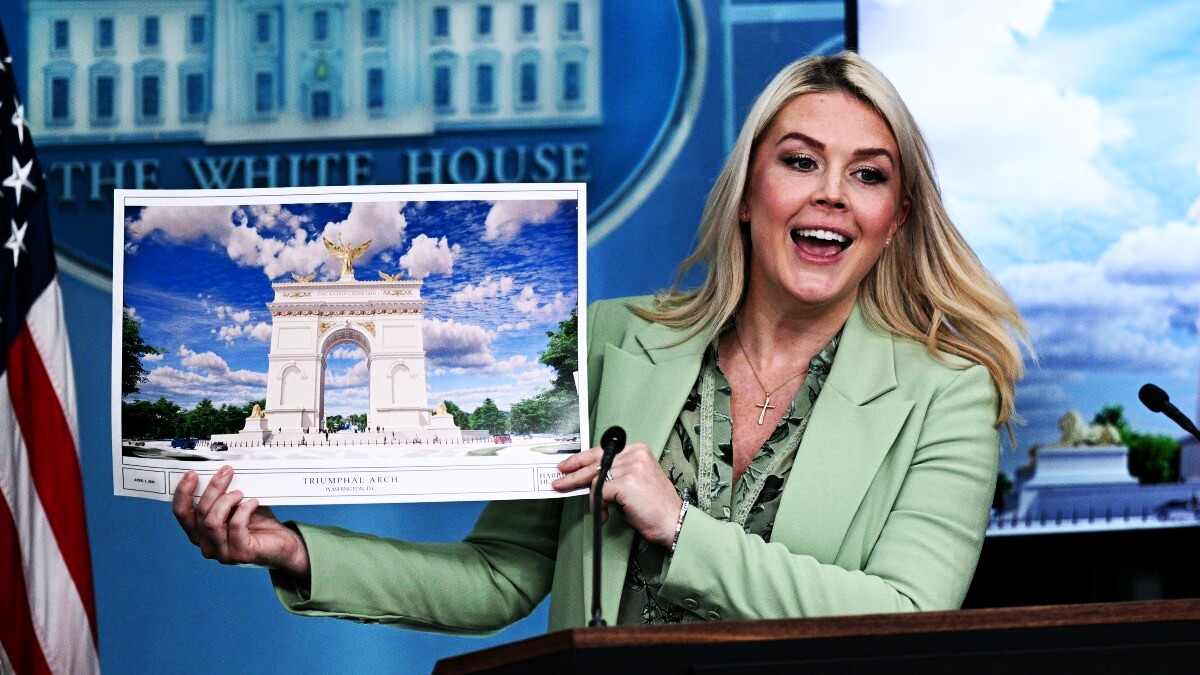
Little did I know that Donald J. Trump already on October 15, 2025 in The Oval Office had showed invited reporters a model standing on his desk; while stating it represented the world's largest triumphal arch. When the CBS reporter Ed O'Keefe asked "Who is it for?" Trump replied, "Me. It will be beautiful." O'Keefe then ironically asked if it would be called the Arc de Trump, a name that was immediately adopted by the media.
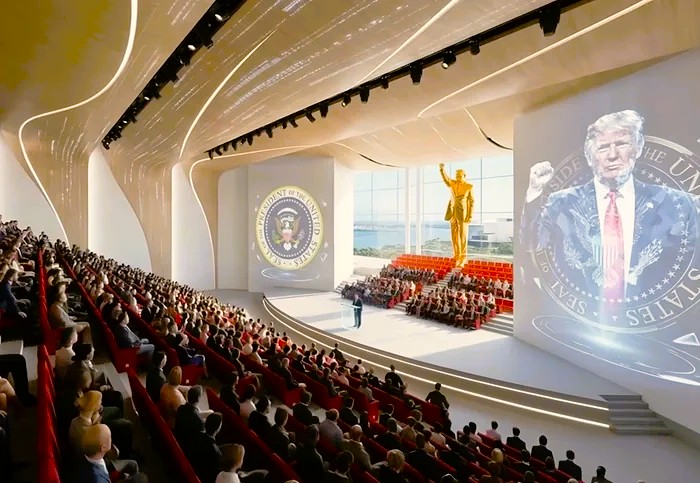
Trump's self-glorification has already reached heights approaching those of the North Korean Kim Jong regime, with its giant gold-covered statues, such as the one in the planned Donald J. Trump Presidential Library in Miami, which does not seem to be concerned with the preservation of books and documents, but bombastic tributes to the glorious era of Trump’s presidency and the man himself, for example in the form of a giant gold-plated sculpture.
Well, the great megalomaniac claims that the giant triumphal arch will be erected to commemorate the 250 years of the United States as an independent nation. At 75 metres tall, it will be larger than its biggest predecessors – the Monument to the Mexican Revolution in Mexico City and the Arc de Triomphe in North Korea's Pyongyang. Pretty ugly creations, both of them.
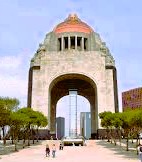
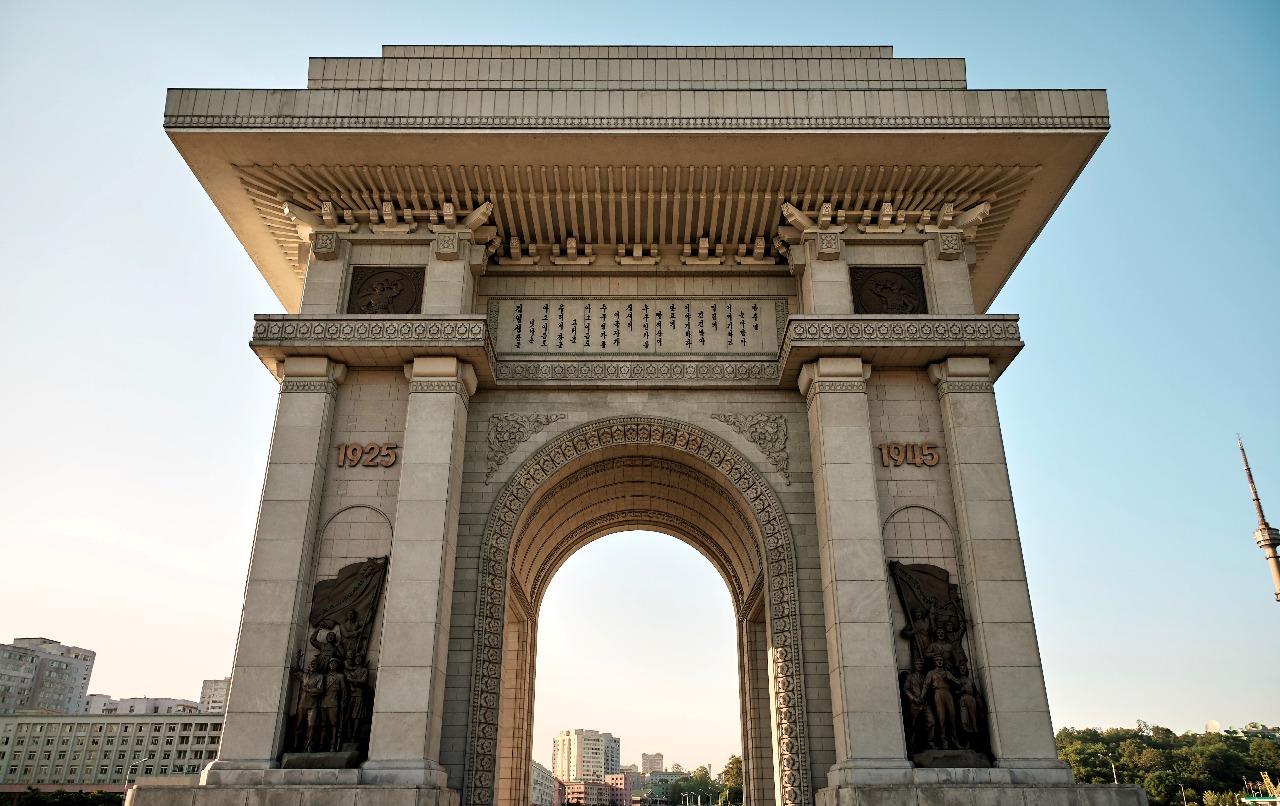
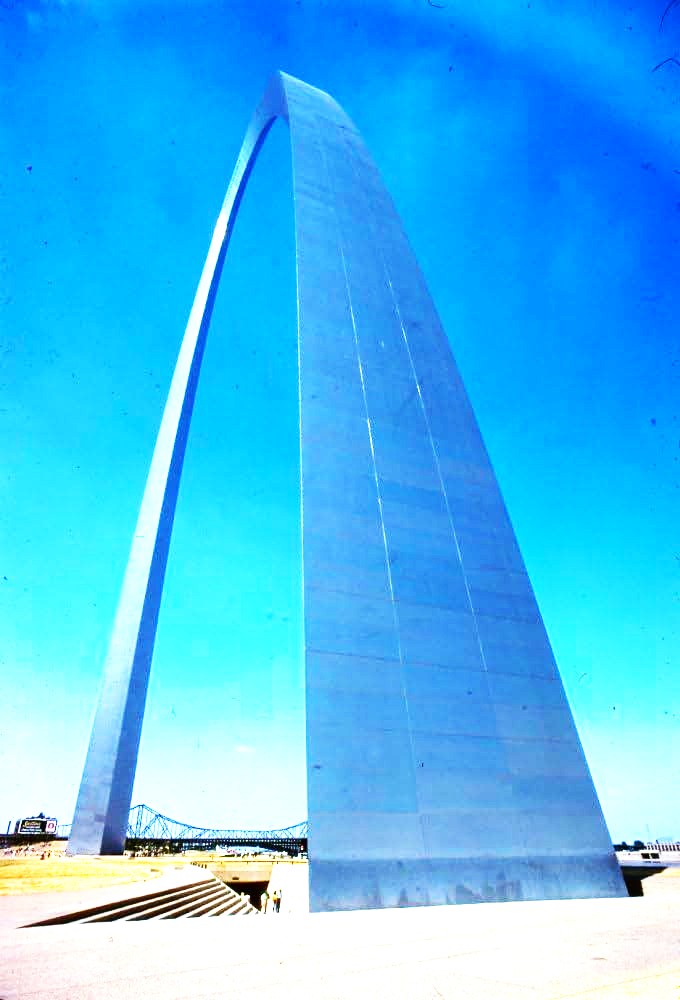
The new giant arch will not be a bold work of art in the style of Eero Saarinen's Portal in St. Louis.
It will be more in line with Trump's own, simpler combination of gold and marble and thus not very original, apart from the oversized format.
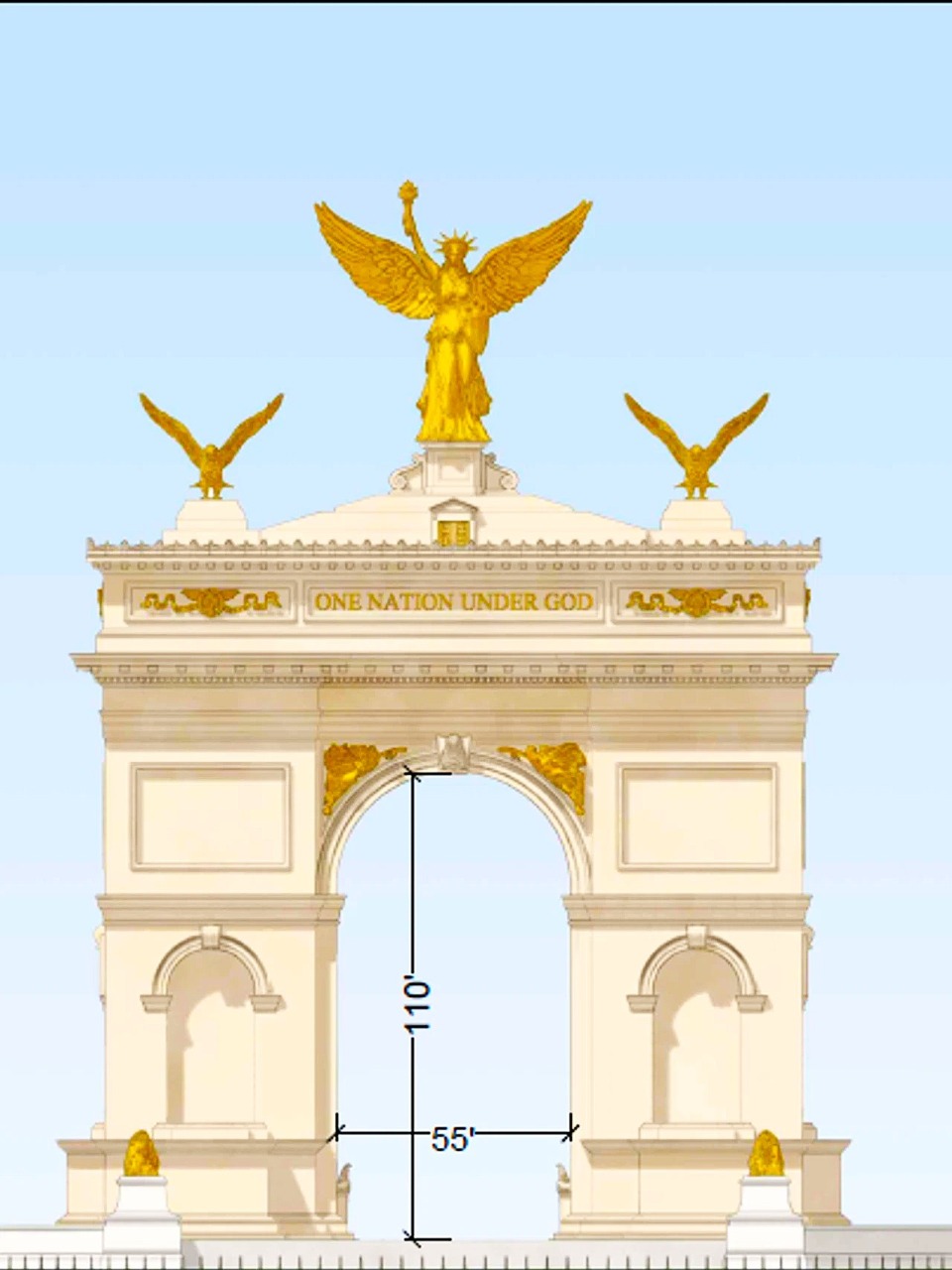
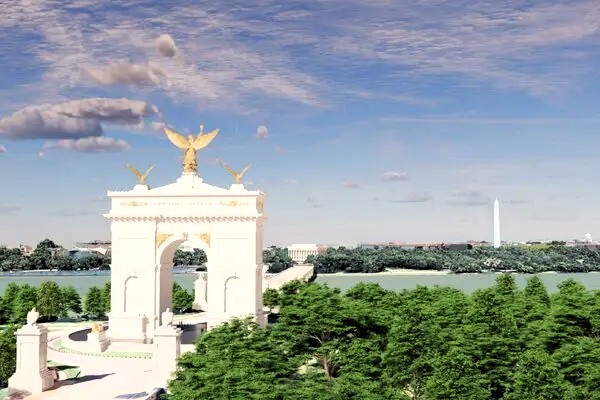
The plans for the monument, which in the usual Trump style will be costly, were approved by The U.S. Commission of Fine Arts, a federal agency responsible for the nation's monuments. It is doubtful that it would have been approved if Trump had not previously fired the former members of the commission and then replaced them with his own choices, most of them completely without experience when it came to art, architecture, or the construction/preservation of public art.
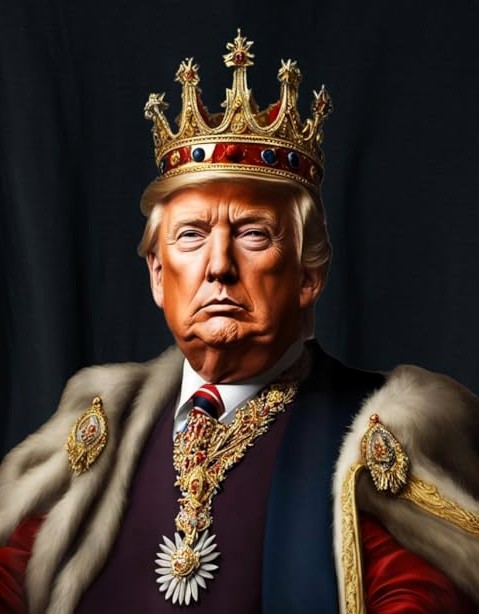
The proposed architect is Nicolas Charbonneau, who states he strives for a classic, European style that abides to and inspires spiritual values. Architectural art, according to him, should communicate emotions in the same way as God does through nature – "God designs his creation according to bilateral symmetry." Maybe so, but we are not gods, even if Trump seems to be moving in that direction and, like Roman emperors, who liked to erect triumphal arches for themselves, he too seems to be striving for an apotheosis – a deification.
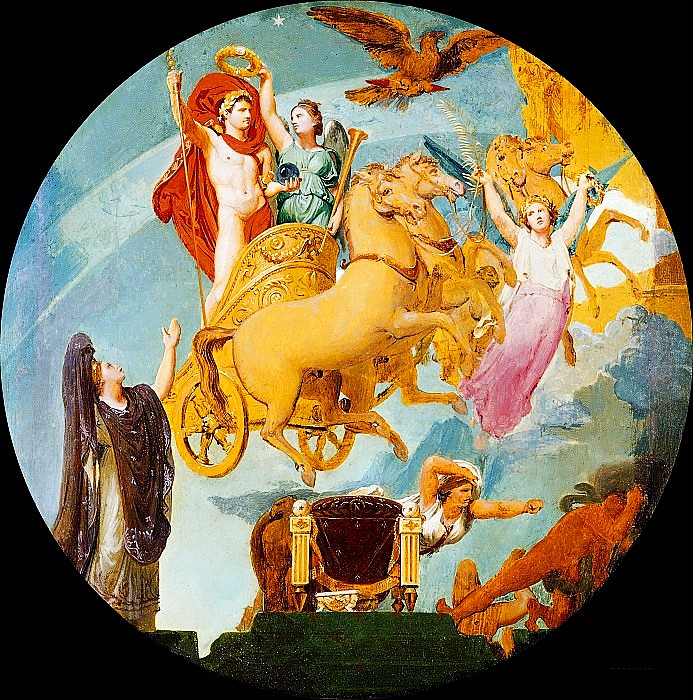
At least if you judge him by the development of his AI-generated self-portraits. What will be the next step? God?
.jpg)

There is no doubt that Trump is mentally unstable, something that was stated already in 2019 by 37 psychiatrists and other professional connoisseurs of both Trump and mental illness (among them Tony Schwartz, who ghostwrote Trump's Art of the Deal). The interesting anthology The Dangerous Case of Donald Trump stressed the "clear and present danger" that Donald Trump's mental health poses to both "the nation and individual well-being."

It's like in the fairy tale The Fisherman and his Wife. The one about how a poor fisherman managed to catch a huge flounder. The fish turned out to be enchanted and in possession of immense powers. When the flounder spoke to the fisherman and begged him "Let me back into the sea, and you shall have everything you want," the terrified fisherman did what the flounder asked for, but demanded nothing for his good deed. When he returned home to his dilapidated cabin, the poor fisherman’s wife became furious: "Idiot! How could you release the fish without wishing for anything! For example, that we ought to get a decent home instead of this horrible shack!" Hesitantly, the fisherman went back and called for the flounder:
Flounder, flounder, in the sea,
listen up and come to me.
My wife, the lovely Ilsebill,
wants not what I will.

Against all odds, the flounder swam up to the shore. Embarrassed, the fisherman stammered:
Oh, there you are! Well, this is not my idea, you see, but what she’s saying is that I should have asked you to grant a wish. She says that she is tired of living in a shed that’s like a pisspot and now she wants to have a proper cottage.
"Go home," said the flounder. "She has already had her wish granted."
However, the woman was not satisfied, soon she wanted a palace, to become queen, empress, pope. The fairy tale emphasized that each palace that came with the new wishes was increasingly impressive, filled with marble, gold, and flattering sycophants. The fisherman's wife, however, expressed no gratitude, no appreciation, only an unbridled desire for more possessions. If, before every request, the fisherman pronounced doubts and hesitations, she became utterly furious.
She flew out of bed and hit him, her hair sticking out wildly from her head, her eyes rolling. She tore off her nightdress and screamed and stamped, shouting: “I can't bear to wait so long! You're driving me insane! Go and do as I tell you, right now!”
With every wish the sea became more agitated, storms raged, and the waves were higher and louder. In the end, in order to be heard above he fury of the elements, the fisherman had to roar out his words:
Flounder, flounder, in the sea,
listen up and come to me.
My wife, the lovely Ilsebill,
wants not what I will.
Confident that she could get anything she asked for, the woman could be hindered. In the end, she wished for the immense – to become God! Now the Powers rose up against her. The storm raged worse than ever and the flounder did not come to shore. When calm descended, everything was just as before – the miserable shack, poverty and listlessness.
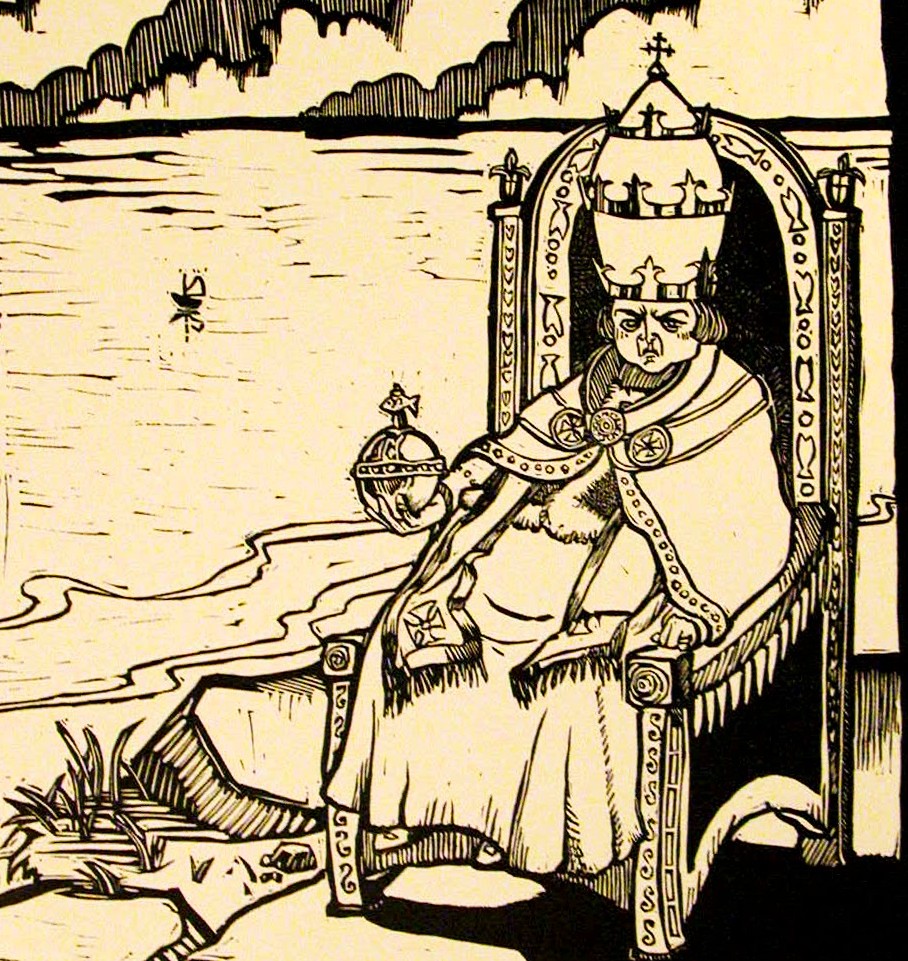
Now let's say Trump is the fisherman's wife and his ever-obedient lackeys are the flounder. How will it all end? Hopefully, his time in power will blow over like the storms in the fairy tale. However, unfortunately he has already done so much damage that it will be difficult to restore it all to "normal".
Trump is far from the first in world history to fall victim to covetousness and self-overestimation. Like the fisherman's wife in the fairy tale, it is doubtful whether he possesses any talents other than an ever-unsatisfied ego and boundless greed. Qualities that, if not curbed by those around him, easily turn into contempt for humanity, megalomania and ruthlessness.
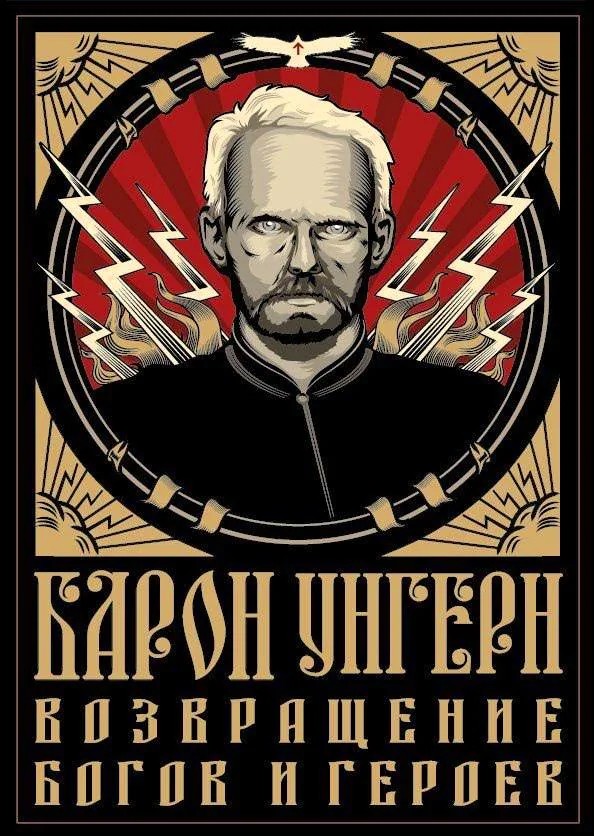
I think of this when I read about the “Bloody Baron", Roman Nikolai Maximilian von Ungern-Sternberg, who by the beginning of last century turned Mongolia into a slaughterhouse where people were tortured, maimed and killed as a result of the baron's twisted hubris and sadistic madness.
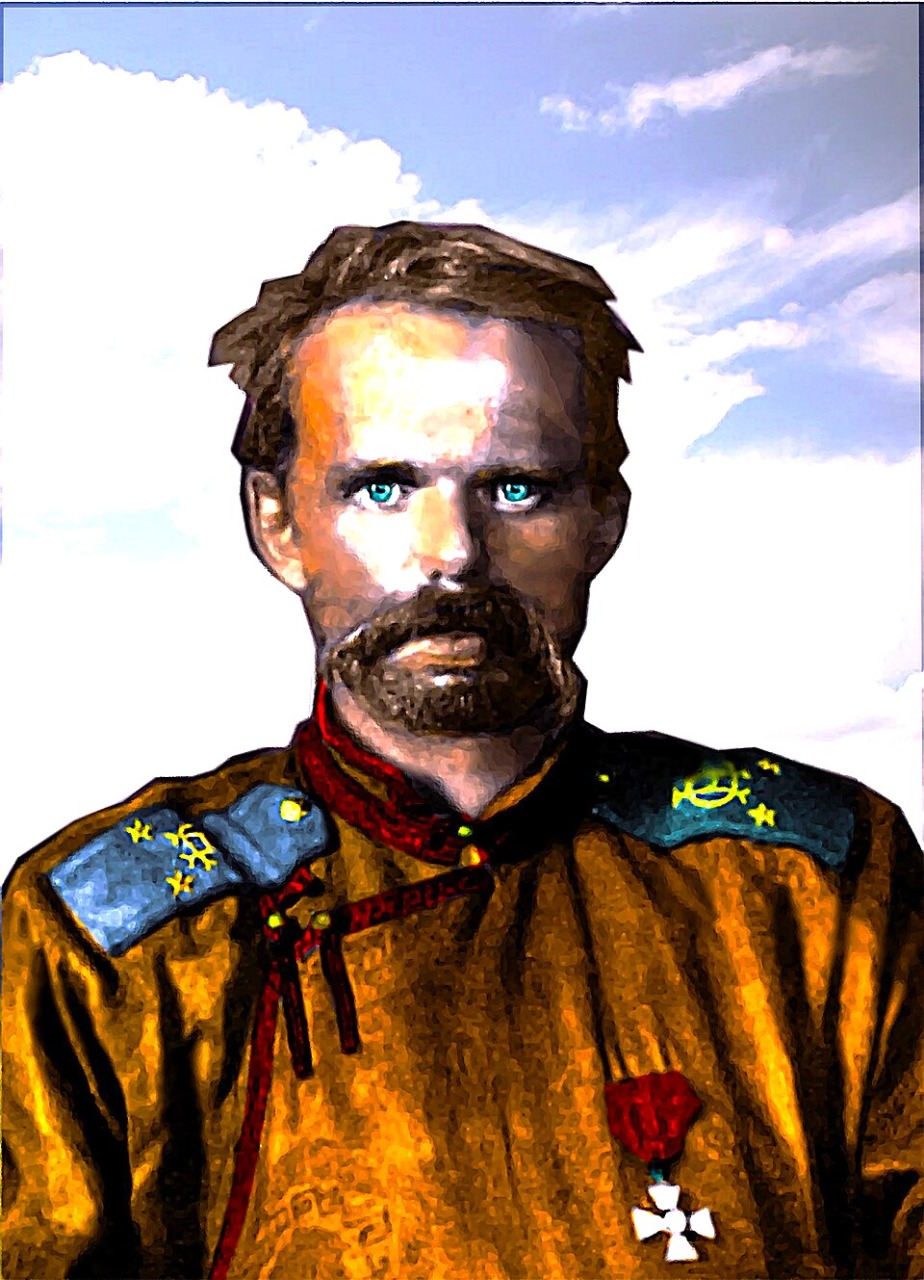
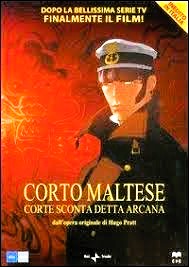
The first time Ungern-Sternberg appeared to me was in a comic book by Hugo Pratt with the untranslatable title Corte sconta detta arcana, perhaps something like The Secret Court of Arcana. Arcana alludes to the tarot deck, which twenty-two trump cards are called The Great Arcana and used for divination and meditation.
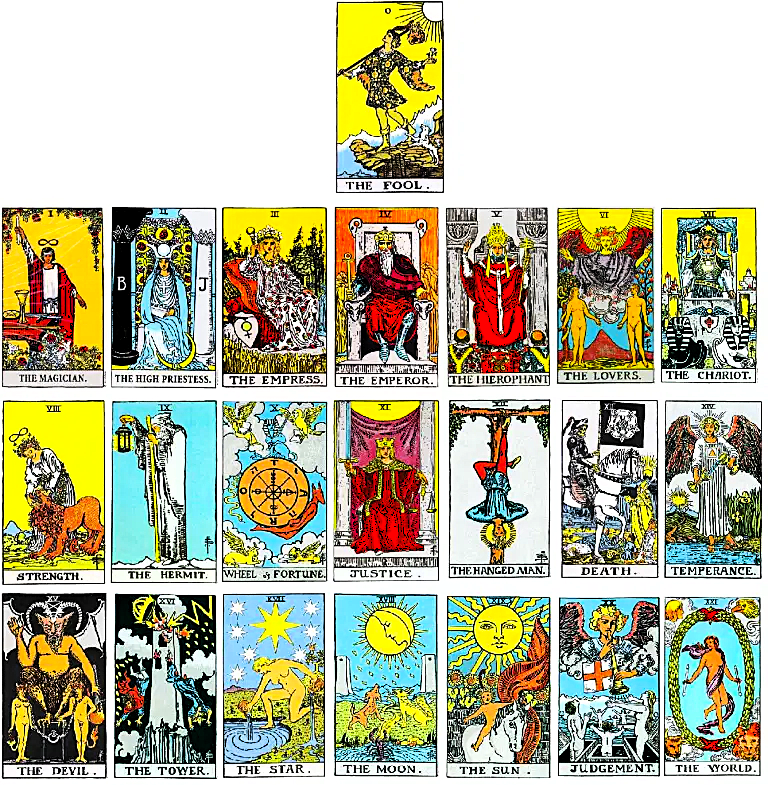
Since the book deals with adventures in the Siberia and Mongolia of the 1920s its title appears to be quite incomprehensible. Although Hugo Pratt's comic books about his hero Corto Maltese occasionally have mystical allusions and the adventure begins in Venice where Corto half-asleep listens to a beautiful fortune teller called Bocca Dorata, the Golden Mouth. She seems to be hundreds of years old, as she came to Venice in the company of the Kabbalist Manoello Giudeo and later became acquainted with Dante. While Corte falls asleep, she lays out La Arcana Maggiore.
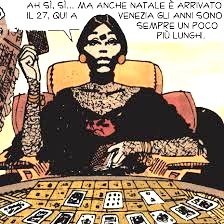
However, as I mentioned, this episode has nothing to do with the thrilling story that follows and which, as in all comic books by Hugo Pratt, also seems to be well entrenched in the time and environment it describes. Hugo Pratt was a world traveller and, like his hero, had a motley background. He was born in Rimini and spent his childhood in Venice. His grandfather was an English Catholic and his maternal grandfather a Jew, married to a Turkish woman. When Pratt was ten years old, his family moved to Ethiopia, where his father was an officer in the fascist militia. Five years later after his father had died in English captivity, Pratt returned with his mother to Venice. He began a career as a successful cartoonist and was in 1949 recruited to Argentina by the writer and cartoonist Héctor Oesterheld (assassinated in 1977 by the Argentine military junta). Pratt returned to Italy in 1962 and alternated his time between Italy and France. Throughout his career, Pratt travelled all over the world, often as part of the research he did in preparation for his comic books, of which the series about Corto Maltese in particular highlighted exotic places and relatively unknown aspects of world history, not least Corte Sconta detta arcana about the battles in twentieth-century Mongolia and the grotesque Roman Nikolai Maximilian von Ungern-Sternberg.
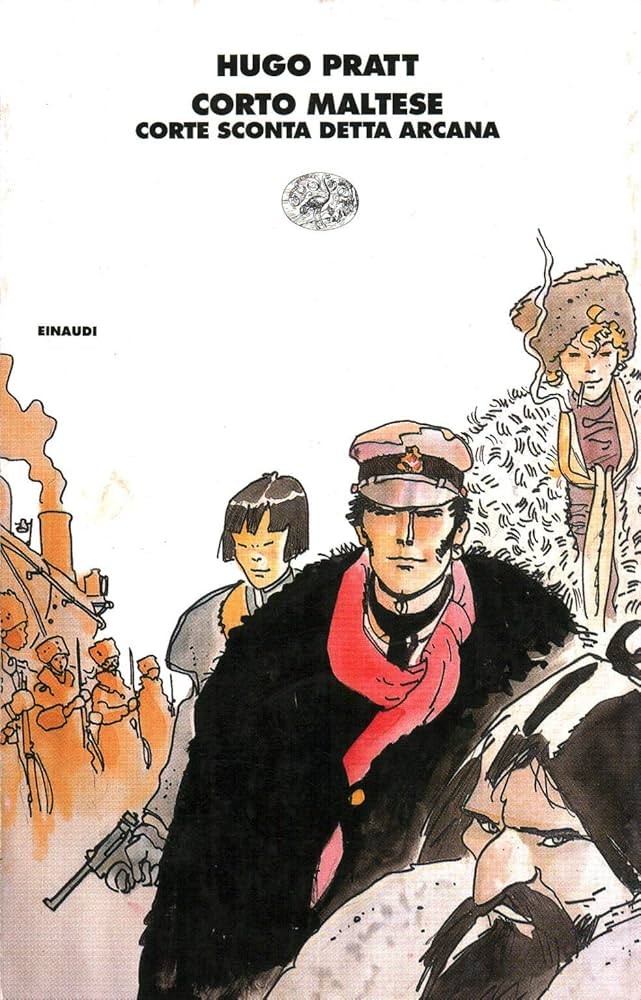
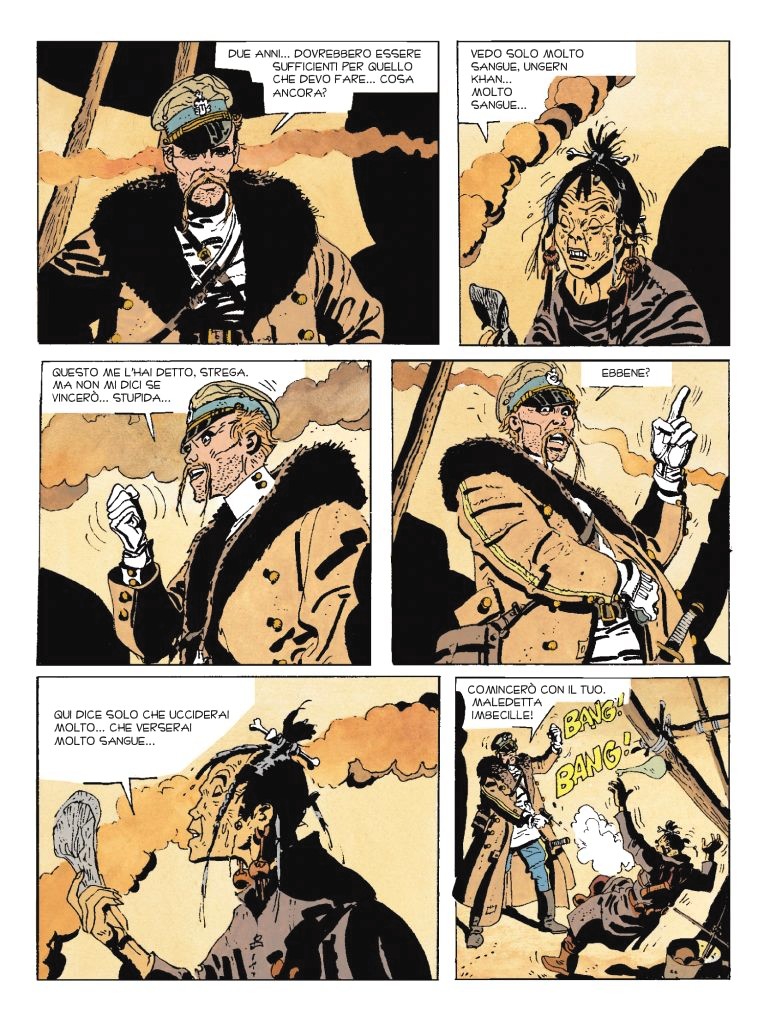
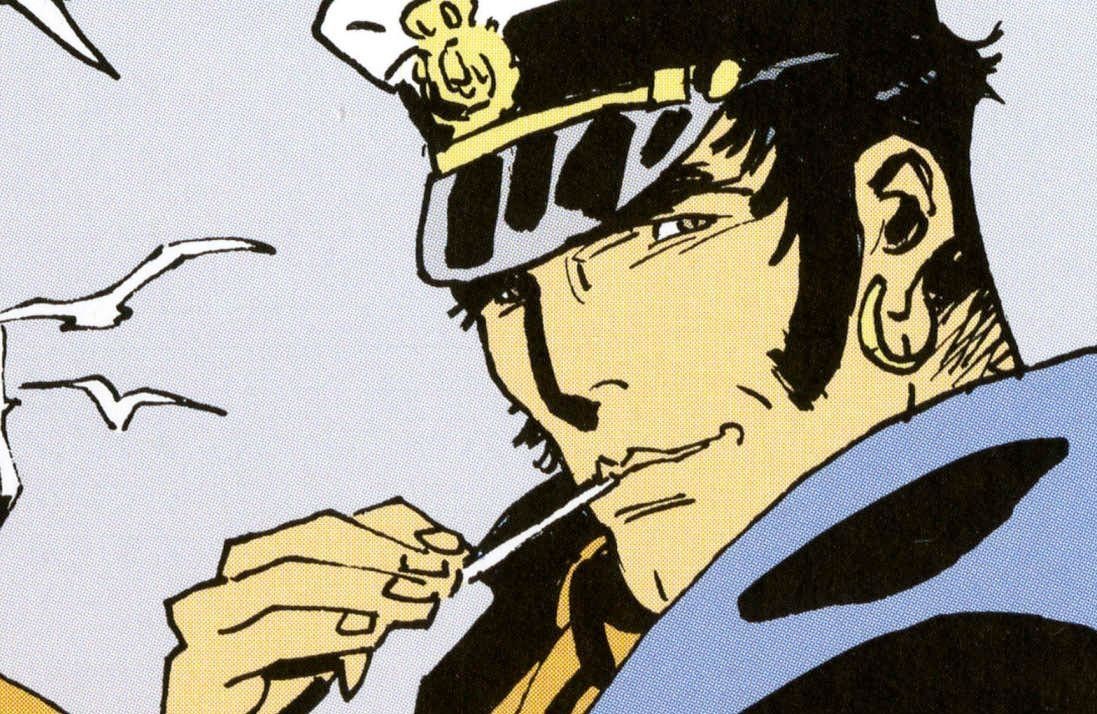
In Corte sconta detta arcana we meet Corto Maltese, a quiet righteous adventurer, a man of the sea who moves from place to place. Born in 1887 in Valletta, Malta, to a father who was an English sailor from Tintagel in Cornwall and a mother who was a Romani woman from Seville. At the beginning of the story Corto fins himself in Hong Kong, searching for a Chinese woman who has abandoned him.
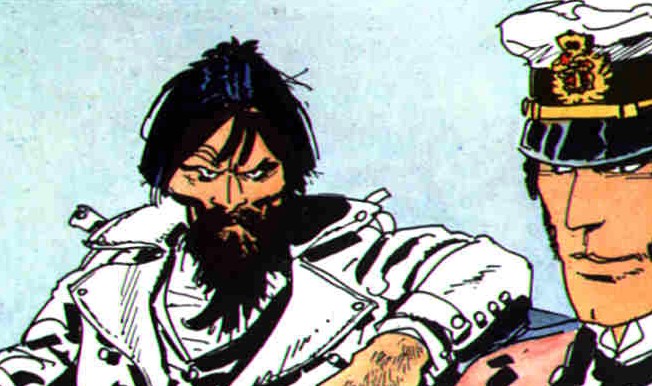
Soon Corto Maltese's "friend" and companion appears – Captain Rasputin, a deserter from the Imperial Russian Army with an appearance and morals reminiscent of his more famous namesake. Born into a family exiled to eastern Siberia Rasputin engages in theft and fraud. Constantly on the run all over the world, he is proud to be a thief and claims that everything he steals he spends. In spite of his unreliable way of being Rasputin remains faithful to his "friend" Corto.
In Hong Kong, Corto Maltese is approached by members of the Red Lantern’s secret society. This association pays Corto for finding General Kolchak's armored “gold train”, located somewhere in Eastern Siberia, to infiltrate its crew, and thus help The Red Lantern seize the valuables, thus supporting China’s efforts to free itself from the foreign powers that are suffocating the nation. Herein lies much of the charm and interest in Corto Maltese's various adventures. Without making it too obvious to the reader, Hugo Pratt's stories are loaded with reality-based, historical details.
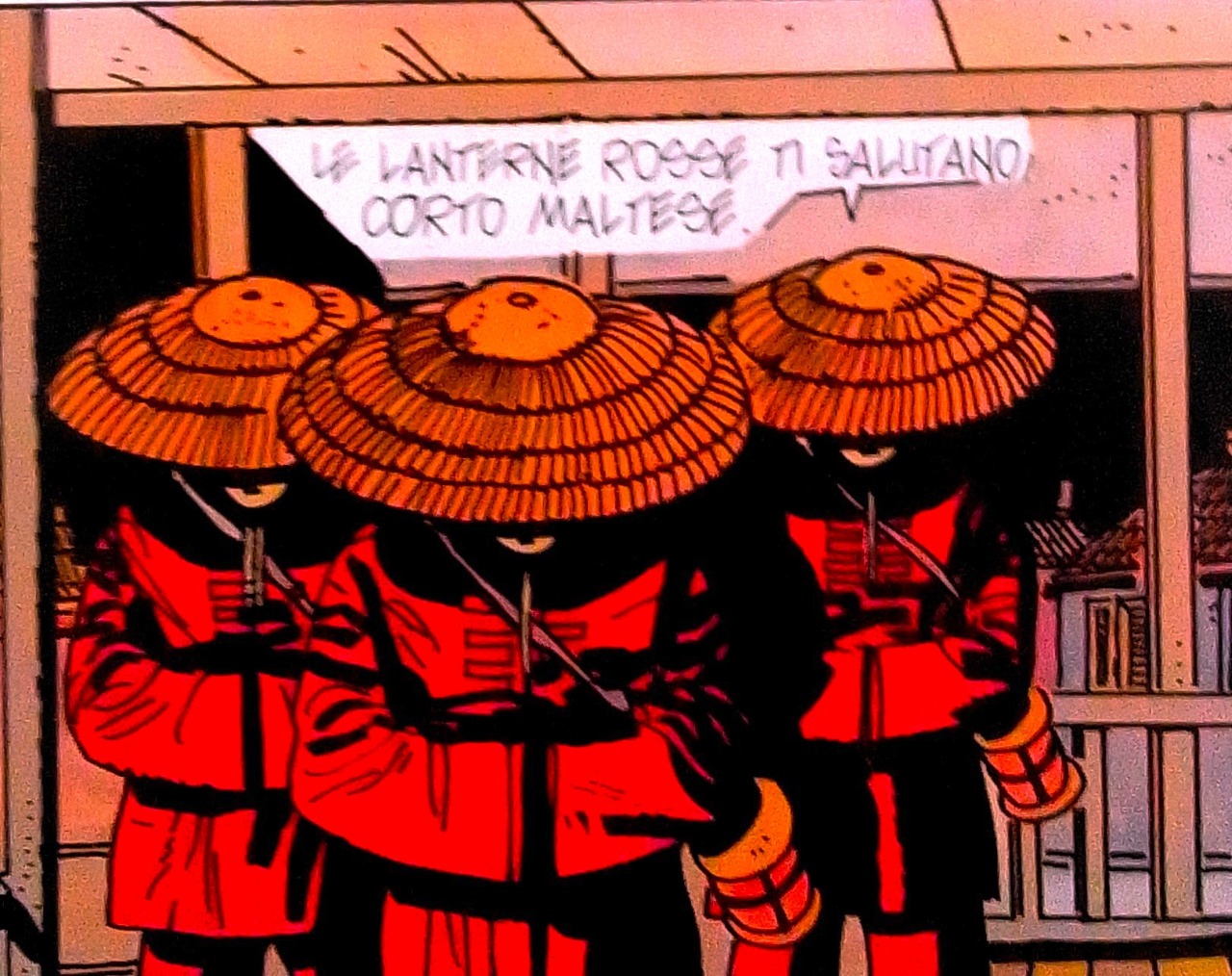
As an example The Red Lantern's secret society did actually exist and just like in Corto Maltese it exclusively consisted of young female members. The Boxer Rebellion, 1898-1901, was a popular revolt against the increasing European influence over China's economy and politics and was mainly aimed at both foreign and native Christians. A number of foreigners and thousands of Chinese, who were said to be associated with the enemy, were killed. The uprising was violently crushed with the help of foreign soldiers and the Chinese Government was subsequently forced to pay a large indemnity to the countries concerned.
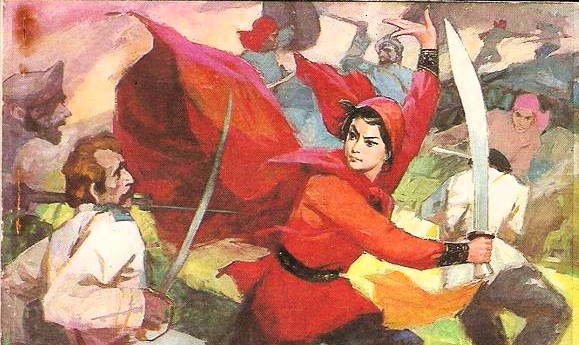
During the early 1900s, a number of secret societies operated in China, several of which were criminal organizations, others were political and/or religious associations. Behind the "Boxer Rebellion" was such an organization called The Fists of Righteousness and Harmony. Strictly religious and misogynistic, it demanded of its belligerent members that they lived in celibacy and avoided all association with women. However, a parallel organization was created – The Red Lanterns, which was also a fighting unit. Participants in this elite force were only young women who underwent a five-months hard training. The Red Lanterns became legendary and people endowed them with supernatural powers, more effective and far more secretive than those of the male "boxers". There are many indications that the organization survived the violent suppression of the Boxer Rebellion.
https://www.youtube.com/watch?v=Cx9FEVTiqN4
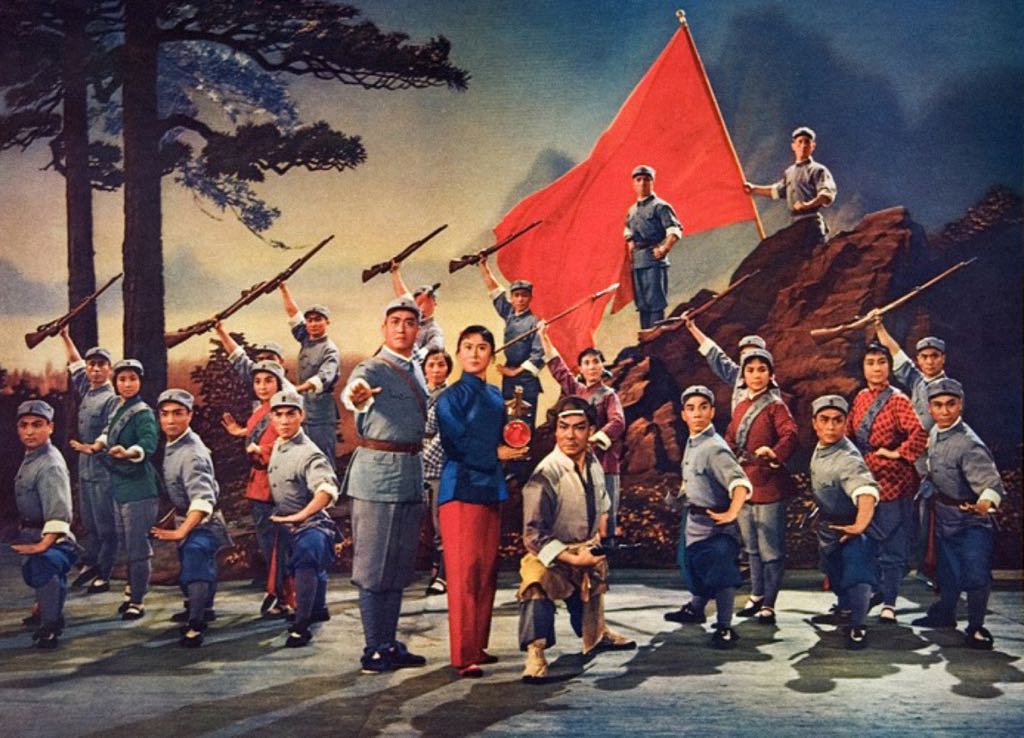
However, the religiously motivated Red Lanterns soon lost their attraction and the movement seems to have been largely forgotten until it in 1967 reappeared as a current topic in Chinese national media. The Cultural Revolution was in its most radical phase, and the radical student youth groups constituting The Red Guard, reached their red-hot peak. Traditional culture was despised, but everything that testified to youthful rebelliousness was celebrated. Traditional Chinese opera was replaced by Mao's wife's eight "model operas," among them The Legend of the Red Lantern, which action concerned communist exploits during the Japanese occupation in 1939, although its story could be traced back to the 1920s. It did deal with the traditional Red Lanterns (after all, they were not communist-motivated) but an imagined uprising in a railway town where the young women were seized by "extreme anger and hatred of their enemies and a strong determination to join the revolutionary forces." Despite the strong communist message, the opera led to a renewed interest in the original Red Lanterns.
Kolchack's gold train, which Corto Maltese's Red Lanterns want to capture, also has a reality background. During the Russian Revolution, Alexander Kolchak became in 1918 Supreme Leader of the so-called Provisional All-Russian Government, which controlled the “White Army” east of the Urals. His government was based in Omsk, at the very centre of the Russian Empire. After initial successes in early 1919, Kolchak's forces lost ground due to a lack of support from the local population and failed to unite the leaders of the motley crew of counterrevolutionary movements. In November 1919, Omsk fell to the Red Army in 1919 and Kolchak was forced to move his headquarters to Irkutsk, where he was later betrayed by the Allied troops who handed him over to local Social Revolutionaries, who executed him.
When Kolchak left Omsk along the Trans-Siberian Railway, he took the imperial gold stores with him. They weighed about 1,600 tons and were worth billions of dollars. The ultimate fate of these gold reserves has never been determined, leaving much room for legend and speculations.
.jpg)
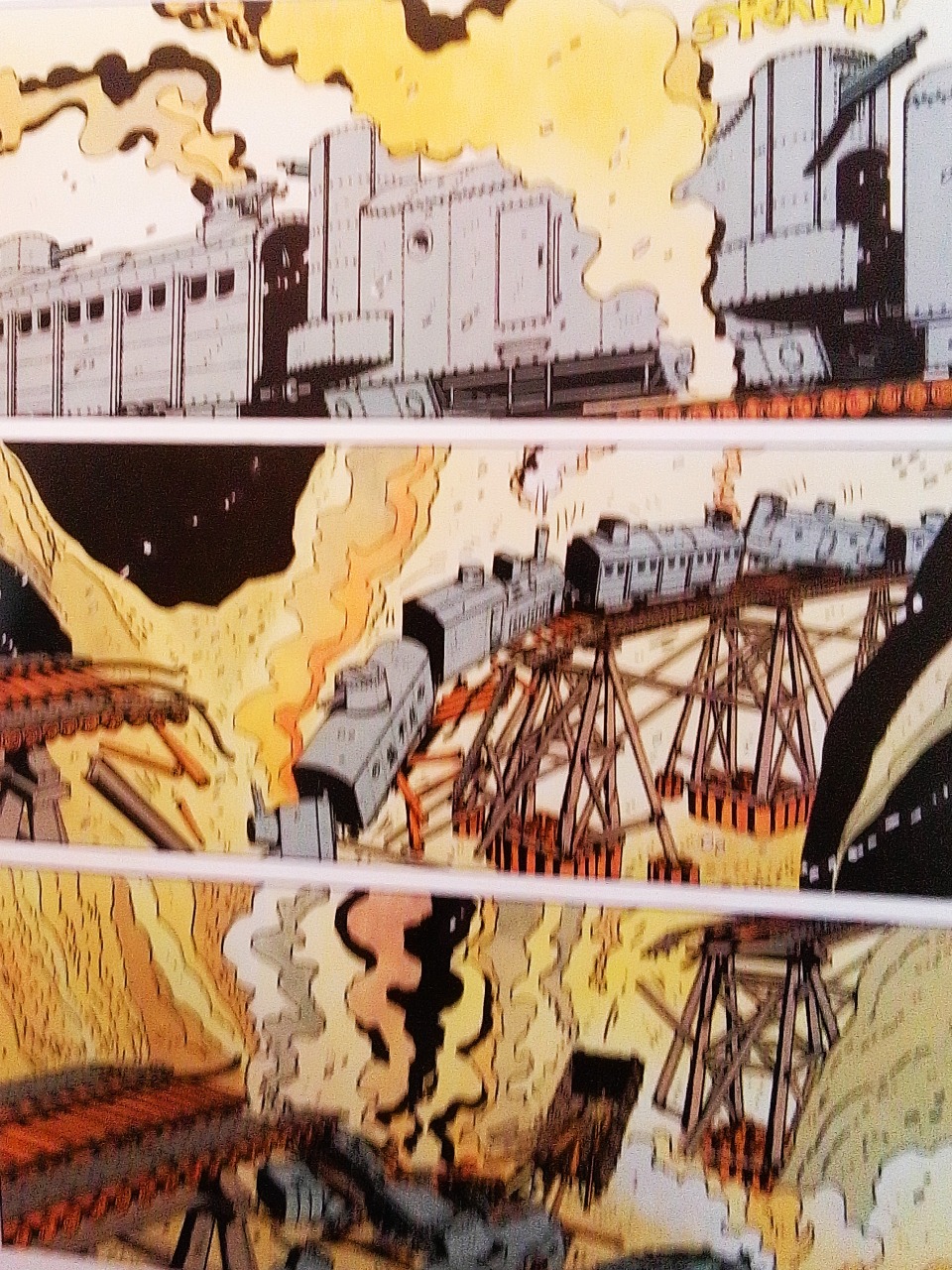
The struggle for the railways during the Russian Civil War was unusually fierce, with not only Bolshevik and “White” armies fighting for their control, but also various bands of bandits, Japanese, Chinese and even Allied troops (Americans, French, Czechs). The 1920s East Asia, with its settlers, Cossack hordes, mosaic of ethnic groups, refugees, mass murderers and bandits, may well be characterized as The Wild East. Something Corte sconta detta arcana portrays in great detail with real actors such as the luxury-loving and extremely depraved Cossack Ataman Grigory Simonëv and the equally debauched Chinese warlord Zhang Zongchang. Both with a background as bandits and officers within their respective nations. They both relied heavily on heavy armoured trains and wild Cossack hordes, and were greedy as well as bloodthirsty. Zhang Zongchang was also a member of the extensive secret society and criminal cartel The Black Dragon.
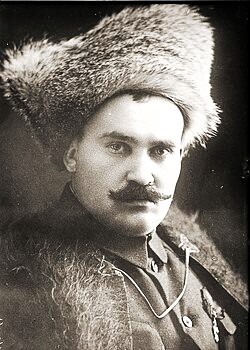
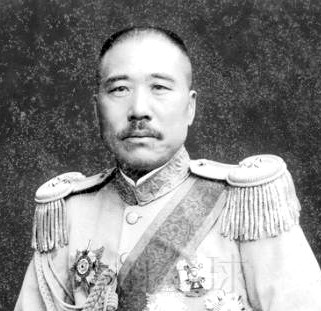
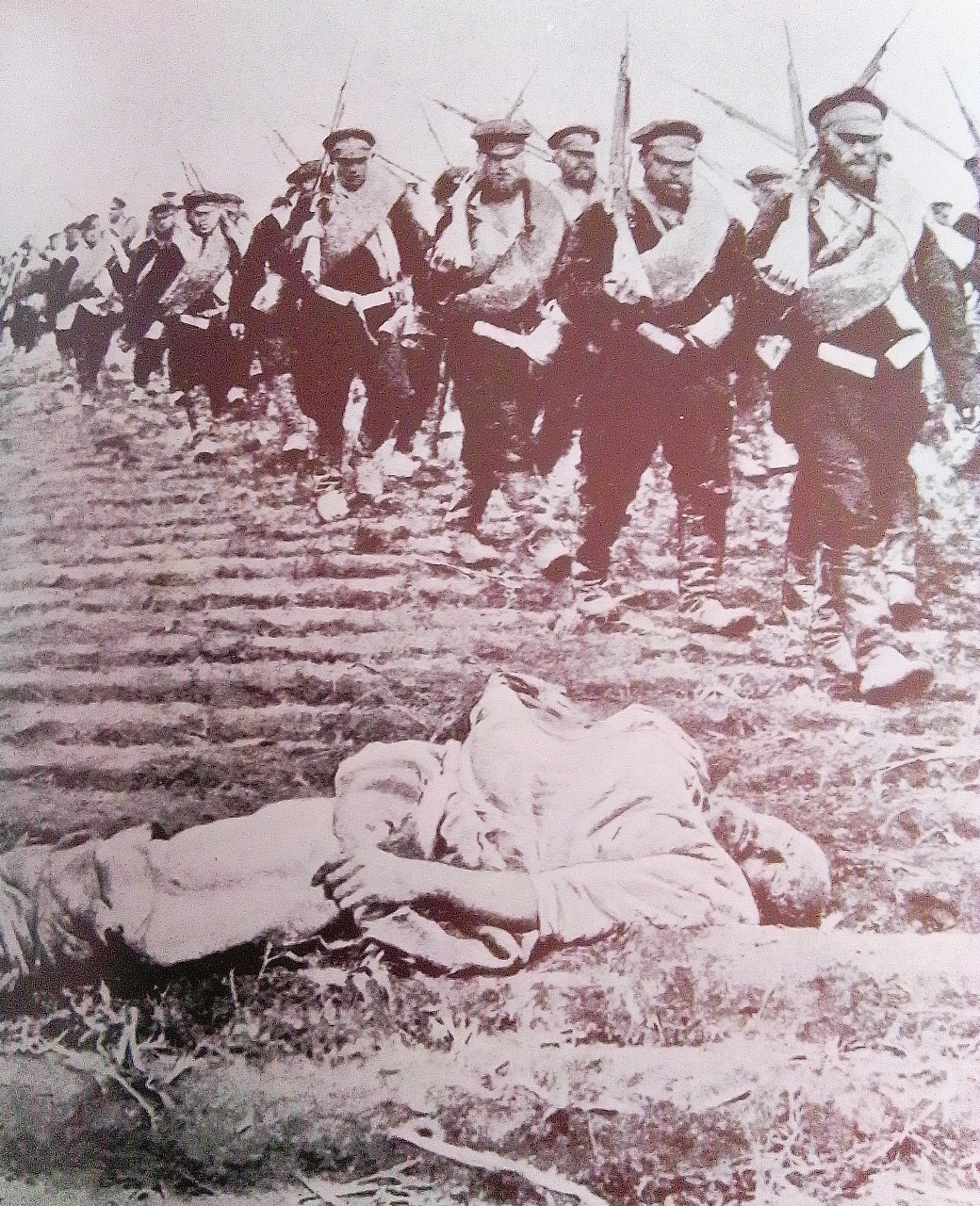
The fighting between the different factions of the East was fierce, ruthless and extremely brutal. No prisoners were taken, people were tortured and maimed by a riffraff of so-called soldiers hardened by endless fighting, during which massacres of innocent civilians and mass rapes were considered a natural part of the warfare.
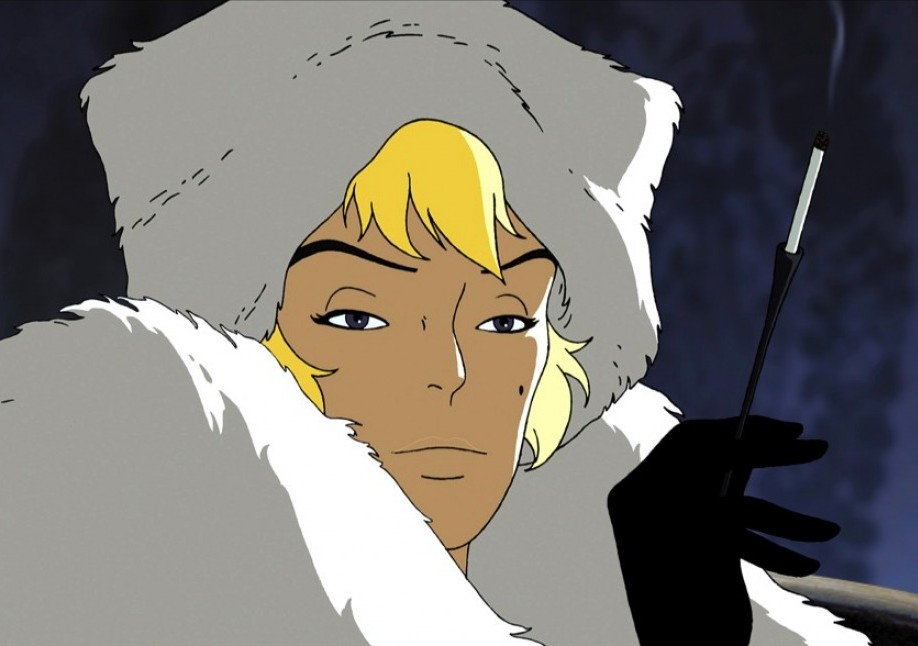
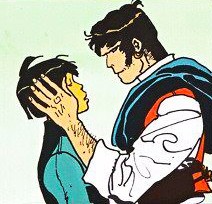
The female figures invented by Hugo Pratt are alluring and mysterious creatures, even more enigmatic than his more one-sided men. Like Kolchak's mistress, Marina Seminova (who, by the way, has the same name as the Bolshoi Theatre's Prima ballerina under Stalin) and the combative, ideologically convinced representative of The Red Lanterns and Kuomintang under her nome de guerre Shanghai Lil, who on several occasions saves the life of Corto Maltese. Shanghai Lil is actually the main character of one of my absolute movie favourites, a song and dance number from Busby Berkley's Footlight Parade.
https://www.dailymotion.com/video/xjzpoy
However, already when I several years ago read Corte sconta detta arcana it was the crazy Baron Ungern-Sternberg that I was most fascinated by. Since then I have reread the comic book several times and also been watching a French movie by Pascal Morelli which follows the original story in great detail and does so in the same subdued manner as Hugo Pratt depicts the violent course of events.
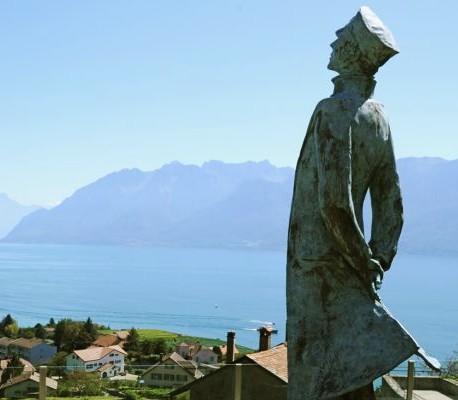
That I was further fascinated by Corto Maltese is probably due to the fact that a lady from Burundi, Claudine, who attends the same Italian course as me, once told me that when she, as I had done very recently, had been bedridden in a hospital, her husband had given her a couple of books about Corto Maltese. Her husband, who is Swiss, had taken an interest in Hugo Pratt because for a couple of years before his death he lived in the Swiss village of Grandvaux, where there is now a monument dedicated to Corto Maltese.
When my good friend Dan later got an assignment in Mongolia and lived there for a couple of years, one of my wishes was to visit him and also learn more about the strange Ungern-Sternberg. I read a lot about the mad baron, but unfortunately the Mongolian trip was costly and I never got there.
Roman Nikolai Maximilian von Ungern-Sternberg was born in Austria in 1886, though he grew up on an estate outside Estonian Tallinn. Ungern-Sternberg was extremely proud of his noble ancestry, both from his father's and mother's side. The lineage stretched far back into the Middle Ages and there had been crusaders as well as robber barons and pirates.
His father had Hungarian roots, something that made the young Ungern-Sternberg fantasize about vast steppes and merciless equestrian warriors. Unfortunately, his father was accused of fraud and was later locked up in a mental hospital, while his mother ask for divorce and remarried to another nobleman, who, like her, had German-Baltic roots.
As a child and youth, Ungern-Sternberg gained the reputation of being such a violent tyrant that even other bullies feared him. Parents forbade their children to play with this brutal villain, who took pleasure in threatening other kids and torturing animals. On several occasions, school principals contacted his stepfather and asked him to take the boy from school.
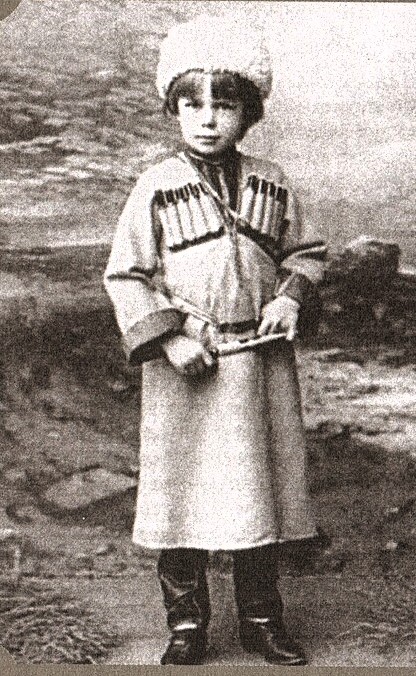
Through his contacts, the aristocratic stepfather succeeded in getting the unruly youngster enrolled in prestigious cadet schools in the army and navy. Ungern-Sternberg excelled in sports, but showed little interest in studies. His aristocratic pride made him despise "primitive peasants and filthy workers." Ungern-Sternberg skipped school, drank and fought, though he was far from being illiterate. His mother tongue was German, though he became fluent in French, Russian, English and Estonian, and later learned to communicate in Mongolian and Mandarin.
Although he was totally uninterested in schoolwork, Ungern-Sternberg devoured all kind of literature and was early influenced by the esoteric writings that were common among German and Russian upper classes. The Russian court of the time was imbued with fuzzy mysticism and surrounded by a number of strange occultists, among them the Buriat Mongol Shamzaran Badmaev, from an area with which Ungern-Sternberg eventually would become familiar with.
Especially certain circles among the wealthy Baltic Germans seem to have cultivated intense esoteric interests. For example, in the 1920s and 1930s, Hermann Keyserling became one of Europe's most fashionable esoteric prophets preaching self-reliance based on "spiritual enlightenment." Keyserling had known Ungern-Sternberg since childhood, his playmate had once tried to strangle Keyserling's pet owl. Ungern-Sternberg’s brother married Keyserling’s sister. Keyserling told the Swedish explorer Sven Hedin that Ungern-Sternberg was
one of the most metaphysically and occultly gifted men I have ever met. He often expressed himself in geometric terms and his ideas were closely related to those found in Tibet and India. However, he was completely erratic and vacillated between evil and good extremes.
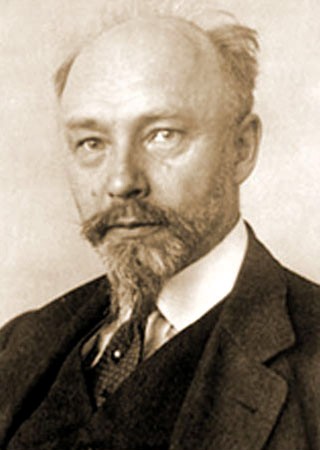
Not the least was Ungern-Sternberg an avid reader of Helena Blavatsky's occult writings, with their accounts of her allegedly extensive journeys through Turkey, Persia, Afghanistan and India on her way to Tibet, where she claimed to have been taught by learned lamas with deep insights into "other dimensions". A reading that Ungern-Sternberg shared with the younger German-Balt Alfred Rosenberg, who like Blavatsky was an anti-Semite, albeit a much worse one. Rosenberg later became Hitler's chief ideologue. His pseudoscientific hodgepodge abot the origin and excellence of the Aryan race, The Myth of the Twentieth Century, sold more than a million copies.
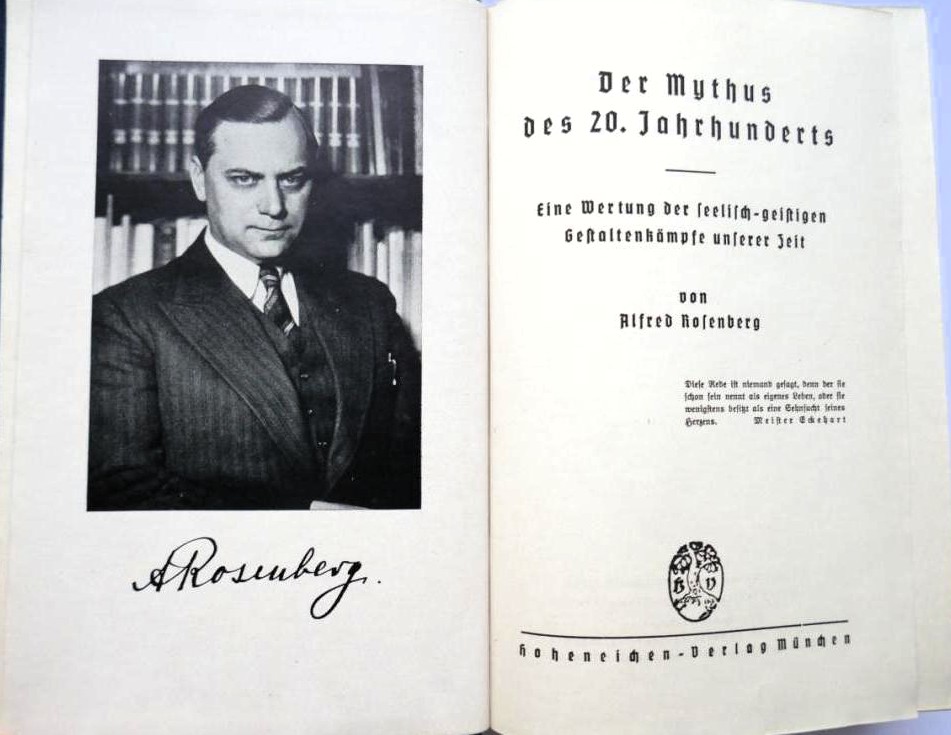
Speculations about the Aryan race and its Central Asian origins (although Rosenberg, unlike Blavatsky, placed it in the Arctic regions) spurred the young Ungern-Sternberg's conviction of his family's roots in a distant and mysterious Orient. When he, as a newly graduated officer, had been imprisoned for drunkenness and fighting and eventually passed over for officer promotion, he enlisted as a private in the Russo-Japanese War and got to know the eastern outskirts of the Russian Empire where he was to spend the last years of his life. In the East he excelled as a cavalryman and ruthless warrior.Completely fearless and merciless, Ungern-Sternberg found warfare to be his lifeblood and when he later, during World War I, served on the Russian Western Front under Major General Pyotr Wrangel (whom he had already gotten to know in Manchuria), he won the admiration of his superiors.
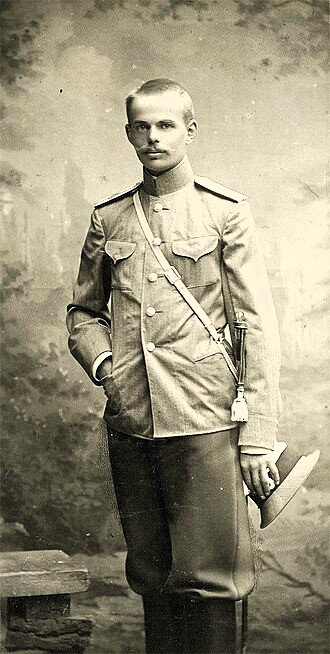
It is hard not to see similarities between this young man, who would develop into an unemotional, sadistic monster, and the young Adolf Hitler. Admittedly, Ungern-Sternberg was a privileged aristocrat and Hitler the son of a customs official. However, they were both fanatical anti-Semites. Like Hitler, Ungern-Sternberg resented the "Jewish race" as a parasitic vermin within the social body, which had to be exterminated – a delusion they both put into practice when they reached their respective authoritative positions.
They read a lot and became self-indulgent dilettantes who could for hours talk about their insights on various subjects. They devoured esoteric, occult literature and entertained megalomaniacal ideas about using their assumed irresistible intelligence to create great empires and lead masses of people.
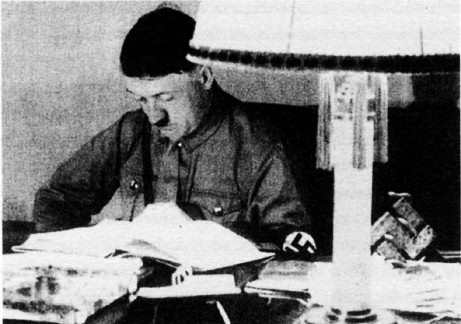
They strove to cultivate a charismatic aura and perhaps even had it – many have testified about Ungern-Sternberg's grey-cold, intense gaze and his overconfidence in being appointed by fate to lead men and achieve his goals. It is also interesting to note that both Hitler's and Ungern-Sternberg's sexual inclinations appear to be quite mysterious. There is no evidence that Ungern-Sternberg, unlike its brutal Cossack and Kalmuck hordes, ever indulged in brothel visits and rape. In the latter part of his life, he could instead punish such misbehaviour with extreme severity. Likewise, he was in many respects a man of healthy living, after his violent youth he neither smoked (apart from opium) nor drank, while he ate and lived in an exceptionally spartan manner. He seems to have avoided female company, but there is also nothing to indicate that he had homosexual inclinations.
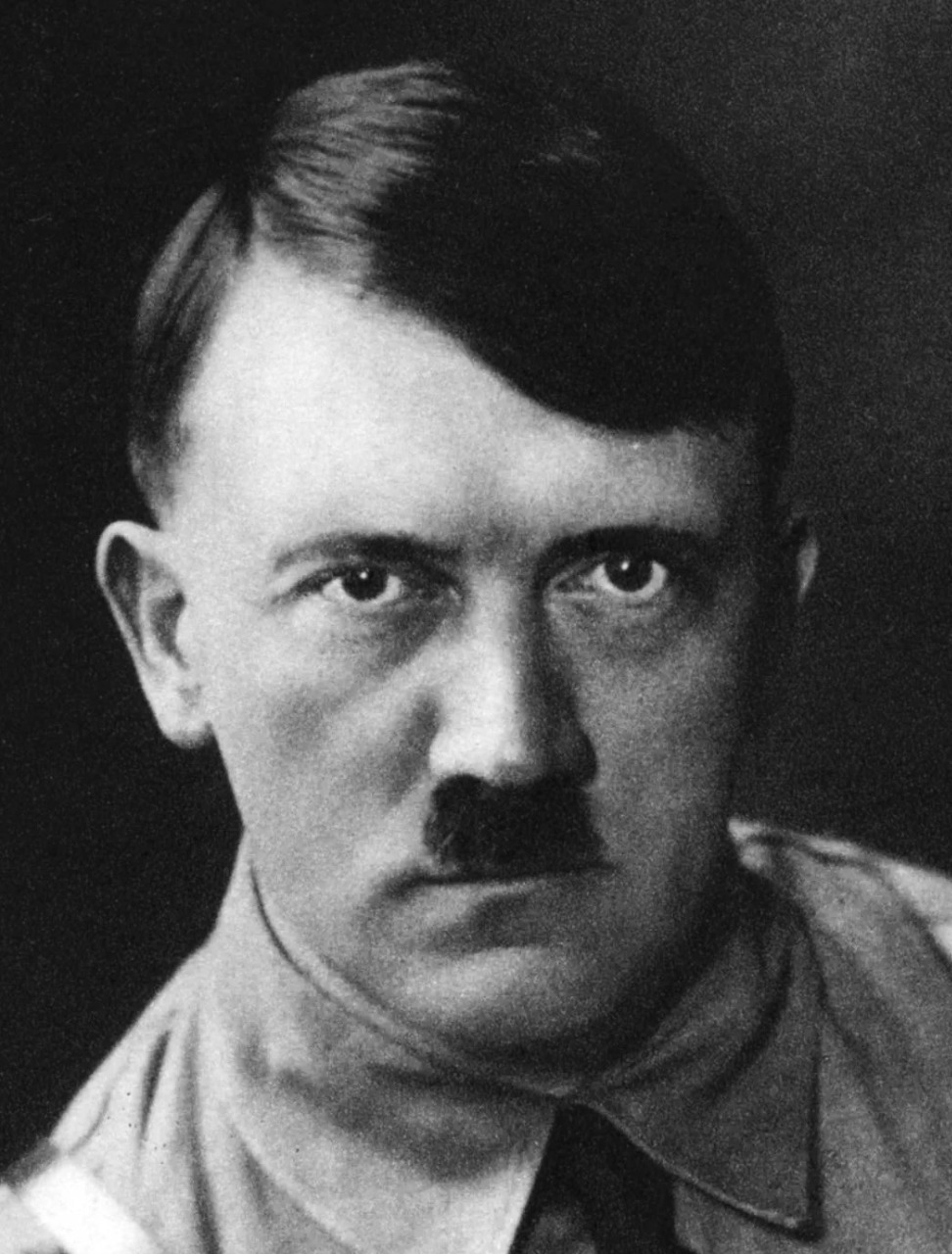
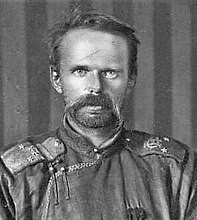
War had been a tumultuous and life-changing experience for both Hitler and Ungern-Sternberg and they encouraged a ruthless behaviour among their subordinates. Admittedly, Ungern-Steinberg was to a far greater extent than Hitler personally complicit in the sadistic abuses that occurred on his orders, though Hitler had also not been averse to participating in such abominable actions, as when, for example, he personally led the liquidation of Röhm and his associates during the "Night of the Long Knives". In any case, with or without their personal involvement, heaps of corpses grew around them, while they were apparently utterly indifferent to all the suffering they were causing, trapped as they were by their megalomania.
After the revolution in March 1917, which deposed the Romanov dynasty, Ungern-Sternberg was transferred from the Russian Western Front to the Caucasus, where Russian troops fought the Ottoman Empire. The fall of the Romanov was a bitter blow to the extreme-monarchist Ungern-Sternberg, who considered the fall of the Romanovs to be the beginning of the end for Russia.
In the Caucasus he met with the Cossack captain Simonëv and together they developed a plan to create a Buryat regiment. Simonëv was born in Buriyatia, his father was a Cossack and his mother a Buryat. The Buryats were Buddhist Mongols living east of Lake Baikal and had much in common with their relatives in Mongolia. Simonëv and Ungern-Sternberg received the blessing of the Russian Provisional Government and arrived in south-east Siberia equipped with arms and their fighting experience.
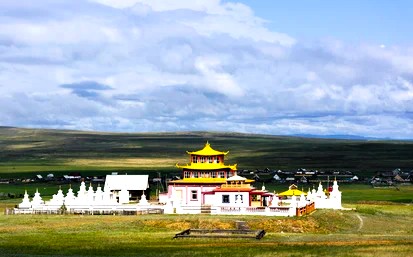
After the Bolsheviks had deposed the Provisional Government by a coup, Simonëv and Ungern-Sternberg declared their support for the Romanov dynasty. Which meant that they also broke with the “White-Russian” pro-republican forces. Their self-confidence was strengthened when, together with five Cossacks, they managed to stage a surprise attack on 1,500 troops loyal to Bolshevik stationed at the important railway junction of Chita, where the Trans-Siberian Railway split in the direction of Russian Siberia and Harbin in China, and then reunited in Valdovistok.
With the support of Mongols, Cossacks, soldiers and officers who had fled from the Bolsheviks and also protected by the Japanese government, which wanted to seize the opportunity to take advantage of a weakened Russian Empire, Simonëv succeeded in building up a strong military base in southeastern Siberia.
In 1918, he declared the founding of the Great Mongol State, which he envisioned would include Inner and Outer Mongolia, all land east of Lake Baikal, and Tibet as well. With financial support from Britain, the United States and France and backed by 72,000 Japanese troops, Simonëv advanced westwards, while in Chita he had created a luxurious court around him, with several mistresses and all kinds of luxuries. He had become wealthy through bribery and extorting desperate refugees from Russia and China.
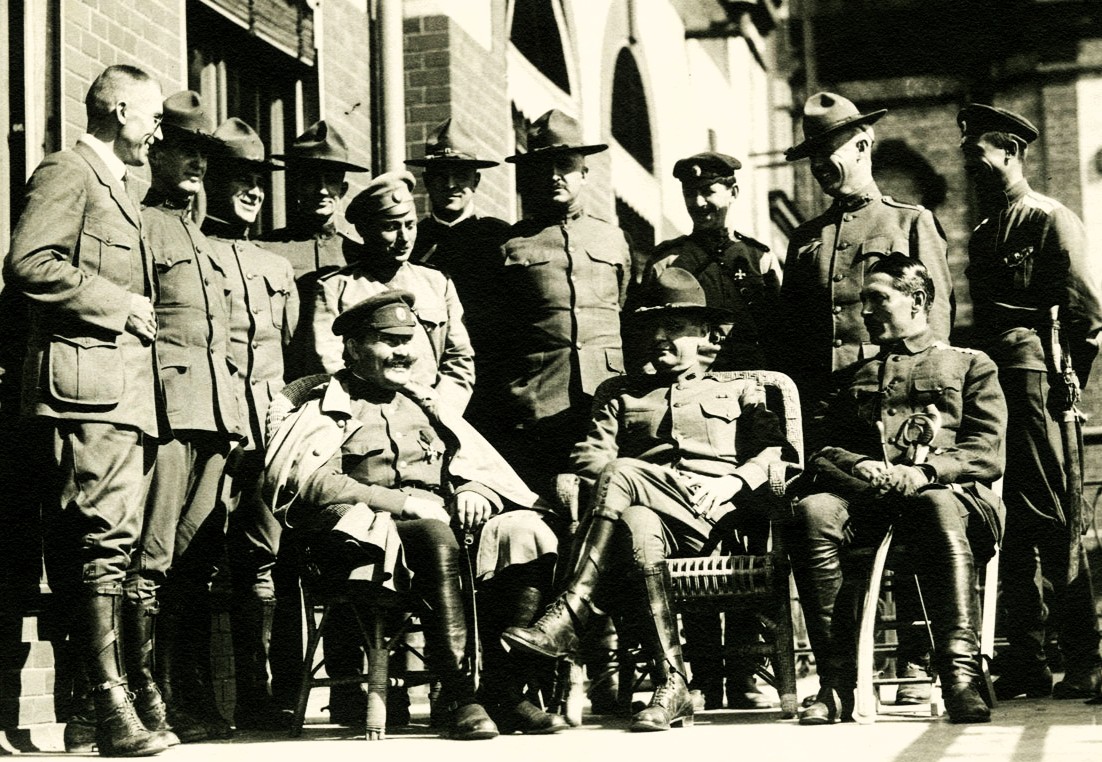
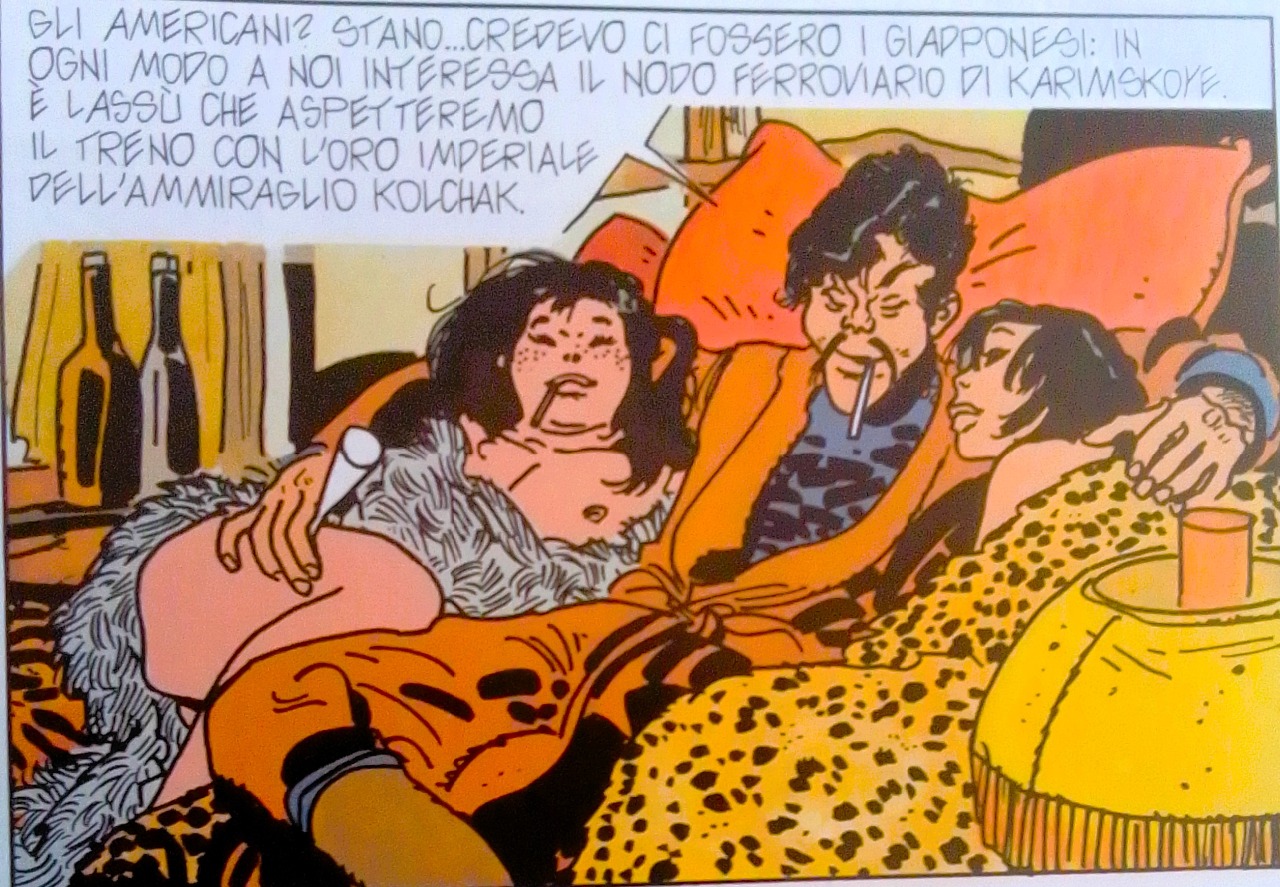
Simonëv, however, was unable to control his ferocious troops, who behaved like bandits, stealing from trains and banks, terrorizing villages and towns, raping, burning, and murdering. During just one year of Simonëv's reign of terror, more than 30,000 people were killed. The Japanese withdrew their support and in October 1920 the Red Army recaptured Chita and drove Simonëv to flight.
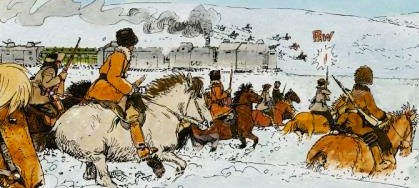
In Pratt's Corte sconta detta arcana, Simonëv is killed by Corto Maltese, but in reality he was well received in the United States, China, and Japan. The Japanese government later gave him a luxurious residence in their subordinate state of Manchuko. However, when the Russians attacked Manchuko in September 1945, Simonëv was captured, taken to Moscow and hanged.
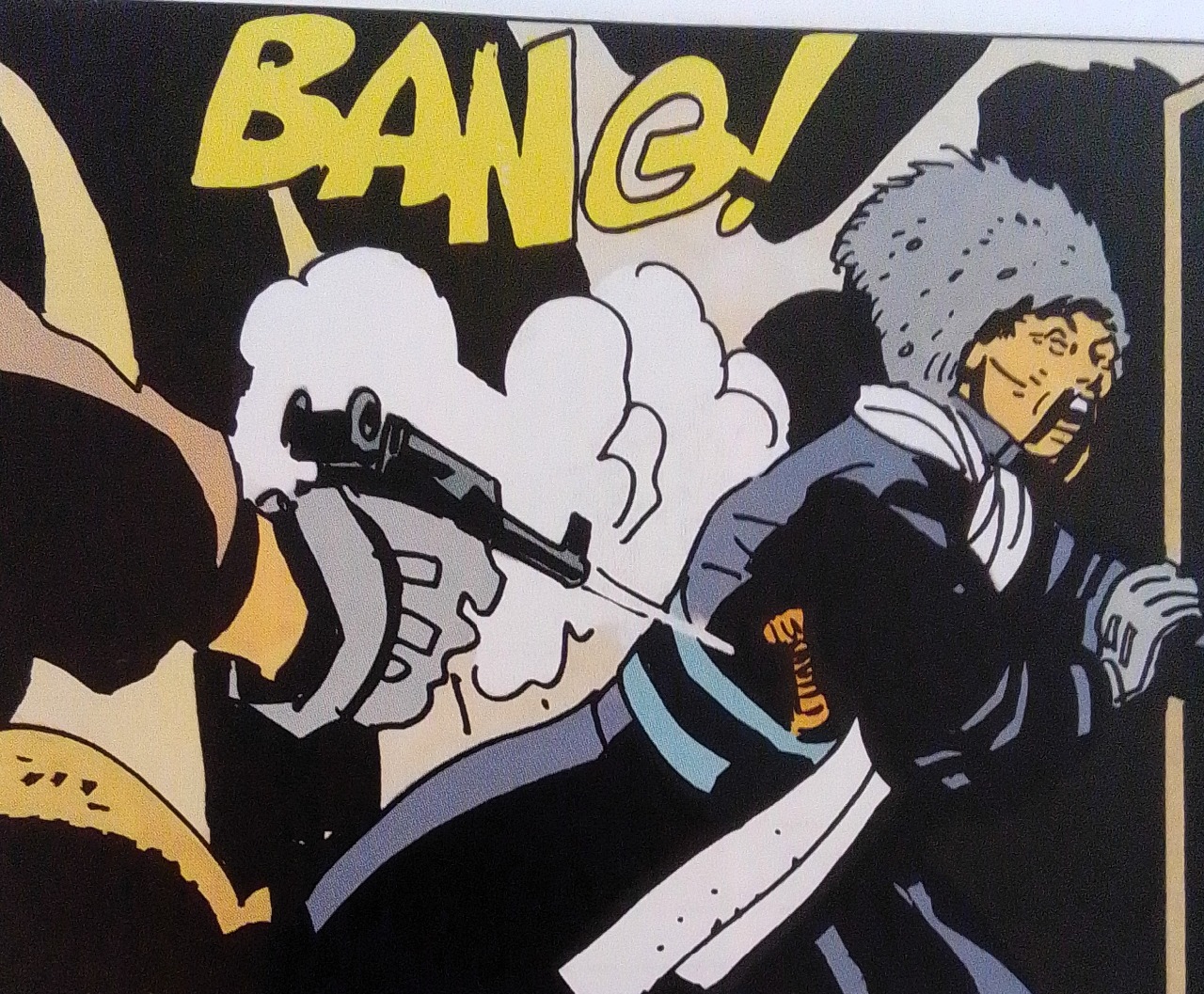
Simonëv had appointed Ungern-Sternberg as major general and commissioned him to create an Asiatic Cavalry Division (ACD) in Dauria, a railway junction on the Chinese part of the Trans-Siberian Railway. Under the rock-hard discipline of Ungern-Sternberg and with an influx of Mongols angered by the Chinese mismanagement of their fatherland, as well as conservative Cossacks and Kalmucks eager to fight the Bolsheviks, Ungern-Sternberg's force grew into an extensive guerrilla unit that effectively fought the Bolsheviks and Chinese troops in Mongolia.
Ungern-Sternberg, whose interest in Buddhist esoteric mysticism had led him to an increasingly ascetic lifestyle, had over time become disgusted with Simonëv’s blatant corruption and debauchery. In particular was the fanatically anti-Semitic Ungern-Sternberg outraged by Simonëv's public affair with a Jewish cabaret singer. Gradually, therefore, he developed his forces into an independent military unit which served entirely his own interests.
Unlike Simonëv, who claimed to be a democrat, Ungern-Sternberg was an ardent monarchist who believed monarchs were appointed by and accountable only to God. According to him, monarchy was the political system that God had intended for the rule of the world, and this applied not only to the Russian Tsar but also to other rulers, such as the Chinese and Japanese emperors, the Dalai Lama of Tibet and Mongolia's Bogd Khan.
As a banner, Ungern-Sternberg carried a yellow streamer, the colour of Buddhism, with the text "M II 1921", which stood for Archduke Mikel Alexandrovich of Russia. He was the younger brother of Tsar Nicholas II, whom he had appointed as his successor at the time of his abdication.
It was Ungern-Sternberg's intention to defeat the Bolsheviks in 1921 and reinstate Michael as tsar of the Russian Empire. He was apparently unaware that the Archduke already had been murdered by the Bolsheviks in June 1918.
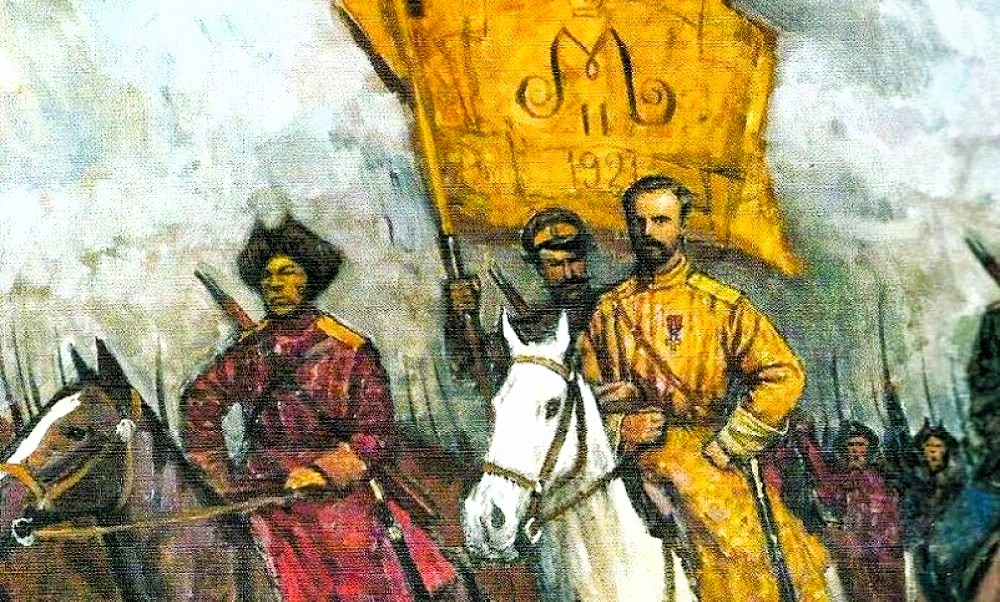
As all-powerful commandant of Dauria, Unger-Sternberg was given free rein to his morbidly sadistic inclinations. Not only did he set up a torture centre where executioners, specially appointed by him, extorted information from captured Bolsheviks and terrified refugees. His hordes ravaged what he considered to be "Bolshevik nests", which meant that all its inhabitants were killed, not least the children – "we cannot leave any tails behind" and that all houses were burned to the ground.
Among his troops, Ungern-Sternberg maintained discipline through a variety of elaborate punishments and ingeniously morbid methods of execution He burned and buried "traitors" alive. He hung publicly hung thieves and plunderers and let their corpses remain in front of the shops or homes they had plundered in violation of his orders, even if the crime victims asked him to take them away.
Several of his punishments were linked to trees. He had flexible tree trunks bent down and tied around the necks of those condemned to death, before their heads were cut off so that when they were separated from the bodies they were hurled a long way, to the great enjoyment of the mad baron. His favourite method o punishment was to allow those who did not obey his orders to climb tall trees and spend the night there. If they fell down and injured themselves, he shot them to death. If they survived the night, he forgave them. Ungern-Sternberg declared that he was a firm believer in the power of fate.
He always carried a bamboo stick with him, which he used to whip his subordinates at the slightest transgression. When, in his opinion, someone had committed a serious crime, he could have them whipped to death. At one point, he remarked: "I can't understand how anyone can walk when his muscles have been separated from the legs."
In spite of all this madness, Ungern-Sternberg managed for several years to maintain the loyalty of his troops, perhaps the lived in both fear and awe of the ruthlessness of this demon. Several of his warriors had been hardened by years of fighting, on both sides waged in the same ruthless manner. Many had lost hope and faith, sense of belonging and families. They did not know of any other existence and if they submitted to the strong-willed Ungern-Sternberg they might feel a certain security and meaning in their lives. A man who was in the front line in every battle and seemed to be immune to the rain of bullets, who lived a Spartan life and shared the often difficult conditions of his troops, did not enrich himself at the expense of his victims and demonstrated great reverence for religious rites.
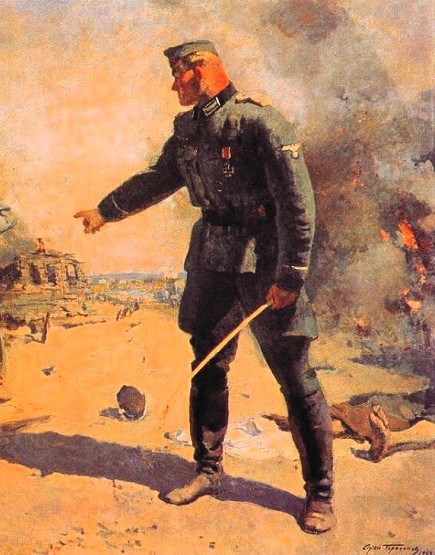
Ungern-Sternberg never renounced his Lutheran faith, but read Buddhist scriptures and surrounded himself with Siberian shamans, whose advice and predictions he followed. He imagined himself to possess supernal powers, and when any Bolsheviks had been captured, he lined them up, and with his bamboo stick he pointed to each and every one of them and after looking intensely at the man standing in front of him, he commanded: "Left" or "Right." Those ordered to go to the left were executed on the spot, in accordance with Ungern-Sternberg's conviction that they were either Jews or communist commissars, while those to the right were pardoned and forced to join his forces.
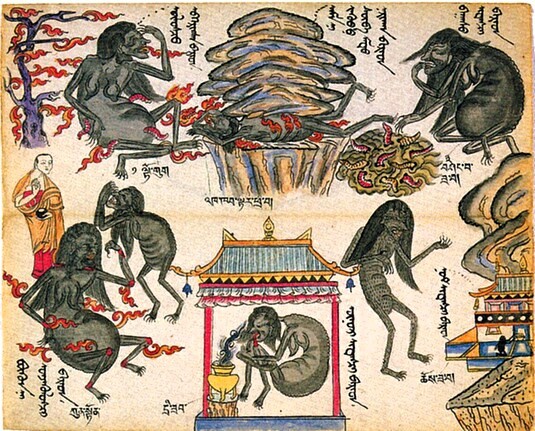
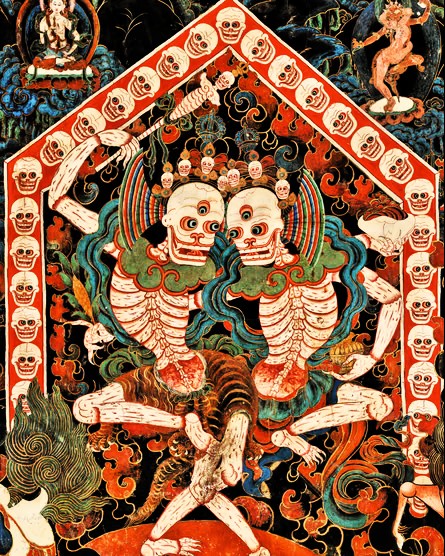
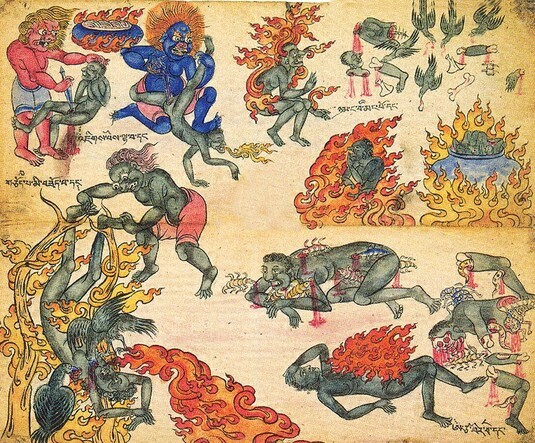
One of Ungern-Sternberg's biographers, James Palmer, has marvelled that a man who claimed to have such great reverence for Buddhism, which in the West generally was regarded as an extremely humane and compassionate religion, could indulge in such bloodlust. Palmer suggests that one reason could be that Tibetan-Mongolian Buddhism also has its darker sides. The temples are usually dark places with depictions of gruesome deities hung with skulls and other body parts, while one furthermore encounters gruesome images of torture and suffering in various hells. Several monasteries also trained their monks to be warriors, and many lamas, who mere regarded as incarnations of divinities, could by such indulgent worship allow themselves to transcend what ordinary mortals considered to be moral limits.
Ungern-Sternberg's Buddhist monarchist thinking was a contributing factor to his decision to liberate Mongolia and its religious leader Bogd Khan from Chinese supremacy. Everything also indicates that in his high-flying plans he envisaged that if he had succeeded in becoming a religiously sanctioned military leader, he would be able to gather deeply believing warriors around him and with their help liberate Russia from the Jewish-Bolshevist, godless criminals who held the Empire hostage and restore the God-given monarchy. Had Genghis Khan succeeded in conquering the world, why should Ungern-Sternberg not be able to do so? Fate had so far been on his side.
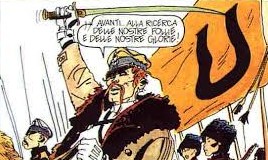
By the end of October 1920, Ungern-Sternberg's troops reached Mongolia's capital Urga, the seat of Bogd Khan, the intensely worshipped living incarnation of Buddha. Admittedly, he was severely overweight, a blind alcoholic. Childishly interested in all technical innovations, such as cars, gramophones and the like, and kept a large zoo, with giraffes, elephants and a variety of other animals. At the same time, Bogd Khan was a shrewd politician, surrounded by a court of skilled administrators. He was also deeply convinced of his divine chosenness, conversing with various bodhisattvas, and having his visions written down. Bogd Khans palace was filled with treasures and housed a large library with unique scriptures. Ungern-Sternberg was fascinated by this living god, whose flaws nevertheless corresponded to his ideas of a God-chosen ruler.
A massive frontal assault on Urga failed miserably as Ungern-Sternberg's troops were mowed down machine-gun-armed well-protected Chinese troops. Urga was besieged while reinforcements arrived from Mongol princes, as well as elite Tibetan forces. A bold cavalry shock forced its way into Urga and managed to free Bogd Khan, who was taken to a nearby monastery and Ungern-Sternberg's subsequent attack on the city was a great success – the Chinese troops fled in panic and were followed by the Russian exiles and others who held socialist views, well aware that Ungern-Sternberg would kill them without mercy.
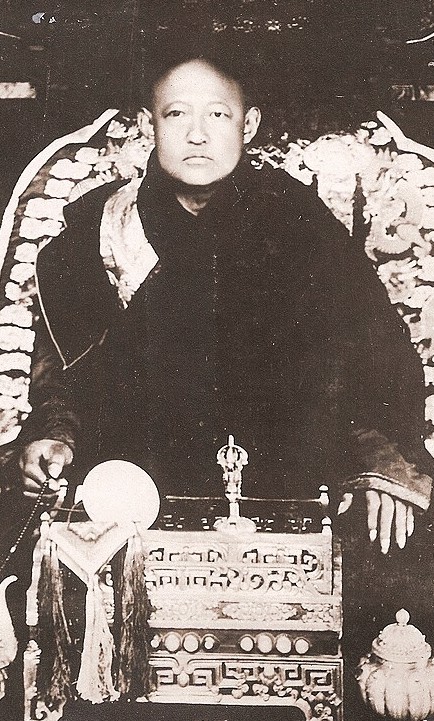
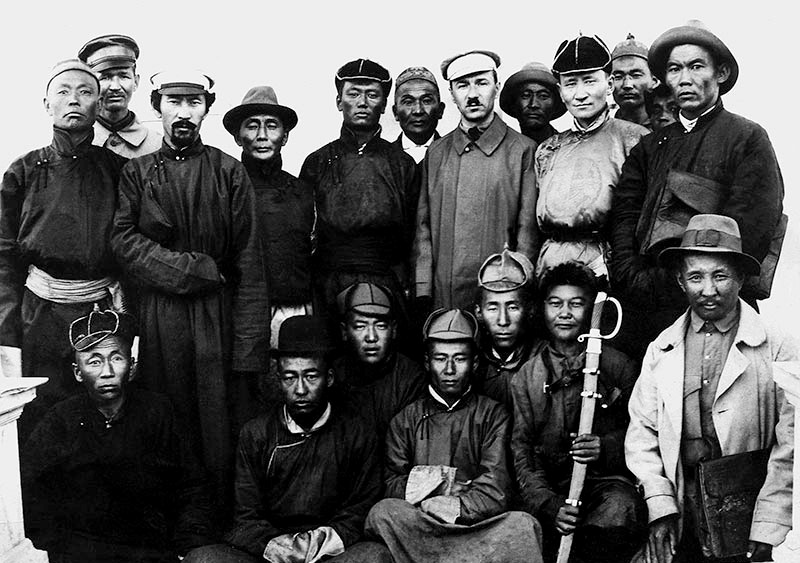
In February 1921, Bogd Khan made his triumphant entry into Urga and Mongolia was proclaimed an independent monarchy. After Bogd Khan's chariot, preceded by soldiers and thousands of lamas, Ungern-Sternberg came riding on his stately white mare, wearing a red Mongolian cloak and crowned with a peacock-feathered hat that indicated that he was now an incarnation of the Fifth Bogd Gegen and "Outstanding-Successful-State Hero".
Before the triumph, Ungern-Sternberg's troops had cleared away the corpses that had cluttered the streets. During the following short time during which Ungern-Sternberg ruled the city, under Bogd Khan's aegis, 846 thieves, rapists, suspected Bolsheviks, Chinese, and other innocent citizens were killed, of whom fifty were Jews, whose only crime was their ethnicity, something that seemed incomprehensible to the Mongols.
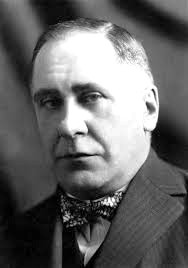
Now Ferdinand Ossendowski arrived, whose book Beasts, Men and Gods was published in the United States already by the end of 1921. It came to have the greatest influence on Ungern-Steinberg's legacy. The book was an international success, already in the first year after its publication the book had sold 300,000 copies in the U.S. alone. Ossendowski became Poland's most internationally renowned writer, after Henryk Sienkiewicz, who had won the Nobel Prize in 1905 for his Quo Vadis.
When he arrived in Urga and met Ungern-Sternberg, Ossendowski was forty-five years old, though with his grey hair and slightly curved posture, he looked older. He had a pleasant voice and a quiet, unassuming demeanour that impressed Ungern-Sternberg. Ossendowski was a geologist, an expert in coal and gold mining, and also a chemist. He had been educated in St. Petersburg and at the Sorbonne in Paris, where he had studied and received his doctorate under none other than Madame Curie.
On behalf of his profession Ossendowski had travelled across large tracts of the Russian Empire. He was practical man, but also something of a mystic. Ossendowski had on several occasions spoken with the controversial Father John of Kronstadt, a healer with a fanatical following, confessor of the Tsarina, an anti-Semite and supporter of the Black Hundreds, who fought left-wing activists, liberals and Jews.
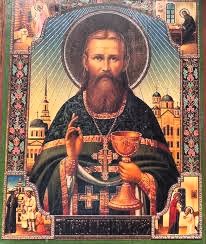
Ossendowski had also moved in Russian and French theosophical and occult circles. In 1905, he had been in Manchuria and had then as a Polish patriot been involved in a political exile group that had protested against Russian abuses in Poland, he was arrested and sentenced to death, but was pardoned. His later reappearance in Manchuria was due to the fact that he had held a position in Kolchak's government, but when the latter had his power, he had been forced to flee eastward, as the Bolsheviks dominated the western part of Russia.
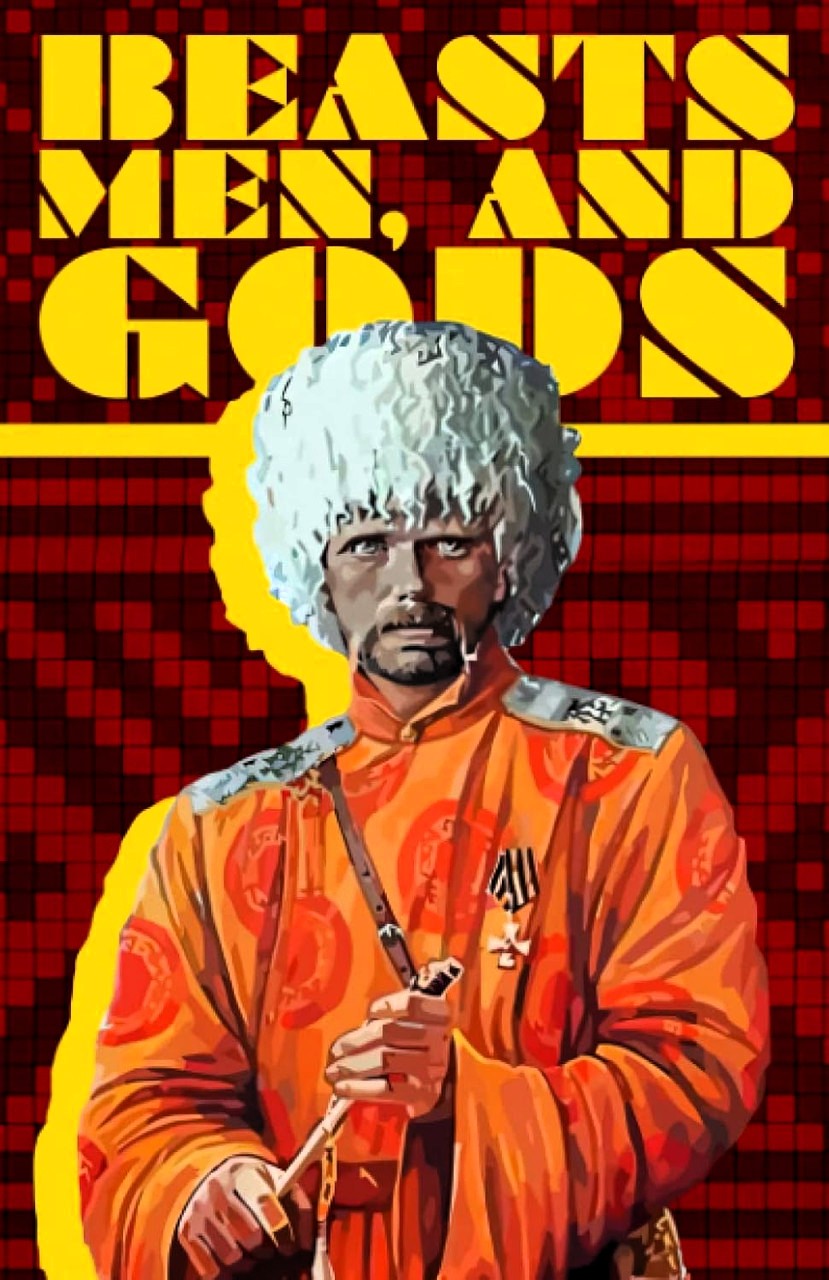
Beasts, men and gods, came in several aspects to characterize the Western world's view of Mongolia and Tibet Ossendowski is a good storyteller and the book is filled with tales perilous hardship – he endures the Siberian winter alone in a hut and is forced to fight a huge bear, his life is saved by a benevolent man who turns out to be an axe murderer, with a small group of refugees he crosses ice-covered rivers, fights freezing cold, starved wolves, Bolsheviks and Tibetan bandits, is welcomed in Buddhist monasteries and encounters miraculous mystics. Ossendowski is generally treated with legendary Mongolian hospitality, but also with suspicion, which was quite natural given the lawlessness in border areas between warring groups where it existence was a matter of life or sudden death. More than once Ossendowski was saved by his medical knowledge and medical bag.
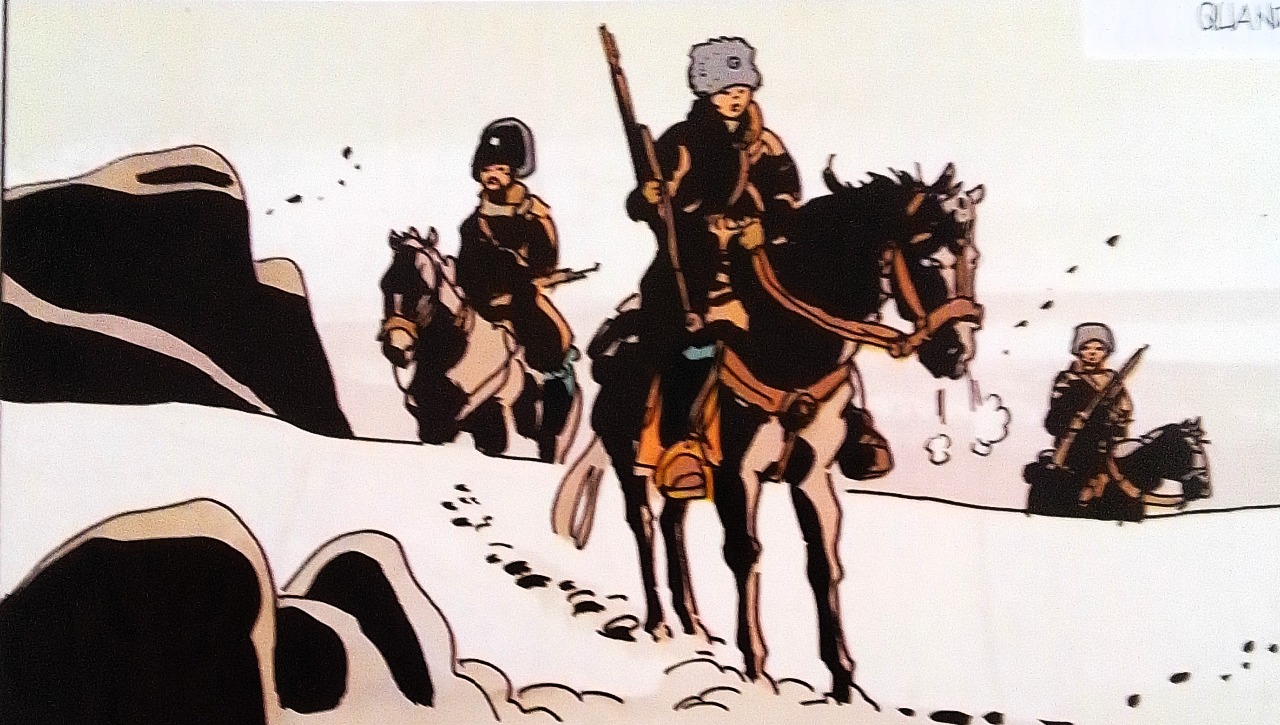
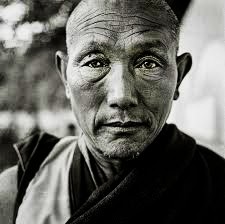
More often than not, the story his tale is spiced up with enigmatic events that make the reader doubt the veracity of the entire story. For example, his visit to the mighty Tushegoun Lama:
He stood up, pushed back the sleeves of his yellow garment, seized his knife and strode across to the shepherd.
"Michik, stand up!" he ordered.
When the shepherd had risen, the Lama quickly unbuttoned his coat and bared the man's chest. I could not yet understand what was his intention, when suddenly the Tushegoun with all his force struck his knife into the chest of the shepherd. The Mongol fell all covered with blood, a splash of which I noticed on the yellow silk of the Lama's coat.
"What have you done?" I exclaimed.
"Sh! Be still," he whispered turning to me his now quite blanched face.
With a few strokes of the knife, he opened the chest of the Mongol, and I saw the man's lungs, softly breathing and the distinct palpitations of the heart. The Lama touched these organs with his fingers but no more blood appeared to flow and the face of the shepherd was quite calm. He was lying with his eyes closed and appeared to be in deep and quiet sleep. As the Lama began to open his abdomen, I shut my eyes in fear and horror; and, when I opened them a little while later, I was still more dumbfounded at seeing the shepherd with his coat still open and his breast normal, quietly sleeping on his side and Tushegoun Lama sitting peacefullyly by the brazier, smoking his pipe and looking into the fire in deep thought. […] I realized that I had become the victim of the hypnotic power of Tushegoun Lama; but I preferred this to seeing an innocent Mongolian die, for I had not believed that Tushegoun Lama, after slashing open the bodies of his victims, could repair them again so readily.
When Ossendowski and his motley crew of refugees of various ethnic origin approached Urga they were taken hostage by a detachment of Ungern-Sternberg's Cossacks, who on the journey to their feared leader frightened their captives with accounts of the mad baron's rage and unpredictability.
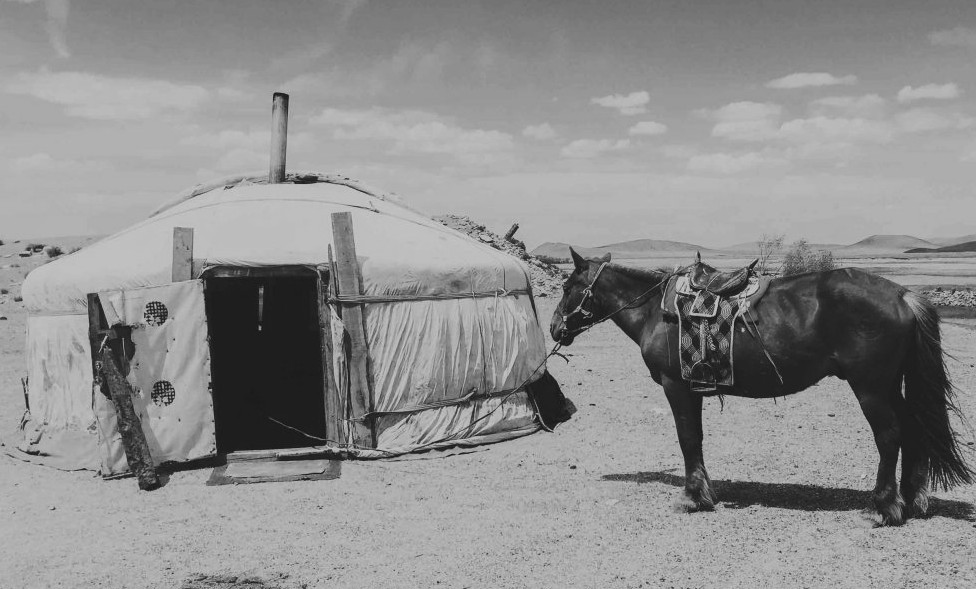
When Ossendowski stepped through the door of Ungern-Sternberg's ger, a Mongolian felt-covered house/hut, he was forced to pass across a pool of blood left behind by a Russian officer whom the baron had shot for "treason".
Ungern-Sternberg's entire behaviour was characterized by an energetic frenzy. Without preamble he ordered Ossendowski to explain who he was, where he came from, what his mission was, his political position. With his usual calm Ossendowski gave Ungern-Sternberg a detailed account of what he wanted to know. Ungern-Sternberg examined his captive with a long critical gaze and came to the conclusion that the Polish gentleman appeared to be an educated man and apologized for his brusque behaviour by noting that the surroundings were teeming with spies, Bolsheviks and Jews and that he must be extremely cautious about whom he allowed into his domain. However, in Ossendowski he assumed he had found an intelligent interlocutor, somethin he lacked in these barbaric environs.
After that, Ossendowski was forced to listen daily to Ungern-Sternberg's monologues about his origins, his religious theories and far-reaching plans. Ossendowski certainly added his own theosophical/esoteric theories to these harangues. For example, what he had been told about Agharti, the underground kingdom where the Rulers of the World were waiting with their armies for by the end of time conquer the entire world. Beliefs that were easily combined with Ungern-Sternberg's apocalyptic vision of a Great Russian/Mongol Empire, purged of Jewish and Bolshevik scoundrels.
As the well-read dilettante he was, Ungern-Sternberg peppered his discourse with references to philosophers like Bergson and writers such as Dostoevsky. All this while he was driving around Ossendowski in his car, introducing him to Bogd Khan and his entourage, showing what he had achieved in Urga so far, without hiding the cruelly merciless "discipline" with which he ruled his realm. Ossendowski was both fascinated and horrified by the tenacious rogue and the trust he placed in him.
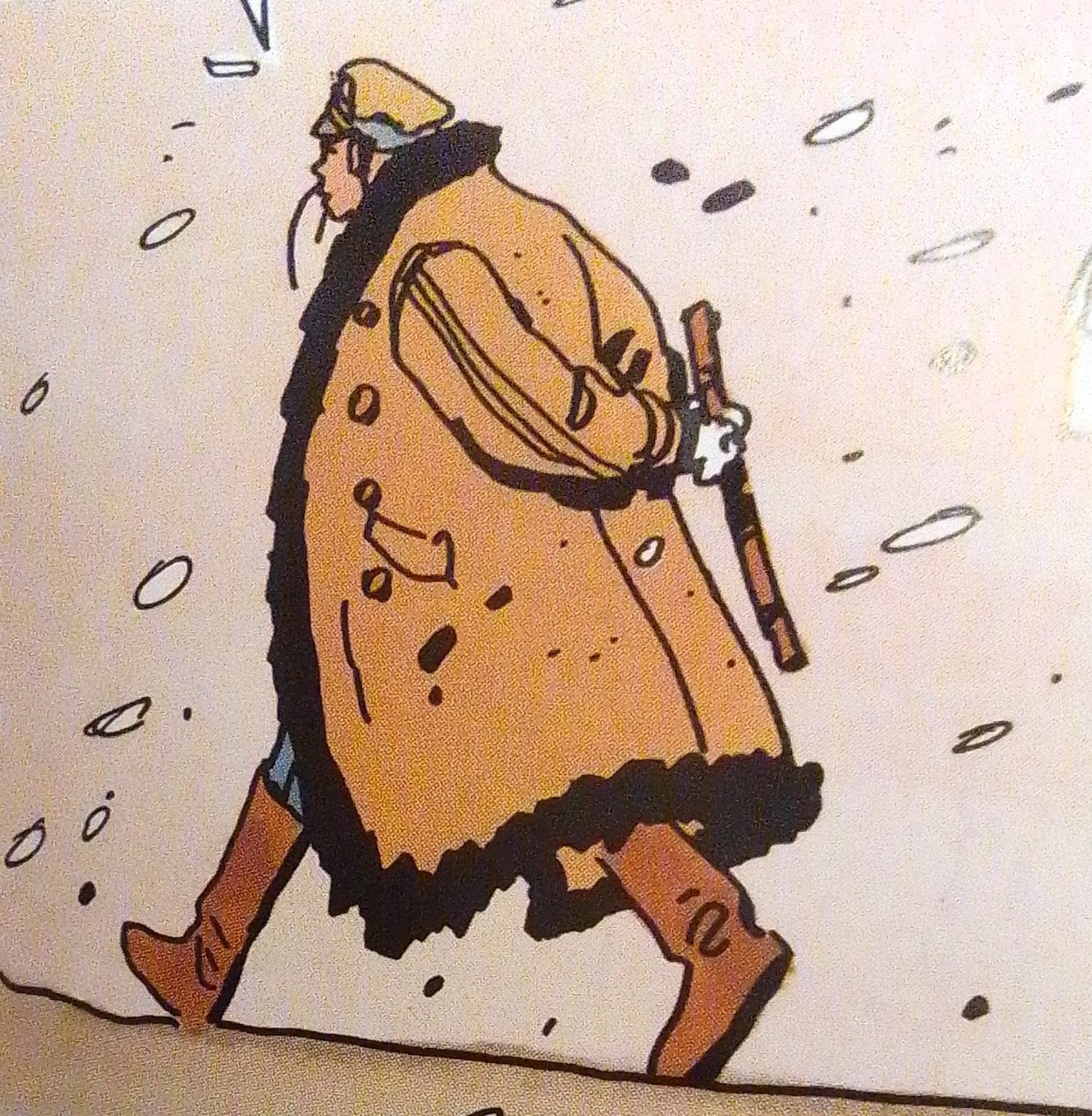
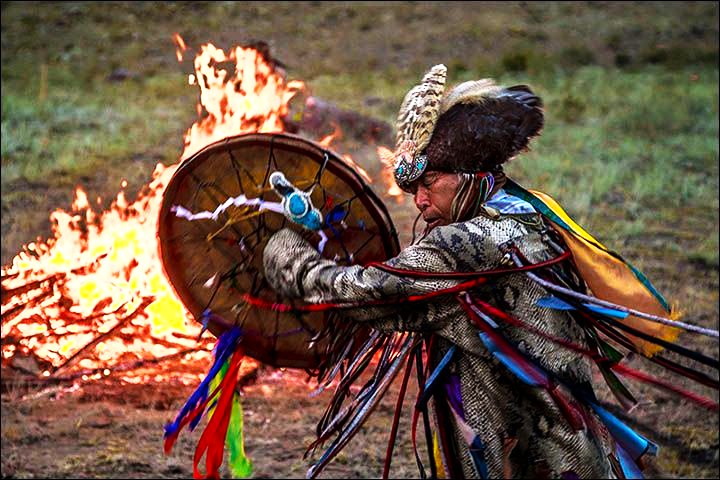
It is known that during his time in Mongolia, Ungern-Sternberg surrounded himself with a variety of Siberian shamans. He often attended their séances and consulted them almost daily about his future and various plans. Ossendowski has given a detailed account of one such séances during which Ungern-Sternberg was told that he only had one hundred and thirty days left to live, which meant that the baron after that, again and again, tried to have this life sentence confirmed by other shamans and fortune tellers.
In any case, Ungern-Sternberg knew that his days were numbered. Simonëv's forces had been defeated and the Cossackataman had fled to Japan. The Bolsheviks rallied effective forces to invade Mongolia and put an end to Ungern-Sternberg's reign of terror. The fighting in the west had subsided, and a large number of troops were being transferred to Mongolia's northern border. They had a huge advantage in terms of equipment – armoured cars, aircraft, railway cars, gunboats, ammunition and large human reserves. Ungern-Sternberg had no chance; he knew it and took refuge in wishful thinking about a divine intervention.
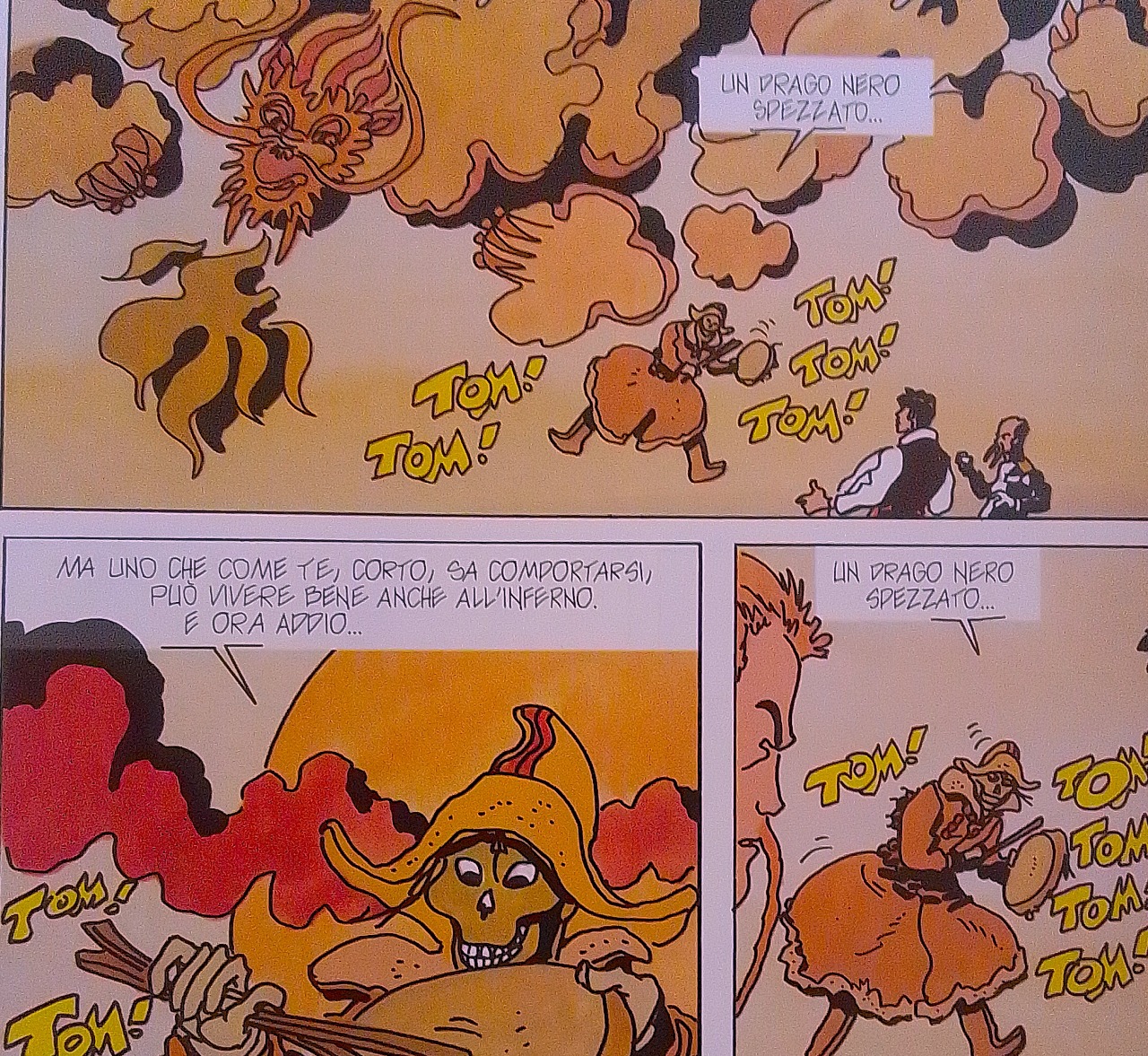
Ungern-Sternberg's increasingly confused brain made him wonder about his last days – would he have time to put his grandiose plans into action? To launch a mighty crusade against the degenerate West that would result in the victory and establishment of a divinely promoted monarchy?
Unlike others who have written about Ungern-Sternberg, Ossendowski firmly maintained that the madman did not consider himself an incarnation of Genghis Khan, but rather saw himself as the Mongol god of war, Jamsaran who, in the service of the monarchs of the world, like the Archangel of the Apocalypse, Michael on his white horse, would lead a celestial-sanctioned campaign.
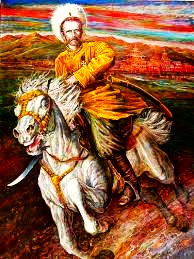
In one remote corner of the world, surrounded by the corpses of his enemies and the rubble of an army mostly consisting of runaway hooligans, who both feared and admired their mad leader, the bewilderingly speculative Ungern-Sternberg is reminiscent of Colonel Kurtz in Coppola's Apocalypse Now.

During his conversations with Ungern-Sternberg, Ossendowski brought up what he had heard about The Lord of the World, who lived hidden in a highly developed underground kingdom, something that surely stirred up Ungern-Sternberg's already muddled brain.
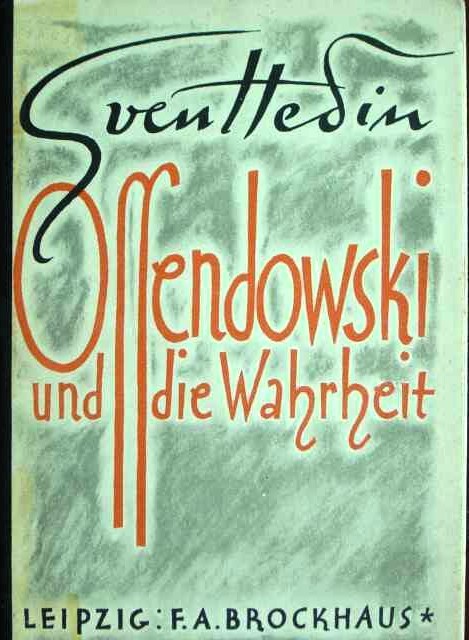
Ossendowski devoted the last chapters of his book to Agharti and what he told has had a great impact on later New Age believers, most of whom are probably unaware that Sven Hedin, who travelled through the same areas as Ossendowski, in his book Ossendowski und die Wahrheit, Ossendowski and the Truth, from 1925 dismissed some of the Pole's geographical information and what was worse – proved that he had largely lifted his Agarthi stories straight from a French novel by the occultist Saint-Yves d'Alveidre, who depicted an underground kingdom in exactly the same way as Ossendowski.
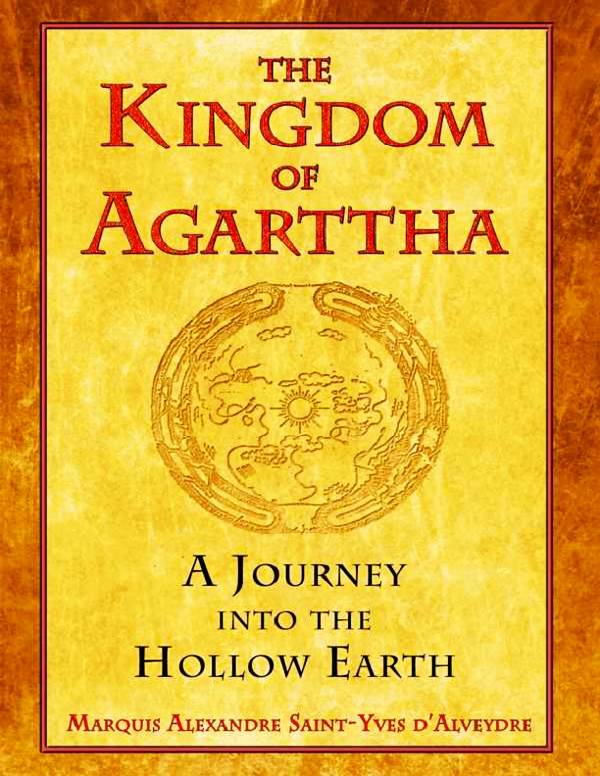
But myths have a hard time dying. For example, the story was taken up by author James Hilton in his 1933 novel Lost Horizon, which became a very popular film. Hilton called Agartha Shangri-La, a dream kingdom where people barely age and in which a group of survivors of a plane crash in Tibet end up. The astonishly modernly equipped Shangri-La of this novel has given its name to a number of more or less luxurious hotels all over the world.

A source of Ossendowski's interest in the hidden kingdom, which he called Agarthi, was certainly speculations he had encountered in Theosophical circles, which received its information from its founder, Helena Blavatsky (1831-1891), who shortly before her death at breakneck speed had written a 1,500-page hodgepodge of seemingly more or less detached thoughts, which she called The Secret Doctrine, which she claimed was a commentary on a work called The Book of Dzyan written by a certain Tibetan monk named Senzar, which she in her youth had read and studied in Tibet. The problem is that it has not been possible to identify any book by Senzar, and even less so its author who is also completely unknown. What Blavatsky included in her “secret teachings” was probably mainly based on what she had heard and found during her years in India, 1879 to 1885. In this encompassing and strange book there are a lot of traces of undigested Hindu, classical literature.

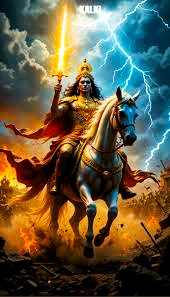
According to Blavatsky, Shamballa was an oasis, a protected kingdom populated by Aryans and surrounded by "the terrible wilderness of the great desert, the Gobi." From there would emerge the Last Saviour, Kalki, who is an incarnation of Vishnu, the Brahmins’ Messiah on a white horse, the Maitreya Buddha of the Buddhists, the Sosisosh of the Parsis and Jesus of the Christians. All these messengers would bring about the destruction of the world. These were thoughts that also could be found in the writings of Saint-Yves d'Alveidre and it is quite possible that Madame Blavatsky took her information from the same source as Ossendowski.
Saint-Yves d'Alveidre may actually have heard about Shamballa from some Buddhist monk. Kālacakra is the name of Buddhist scriptures originating around the first decades of the 12th century AD and contain passages about a kingdom called Shambhala, which came into conflict with invaders known as mleccha, barbarians. Most Orientalists believe that these are Muslims and that the Buddhist texts allude to Muslim invasions of India. The Kālacakra has from Hinduism borrowed the concept of Kalki, which is the last incarnation of the god Vishnu. He will appear at the end of the present age, Kali Yuga, and herald the beginning of the Satya Yuga, the happy epoch before the final dissolution of the Universe. Kālacakra mentions a number of figures who are said to be in the service of demonic serpents and fighting against Kalki, these include Adam, Noah, Abraham, Moses, Jesus, Muhammad and Mathani (actually a Muslim poetic expression meaning something like "repetition, learning"). Evil creatures that slaughter cattle while reciting the name of their god. They veil their women, practice circumcision, and pray five times a day to turn toward their holy land.
According to Kālacakra, the battle against these barbarians will be both an "illusory battle" taking place within a trues believer and a real battle against the ungodly invaders.
It was from such murky sources that the elusive Ungern-Sternberg created the image of himself as a divinely inspired war hero from the East. He scraped together his forces and divided them into two units, one under the command of himself and the other under the Cossack Rezuhin, who was unfailingly loyal to his master and tried to imitate Ungern-Sternberg in terms of ice-cold callousness. His name meaning "chopper".
Before heading north to encounter his fate, Ungern-Sternberg wrote a series of letters to various potentates, including the Dalai Lama and the Emperor of Japan, in which he with an apocalyptic visionary language declared his intention to exterminate the Bolshevik demons (it is doubtful whether these despatches actually reached their addressees). He sent Ossendowski on a “diplomatic mission” to the Japanese government. Ossendowski managed to get to Japan and then to the USA, where he wrote and published his bestseller about his Siberian adventures and the Mad Baron.
At first, the gods seemed to be on Ungern-Sternberg's side. His troops crossed the border with Russia and attacked the well-fortified monastery of Guzino Ozero. In spite of fierce resistance from "Red" machine-gun-armed forces, the monastery was taken and, in the usual manner, Ungern-Sternberg selected a hundred "Bolshevik commissars and Jews" and had them immediately executed. The rest of the captured garrison was forcibly recruited.
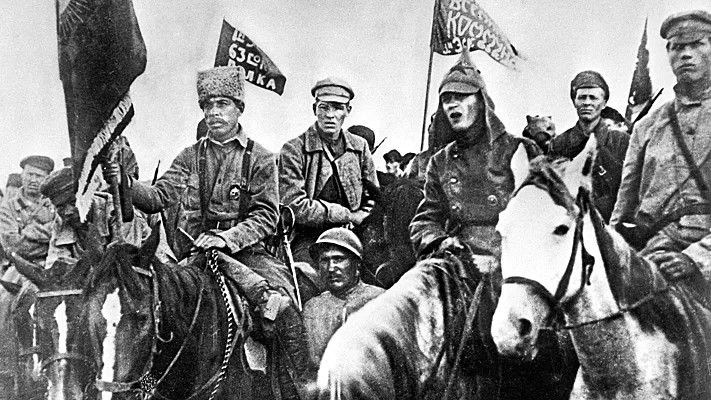
Now, however, Ungern-Sternberg's successes were over. The Red Army employed its military strength with full force. Aircraft poured bombs on them and they were pursued by armoured vehicles and heavy field guns. Demoralized and quite helpless, Ungern-Sternberg's soldiers retreated into Mongolia. Their fighting spirit was broken and it was only mere fear of their merciless leader's reprisals that prevented them from deserting – some did it anyway.
A small group of Ungern-Sternberg's officers decided to take the risk of assassinating him – Ostroviskii, Evaritiskii and Makeev. His doctor Ribo also joined them. However, someone alerted Ungern-Sternberg that something was in the works. He seized Ostroviskii and forced him during the night to sit climbed up a tree, he fell down in the morning and injured one of his legs, but Ungern-Sternberg spared him. Why he did so would soon become apparent.
The following evening the conspirators concealed themselves around Ungern-Sternberg’s ger. When the door opened, they shot at the person who came out, but it was not Ungern-Sternberg but Ostroviskii who fell to the ground. As the conspirators rushed up to him, one of them caught sight of Ungern-Sternberg, who was rushing out of the ger of one of his shamans. He immediately shot at him. Ungern-Sternberg threw himself into a thicket of bushes, at which the conspirators recklessly began to fire. When they calmed down and examined the thicket, they found that Ungern-Sternberg was not there any longer. They gathered the soldiers around them and declared that they were now were in command and, contrary to expectations, they received their support. They sought out Ungern-Sternberg's executioners and hade them executed.
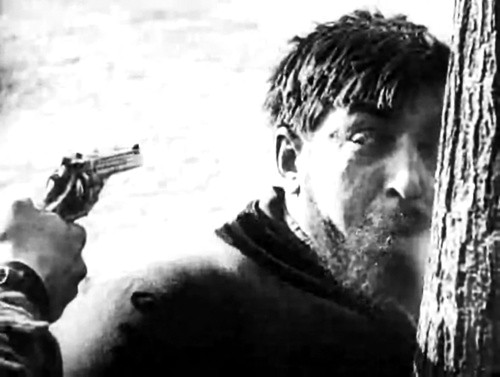
In the meantime, Ungern-Sternberg had found his mare and galloped away from the camp, but then changed his mind, assuming that the soldiers would not dare to turn against him. Suddenly the conspirators and soldiers found that Ungern-Sternberg had appeared in their midst, sitting on his white mare, illuminated by the moonlight, and apparently quite calm. Everyone around him was petrified with fear, until Makeev pulled out his revolver and fired it at Ungern-Sternberg. He missed. Ungern-Sternberg spurred his horse and galloped away followed by volleys of shots, which all missed their target. Ungern-Sternberg was heard roaring: "Bastards!"
He rode on to the camp of the Mongol prince Sundgui Gun, which was a few kilometres from the main camp. Unmolested, Ungern-Sternberg galloped up to Sundgui Gun's ger, dismounted, stepped in and in his unusually shrill voice he stated: "The army has collapsed". He shook his head and added, "Russians are in general ... they are all bad people."
Ungern-Sternberg proposed to unite Sundgui Gun's forces with Rezuhin's unit as soon as possible. Little did he know that Rezuhin's forces had been dissolved. Rezuhin, who wanted to imitate the brutality of Ungern-Sternberg in everything, but lacked his diabolical charisma, had as soon as his troops had been separated from Ungern-Sternberg's main force, been attacked by his own soldiers and tied behind. As he sat there helpless and surrounded by angry men, no one dared to react. They all seemed to be paralyzed at the thought of what might happen to them if the mad Baron learned that they had killed his faithful Rezuhin. After more than a quarter of an hour, a young Cossack stepped forward, raising his revolver and pressed the barrel to Rezuhin's temple while he said to him: "You wanted to drink our blood? Take this instead" and fired his shot. Rezuhin's force broke up and the soldiers dispersed in different directions.
Sundgui Gun allowed Ungern-Sternberg to spend the night in a ger. The next day he stepped in with a group of his officers. They tied up the Baron and brought him to a wagon. It was unclear what would happen, but a few miles from Sundgui Gun's camp, the wagon trail was surprised by a mounted group of "red" Cossacks. The Mongols fled, leaving their carts behind. The Cossacks found the tied up Ungern-Sternberg. One of them grabbed his hair to lift up his face: "And who are you?" he wondered. Ungern-Sternberg replied: "I am Baron Ungern von Sternberg. Commander of the Asiatic Cavalry Division."
Ungern von Sternberg was taken to Novonikolaevsk, now Novisibirsk, for a several days long show trial to which foreign press was invited to attend. The Baron behaved with dignity and correctness, answering truthfully to all questions, including those concerning his murders and brutalities. When asked if he had killed children, he admitted it with the same motivation he had given his soldiers: "You cannot leave any tails behind." Only on one occasion did he break the "decent tone", wrinkled his nose, sniff, and pointed out: "Here stinks strongly of garlic. Why do you hire so many Jews?" He was sentenced to arquebusiering.
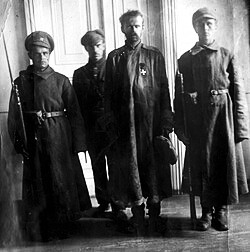
In recent years, the mad baron has been given a heroic halo by some right-wing extremist Russians who consider him as a martyr for the establishment of the Monarchy and the old Russian Empire. A bold fighter against the decadence of the West.
In Estonia, members of the right-wing conservative Blue Awakening have formed an NGO called Ungern Khaan with the aim of raising funds to erect a statue in Ungern-Sternberg's honour.
My thoughts about Ungern-Steinberg's strange fate began with Donald J. Trump. Why? After all, Trump is not a bloodthirsty madman far from the United States, and Ungern-Steinberg's madness did not have global repercussions. Yet, Trump is nevertheless an example of how narcissistic megalomania can drive an individual to abuse others and entrap himself in strange delusions about his destiny as a Savior of the World, with bloody results. It is up to all of us to curb such folly.
Blavatsky, Helena W. (2009) The SecretDoctrine: The Classic Work, Abridged and Annotated. London: Penguin. Cohen, Paul A. (1997) History in Three Keys: The Boxers as Event, Experience, and Myth. New York: Columbia University Press. Lee, Bandy X. (2019) The Dangerous Case of Donald Trump: 37 Psychiatrists and Mental Health Experts Assess a President – Updated and Expanded with New Essays. New York: St. Martin's Press. Moliterni, Claude e Dario Campione (1996) Il fumetto, cent'anni di aventura. Milan: Electa/Gallimard. Ossendowski, Ferdinand (2010) Beasts, Men and Gods. Las Vegas, Nevada: Information Age Publishing. Palmer, James (2008) The Bloody White Baron. London: Faber and Faber. Pratt, Hugo (2009) Corte Sconta detta Arcana: I Maestri del fumetto 1. Milan: Mondadori. Pullman, Philip (2012) Grimm Tales for Young and Old. London: Penguin Classics. Webb, James (1976) The Occult Establishment. La Salle, IL: Open Court.


.jpg)

